Department of Internal Medicine, Faculty of Medical Sciences, State University of Campinas, Rua Tessalia Vieira de Camargo 126, 13083-887 - Campinas, Brazil.
BMC Infect Dis. 2011 Feb 3;11:38. doi: 10.1186/1471-2334-11-38.
Children born to HIV+ mothers are exposed intra-utero to several drugs and cytokines that can modify the developing immune system, and influence the newborn's immune response to infections and vaccines. We analyzed the relation between the distribution of cord blood lymphocyte subsets and cytokine profile in term newborns of HIV+ mothers using HAART during pregnancy and compared them to normal newborns.
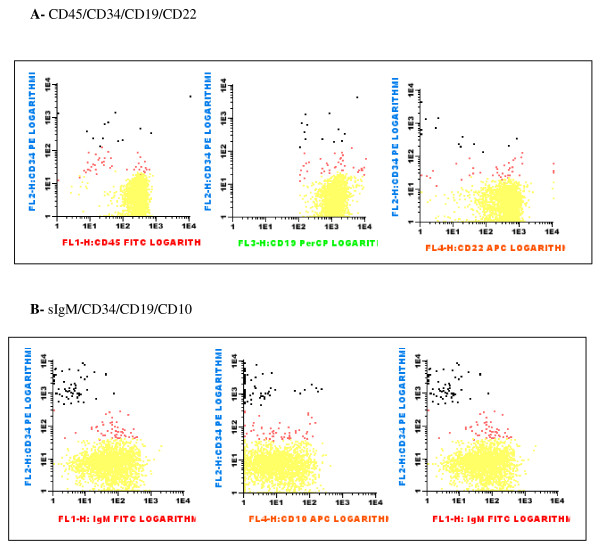
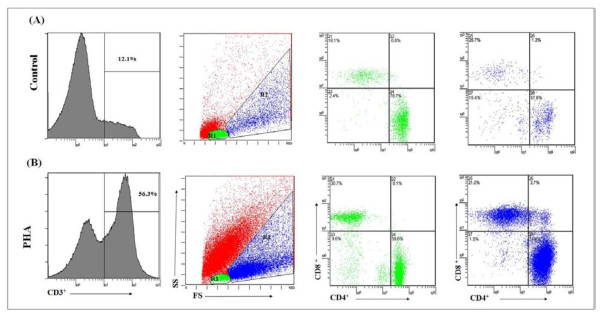
In a prospective, controlled study, 36 mother-child pairs from HIV+ mothers and 15 HIV-uninfected mothers were studied. Hematological features and cytokine profiles of mothers at 35 weeks of pregnancy were examined. Maternal and cord lymphocyte subsets as well as B-cell maturation in cord blood were analyzed by flow cytometry. The non-stimulated, as well as BCG- and PHA-stimulated production of IL2, IL4, IL7, IL10, IL12, IFN-γ and TNF-alpha in mononuclear cell cultures from mothers and infants were quantified using ELISA.
After one year follow-up none of the exposed infants became seropositive for HIV. An increase in B lymphocytes, especially the CD19/CD5+ ones, was observed in cord blood of HIV-exposed newborns. Children of HIV+ hard drug using mothers had also an increase of immature B-cells. Cord blood mononuclear cells of HIV-exposed newborns produced less IL-4 and IL-7 and more IL-10 and IFN-γ in culture than those of uninfected mothers. Cytokine values in supernatants were similar in infants and their mothers except for IFN-γ and TNF-alpha that were higher in HIV+ mothers, especially in drug abusing ones. Cord blood CD19/CD5+ lymphocytes showed a positive correlation with cord IL-7 and IL-10. A higher maternal age and smoking was associated with a decrease of cord blood CD4+ cells.
in uninfected infants born to HIV+ women, several immunological abnormalities were found, related to the residual maternal immune changes induced by the HIV infection and those associated with antiretroviral treatment. Maternal smoking was associated to changes in cord CD3/CD4 lymphocytes and maternal hard drug abuse was associated with more pronounced changes in the cord B cell line.
感染 HIV 的母亲所生的婴儿在子宫内会接触到多种药物和细胞因子,这些物质可能会改变正在发育的免疫系统,并影响新生儿对感染和疫苗的免疫反应。我们分析了使用 HAART 进行孕期治疗的 HIV 阳性母亲所生的足月新生儿脐带血淋巴细胞亚群分布和细胞因子谱的关系,并与正常新生儿进行了比较。
采用前瞻性、对照研究,对 36 对 HIV 阳性母亲及其婴儿和 15 对 HIV 阴性母亲及其婴儿进行研究。在妊娠 35 周时检测母亲的血液学特征和细胞因子谱,用流式细胞术分析脐带血中母亲和婴儿的淋巴细胞亚群以及 B 细胞成熟情况。采用 ELISA 法定量检测非刺激以及 BCG 和 PHA 刺激后母亲和婴儿单核细胞培养上清液中 IL2、IL4、IL7、IL10、IL12、IFN-γ和 TNF-α的产生。
经过一年的随访,所有暴露的婴儿均未对 HIV 呈血清阳性。与未感染 HIV 的新生儿相比,HIV 暴露新生儿的脐带血中 B 细胞,特别是 CD19/CD5+细胞增多。感染 HIV 的母亲如果滥用硬毒品,其婴儿的未成熟 B 细胞也会增多。与未感染 HIV 的母亲相比,HIV 暴露新生儿脐带血单核细胞培养上清液中 IL-4 和 IL-7 的产生减少,而 IL-10 和 IFN-γ的产生增加。除 IFN-γ和 TNF-α外,婴儿和母亲的细胞因子值在培养上清液中相似,而 IFN-γ和 TNF-α在 HIV 阳性母亲中,尤其是在滥用药物的母亲中更高。脐带血 CD19/CD5+淋巴细胞与脐带血 IL-7 和 IL-10 呈正相关。产妇年龄较大和吸烟与脐带血 CD4+细胞减少有关。
在未感染 HIV 的婴儿中,我们发现了一些与 HIV 感染引起的母体免疫变化以及与抗逆转录病毒治疗相关的免疫异常,这些异常与 HIV 感染相关。母亲吸烟与脐带血 CD3/CD4 淋巴细胞变化有关,而母亲滥用硬毒品与脐带血 B 细胞系变化更明显有关。