Clinical Research Department, Lilly SA, Alcobendas, Madrid, Spain.
Diabet Med. 2011 Jun;28(6):731-40. doi: 10.1111/j.1464-5491.2011.03258.x.
To assess blood glucose control and quality of health care provided to non-insulin-treated patients with Type 2 diabetes mellitus in routine clinical practice in Spain.
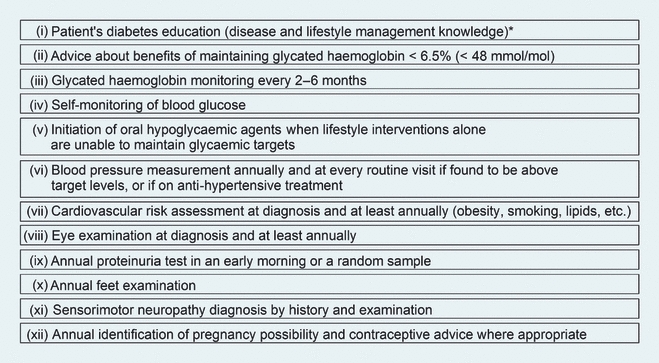
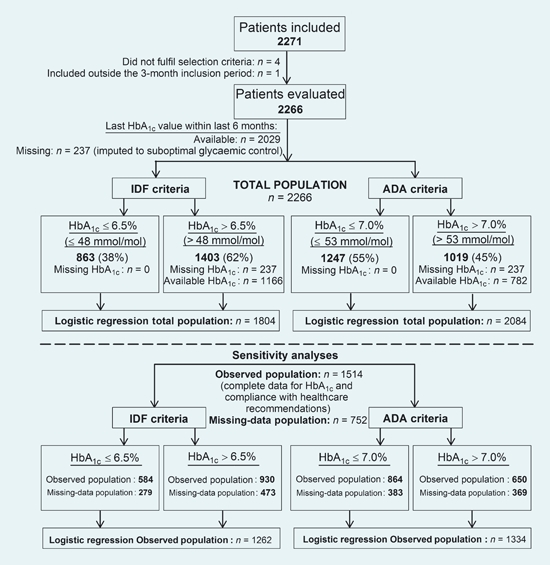
In this observational, retrospective, cross-sectional study, patients were grouped as either having good or suboptimal blood glucose control according to International Diabetes Federation or American Diabetes Association HbA(1c) goals. Clinical and socio-demographic data and compliance with the main standard level of care recommendations of the International Diabetes Federation were recorded during a routine visit. Correlates of glucose control were analysed by logistic regression.
Many patients were grouped as having suboptimal control under International Diabetes Federation (61.9%) or American Diabetes Association (45.0%) criteria. The mean number of accomplished International Diabetes Federation recommendations (7.3 out of 11) was higher for endocrinologists (than for internists or primary care physicians), and significantly more patients under their care were in the good glucose control group (than with primary care physicians). More recommendations were associated with blood glucose control using International Diabetes Federation than American Diabetes Association criteria, demanding higher quality of health care for achieving stricter goals. Some recommendations were poorly observed, particularly those concerning patients' education on diabetes, the prompt prescription of effective treatments and monitoring of complications. Diabetes complications were associated with being in the suboptimal control group. Patients' education on diabetes and HbA(1c) monitoring were associated with being in the good control group.
These results demonstrate the need for improvement in the management of patients with non-insulin-treated Type 2 diabetes in actual clinical practice in Spain. Such improvement would entail a stricter adherence to International Diabetes Federation recommendations.
评估西班牙常规临床实践中非胰岛素治疗的 2 型糖尿病患者的血糖控制情况和医疗质量。
在这项观察性、回顾性、横断面研究中,根据国际糖尿病联合会或美国糖尿病协会的 HbA1c 目标,将患者分为血糖控制良好或不理想的两组。在常规就诊期间,记录了临床和社会人口统计学数据以及对国际糖尿病联合会主要标准护理建议的遵守情况。采用逻辑回归分析血糖控制的相关性。
根据国际糖尿病联合会(61.9%)或美国糖尿病协会(45.0%)标准,许多患者被归类为血糖控制不理想。完成的国际糖尿病联合会建议的平均数量(11 项中的 7.3 项)在内分泌科医生(比内科医生或初级保健医生)中更高,而且他们治疗的患者中更多的人处于血糖控制良好的组(比初级保健医生)。与美国糖尿病协会标准相比,使用国际糖尿病联合会标准与血糖控制更相关,这需要更高质量的医疗保健来实现更严格的目标。一些建议执行情况不佳,特别是关于糖尿病患者教育、及时开具有效治疗药物和监测并发症的建议。糖尿病并发症与血糖控制不理想有关。患者的糖尿病教育和 HbA1c 监测与血糖控制良好有关。
这些结果表明,西班牙实际临床实践中非胰岛素治疗的 2 型糖尿病患者的管理需要改进。这种改进需要更严格地遵守国际糖尿病联合会的建议。