Pulmonary and Critical Care Unit, Department of Medicine, Massachusetts General Hospital, Harvard Medical School, Boston, MA 02114, USA.
Respir Res. 2011 Feb 4;12(1):21. doi: 10.1186/1465-9921-12-21.
CXCR4 is the receptor for chemokine CXCL12 and reportedly plays an important role in systemic vascular repair and remodeling, but the role of CXCR4 in development of pulmonary hypertension and vascular remodeling has not been fully understood.
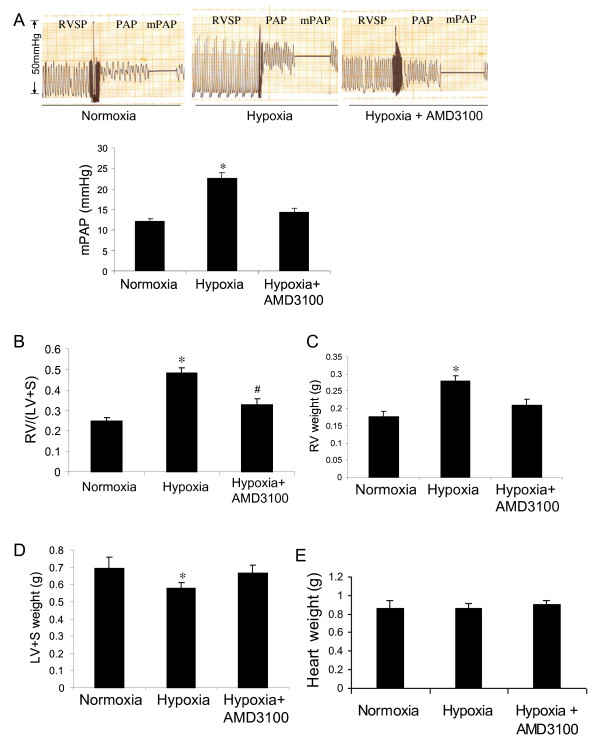
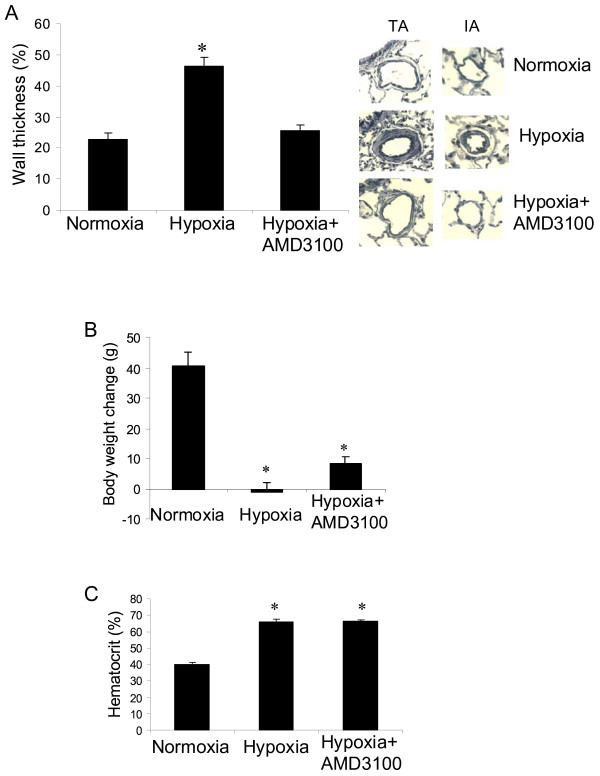
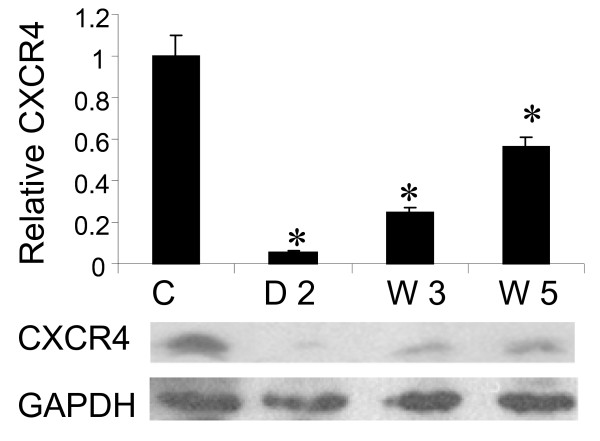
In this study we investigated the role of CXCR4 in the development of pulmonary hypertension and vascular remodeling by using a CXCR4 inhibitor AMD3100 and by electroporation of CXCR4 shRNA into bone marrow cells and then transplantation of the bone marrow cells into rats.
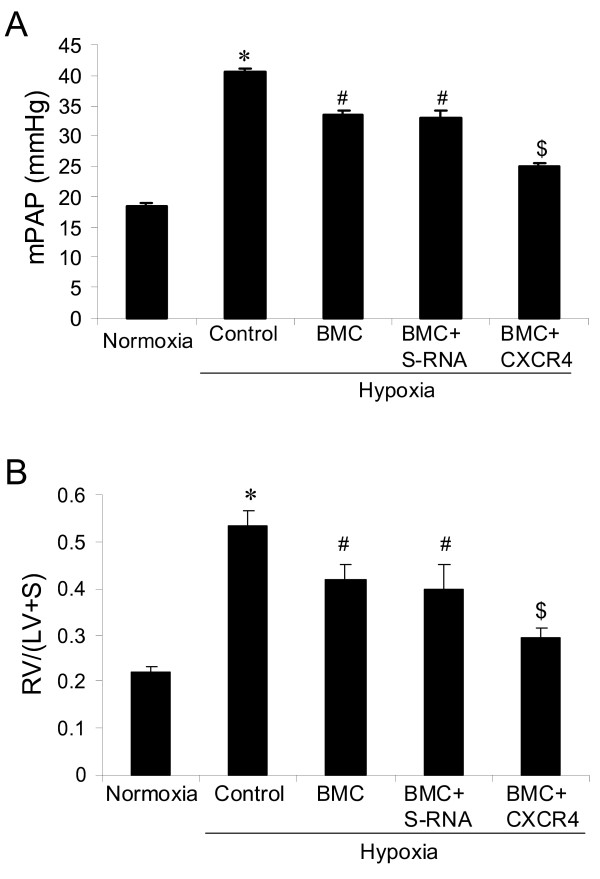
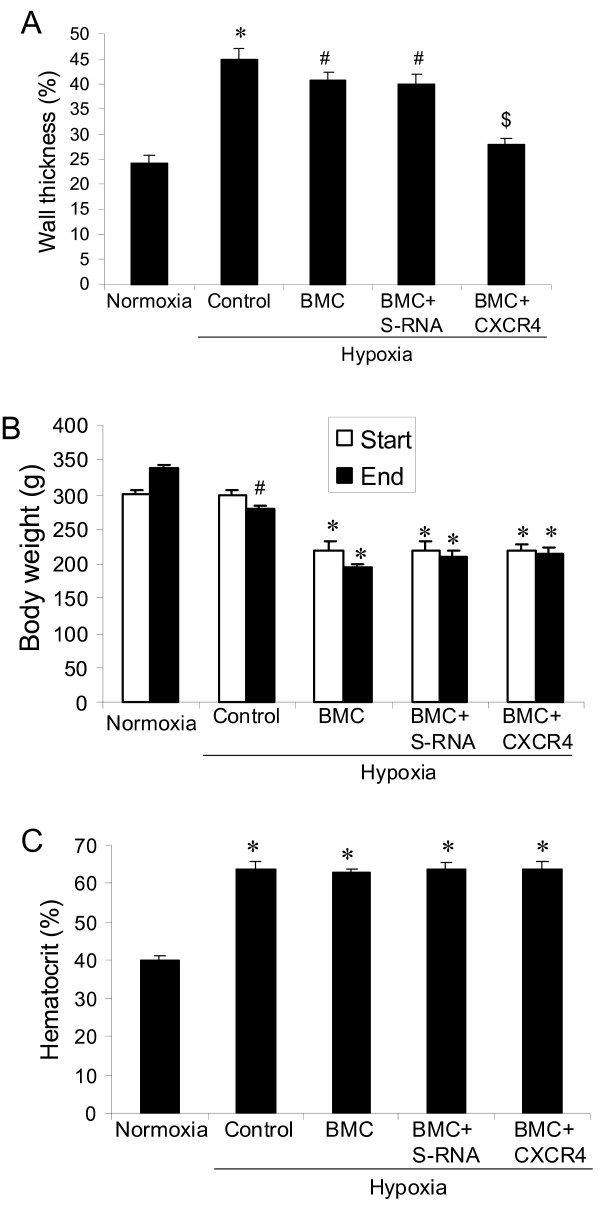
We found that the CXCR4 inhibitor significantly decreased chronic hypoxia-induced pulmonary hypertension and vascular remodeling in rats and, most importantly, we found that the rats that were transplanted with the bone marrow cells electroporated with CXCR4 shRNA had significantly lower mean pulmonary pressure (mPAP), ratio of right ventricular weight to left ventricular plus septal weight (RV/(LV+S)) and wall thickness of pulmonary artery induced by chronic hypoxia as compared with control rats.
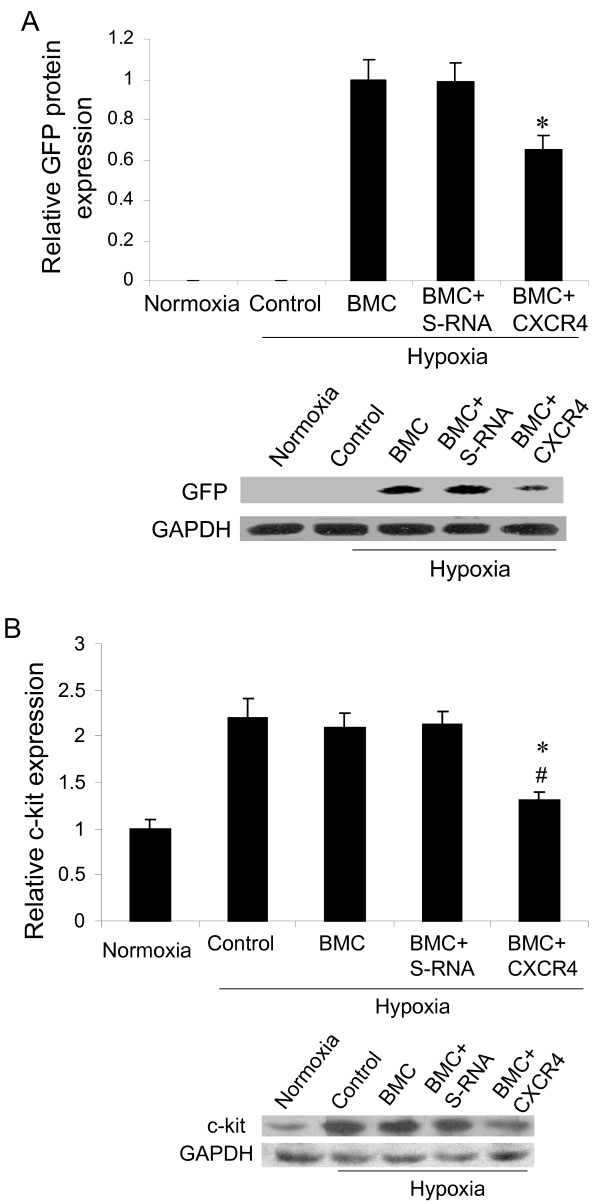
The hypothesis that CXCR4 is critical in hypoxic pulmonary hypertension in rats has been demonstrated. The present study not only has shown an inhibitory effect caused by systemic inhibition of CXCR4 activity on pulmonary hypertension, but more importantly also has revealed that specific inhibition of the CXCR4 in bone marrow cells can reduce pulmonary hypertension and vascular remodeling via decreasing bone marrow derived cell recruitment to the lung in hypoxia. This study suggests a novel therapeutic approach for pulmonary hypertension by inhibiting bone marrow derived cell recruitment.
趋化因子受体 4(CXCR4)是趋化因子 CXCL12 的受体,据报道在系统性血管修复和重塑中发挥重要作用,但 CXCR4 在肺动脉高压和血管重塑发展中的作用尚未完全阐明。
在这项研究中,我们通过使用 CXCR4 抑制剂 AMD3100 以及用电穿孔将 CXCR4 shRNA 转染到骨髓细胞中,然后将骨髓细胞移植到大鼠体内,来研究 CXCR4 在肺动脉高压和血管重塑发展中的作用。
我们发现 CXCR4 抑制剂显著降低了慢性缺氧诱导的大鼠肺动脉高压和血管重塑,最重要的是,我们发现与对照组大鼠相比,用 CXCR4 shRNA 电穿孔转染的骨髓细胞移植的大鼠的平均肺动脉压(mPAP)、右心室重量与左心室加室间隔重量的比值(RV/(LV+S))和慢性缺氧诱导的肺动脉壁厚度明显降低。
已经证明了 CXCR4 在大鼠缺氧性肺动脉高压中至关重要的假说。本研究不仅显示了系统抑制 CXCR4 活性对肺动脉高压的抑制作用,而且更重要的是还表明,特异性抑制骨髓细胞中的 CXCR4 可以通过减少骨髓源性细胞在缺氧时向肺部的募集来减轻肺动脉高压和血管重塑。这项研究通过抑制骨髓源性细胞募集为肺动脉高压提供了一种新的治疗方法。