Chen Yi-Hui, Xu Xun, Sheng Min-Jie, Zheng Zhi, Gu Qing
Department of Ophthalmology, Shanghai First People’s Hospital, Shanghai Jiaotong University, Shanghai, China.
Mol Vis. 2011 Feb 1;17:332-40.
Asymmetric dimethylarginine (ADMA), an endogenous competitive inhibitor of nitric oxide synthase, is associated with impaired endothelial dysfunction, such as chronic heart failure, hypertension, diabetes, and pulmonary hypertension. The effects of ADMA on cell proliferation, reactive oxygen species (ROS) production, cell permeability, intercellular adhesion molecule-1 (ICAM-1), and tight-junction protein occludin levels in bovine retinal capillary endothelial cells (BRCECs) were investigated.
A cell proliferation assay was performed using the novel tetrazolium compound 3-(4,5-dimethylthiazol-2-yl)-5-(3-carboxymethoxyphenyl)-2-(4-sulfophenyl)-2H-tetrazolium and an electron coupling reagent. Intracellular ROS levels were determined using the fluorescent probe CM-H(2)DCFDA. Horseradish peroxidase was used for a permeability assay. ICAM-1 and tight-junction protein occludin were assessed by western blotting and quantitative real-time PCR.
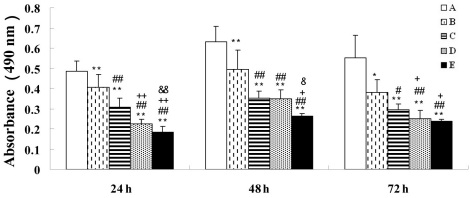
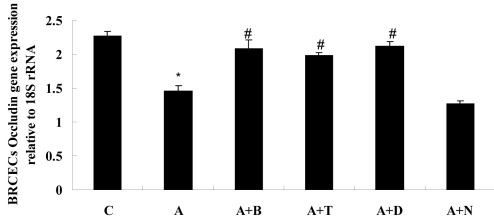
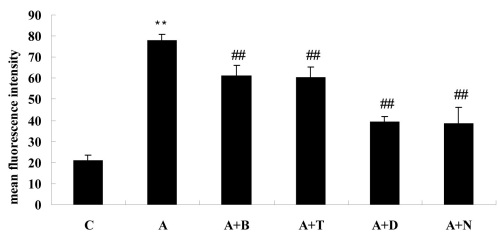
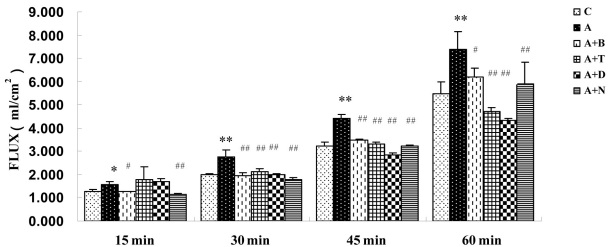
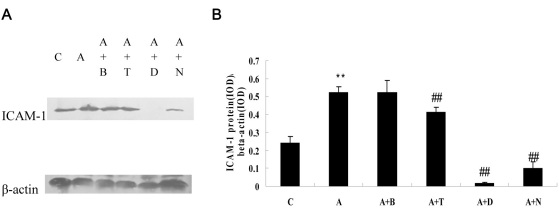
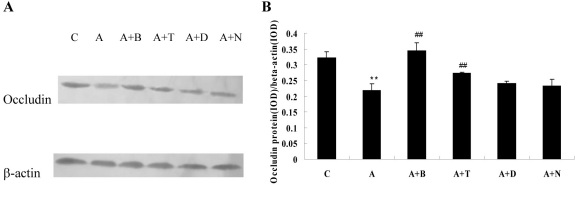
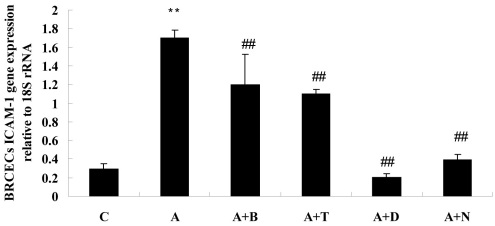
Cell proliferation was significantly inhibited by ADMA. ADMA increased intracellular ROS generation in BRCECs. The increased ROS production induced by ADMA was markedly inhibited by the angiotensin II receptor-blocker telmisartan, the angiotensin-converting enzyme inhibitor benazepril, the reduced form of nicotinamide-adenine dinucleotide phosphate (NADPH) oxidase inhibitor diphenyliodonium (DPI), or the antioxidant and free-radical scavenger N-acetyl-L-cysteine (NAC). ADMA significantly increased horseradish peroxidase (HRP) permeability in BRCECs. Benazepril, telmisartan, DPI, and NAC downregulated cell permeability. ADMA markedly upregulated ICAM-1 expression in BRCECs, which were downregulated by telmisartan, DPI, and NAC. ADMA significantly downregulated occludin expression in BRCECs. Benazepril and telmisartan upregulated occludin expression in BRCECs exposed to ADMA.
Our results provide the first reported evidence that ADMA has potent adverse effects on cell proliferation, intracellular ROS generation, cell permeability, levels of ICAM-1, and the tight-junction protein occludin. Angiotensin-converting enzyme inhibitors, angiotensin II receptor blockers, and antioxidants are effective inhibitors of the adverse effects of ADMA.
不对称二甲基精氨酸(ADMA)是一种内源性一氧化氮合酶竞争性抑制剂,与内皮功能障碍有关,如慢性心力衰竭、高血压、糖尿病和肺动脉高压。本研究旨在探讨ADMA对牛视网膜毛细血管内皮细胞(BRCECs)细胞增殖、活性氧(ROS)生成、细胞通透性、细胞间黏附分子-1(ICAM-1)和紧密连接蛋白闭合蛋白水平的影响。
使用新型四唑化合物3-(4,5-二甲基噻唑-2-基)-5-(3-羧甲氧基苯基)-2-(4-磺基苯基)-2H-四唑和电子偶联试剂进行细胞增殖测定。使用荧光探针CM-H(2)DCFDA测定细胞内ROS水平。用辣根过氧化物酶进行通透性测定。通过蛋白质印迹法和定量实时PCR评估ICAM-1和紧密连接蛋白闭合蛋白。
ADMA显著抑制细胞增殖。ADMA增加了BRCECs细胞内ROS的生成。ADMA诱导的ROS生成增加被血管紧张素II受体阻滞剂替米沙坦、血管紧张素转换酶抑制剂苯那普利、还原型烟酰胺腺嘌呤二核苷酸磷酸(NADPH)氧化酶抑制剂二苯基碘鎓(DPI)或抗氧化剂和自由基清除剂N-乙酰-L-半胱氨酸(NAC)显著抑制。ADMA显著增加了BRCECs中辣根过氧化物酶(HRP)的通透性。苯那普利、替米沙坦、DPI和NAC下调了细胞通透性。ADMA显著上调了BRCECs中ICAM-1的表达,而替米沙坦、DPI和NAC下调了ICAM-1的表达。ADMA显著下调了BRCECs中闭合蛋白的表达。苯那普利和替米沙坦上调了暴露于ADMA的BRCECs中闭合蛋白的表达。
我们的结果首次报道了ADMA对细胞增殖、细胞内ROS生成、细胞通透性、ICAM-1水平和紧密连接蛋白闭合蛋白具有显著的不良影响。血管紧张素转换酶抑制剂、血管紧张素II受体阻滞剂和抗氧化剂是ADMA不良反应的有效抑制剂。