Almubarak Hussain, Jones Antonia, Chaisuparat Risa, Zhang Ming, Meiller Timothy F, Scheper Mark A
University of Maryland and the Marlene and Stewart Greenebaum Cancer Center, 650 W. Baltimore St., Baltimore, MD 21201, USA.
J Carcinog. 2011 Jan 15;10:2. doi: 10.4103/1477-3163.75723.
Bisphosphonates (BPs) were designed for the prevention of skeletal-related events secondary to bone metastases. The purpose of this study was to show that zoledronic acid (ZA) directly eradicates highly tumorigenic and potentially metastatic cancer cells.
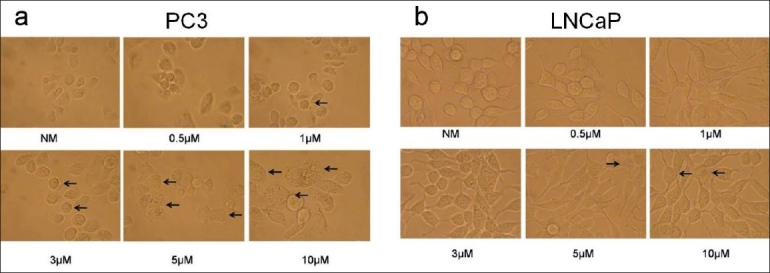
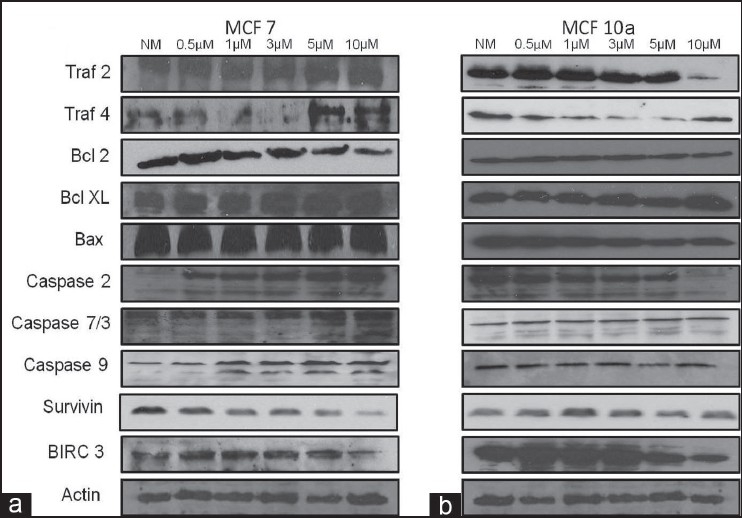
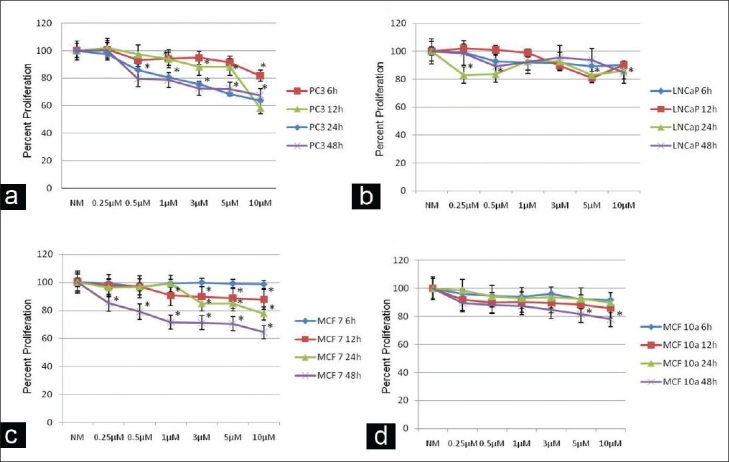
Human prostate and breast highly tumorigenic (PC3, MCF 7) and low- or non-tumorigenic (LNCaP, MCF 10a) cell lines, respectively, were exposed to different concentrations of ZA (0-10 μM). Reverse transcriptase double quantitative polymerase chain reaction was used for quantitative gene expression analysis. Apoptosis and cell proliferation were determined using microscopic observation and MTS assays. Western blot was used to confirm the translational effects of apoptotic genes on protein expression.
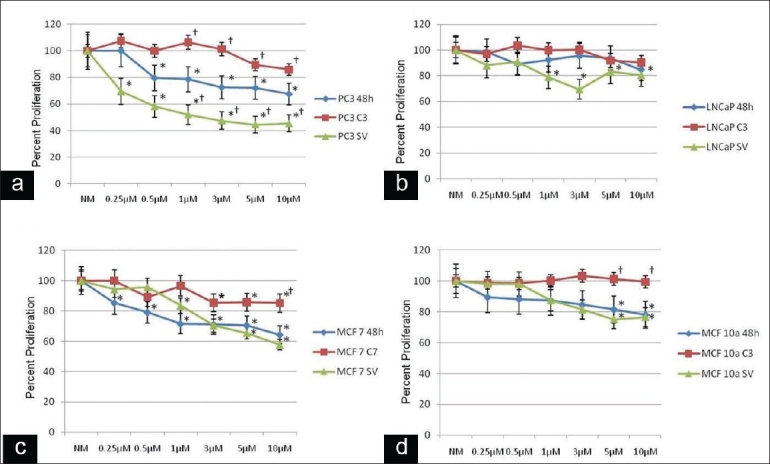
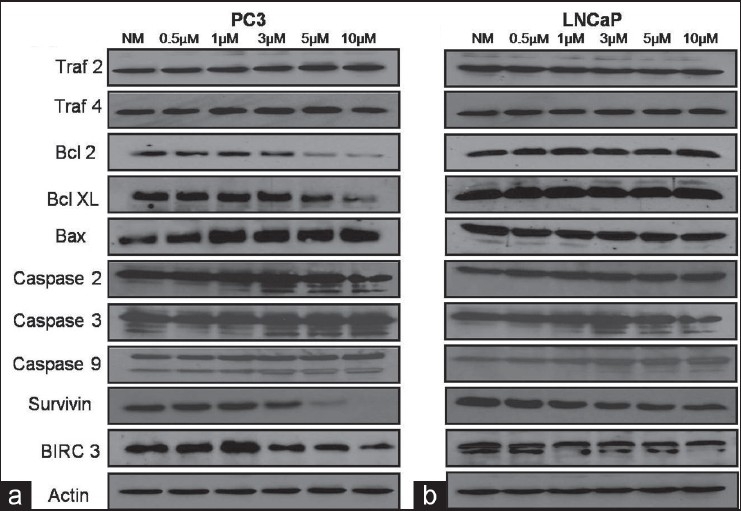
Human prostate and breast highly tumorigenic (PC3, MCF 7) and low- or non-tumorigenic (LNCaP, MCF 10a) cell lines, respectively, showed multiple genes demonstrating differential expressions, including TRAF, TRADD, BCL2, CASPASES and IAP families. Increasing ZA concentrations showed a greater concentration-time response on cell proliferation and apoptosis in the highly tumorigenic cells. These results were confirmed by both reversing and enhancing the effect of ZA on cell proliferation with caspase 3, 7 or survivin siRNA, respectively. Pro-apoptotic proteins bax and caspase 2, 3, 7 and 9 were up-regulated, while the anti-apoptotic proteins bcl2, birc3 and survivin were down-regulated only in the highly tumorigenic cells.
This explains the ability of ZA to inhibit bony metastasis in highly tumorigenic cells compared with the low- or non-tumorigenic cells through a significant decrease in cell proliferation and increase in apoptosis through gene-regulated and translational-mediated down-regulation of survivin coupled with the inhibition of caspase 3 or 7. This has significant implications toward understanding the pharmacophysiology of BPs in metastasis and supports the clinically observed effect of BPs when administered adjunctively with anticancer drugs such as cyclophosphamide/methotrexate/5-fluorouracil, epirubicin in combination with cyclophosphamide or docetaxel, and doxorubicin.
双膦酸盐(BPs)旨在预防骨转移继发的骨相关事件。本研究的目的是表明唑来膦酸(ZA)可直接根除高致瘤性和潜在转移性癌细胞。
分别将人前列腺和乳腺的高致瘤性(PC3、MCF 7)以及低致瘤性或非致瘤性(LNCaP、MCF 10a)细胞系暴露于不同浓度的ZA(0 - 10 μM)。采用逆转录双定量聚合酶链反应进行基因表达定量分析。通过显微镜观察和MTS检测确定细胞凋亡和增殖情况。使用蛋白质印迹法确认凋亡基因对蛋白质表达的翻译作用。
人前列腺和乳腺的高致瘤性(PC3、MCF 7)以及低致瘤性或非致瘤性(LNCaP、MCF 10a)细胞系分别显示多个基因存在差异表达,包括TRAF、TRADD、BCL2、半胱天冬酶家族和IAP家族。ZA浓度增加对高致瘤性细胞的增殖和凋亡显示出更大的浓度 - 时间反应。分别用半胱天冬酶3、7或生存素siRNA逆转和增强ZA对细胞增殖的作用,证实了这些结果。促凋亡蛋白bax和半胱天冬酶2、3、7和9上调,而抗凋亡蛋白bcl2、birc3和生存素仅在高致瘤性细胞中下调。
这解释了与低致瘤性或非致瘤性细胞相比,ZA通过显著降低细胞增殖以及通过基因调控和翻译介导的生存素下调并抑制半胱天冬酶3或7来增加凋亡,从而抑制高致瘤性细胞骨转移的能力。这对于理解双膦酸盐在转移中的药理生理学具有重要意义,并支持双膦酸盐与环磷酰胺/甲氨蝶呤/5 - 氟尿嘧啶、表柔比星联合环磷酰胺或多西他赛、阿霉素等抗癌药物联合使用时临床上观察到的效果。