Molecular and Cellular Biology Program, The University of Iowa, Iowa City, Iowa, United States of America.
PLoS One. 2011 Jan 28;6(1):e14617. doi: 10.1371/journal.pone.0014617.
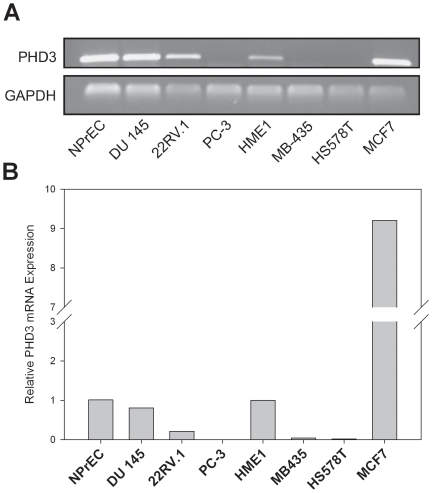
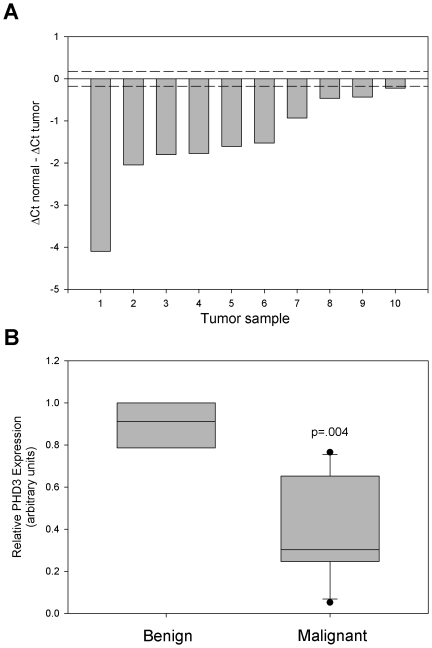
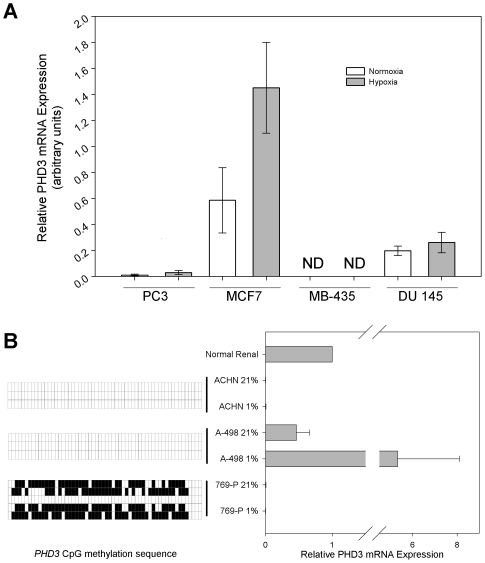
The prolyl-hydroxylase domain family of enzymes (PHD1-3) plays an important role in the cellular response to hypoxia by negatively regulating HIF-α proteins. Disruption of this process can lead to up-regulation of factors that promote tumorigenesis. We observed decreased basal expression of PHD3 in prostate cancer tissue and tumor cell lines representing diverse tissues of origin. Furthermore, some cancer lines displayed a failure of PHD3 mRNA induction when introduced to a hypoxic environment. This study explores the mechanism by which malignancies neither basally express PHD3 nor induce PHD3 under hypoxic conditions.
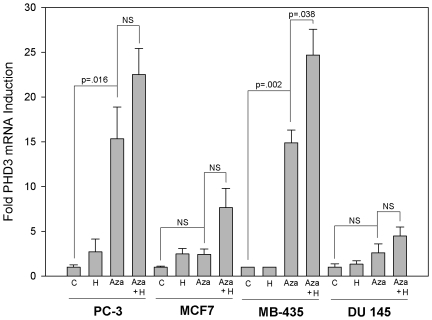
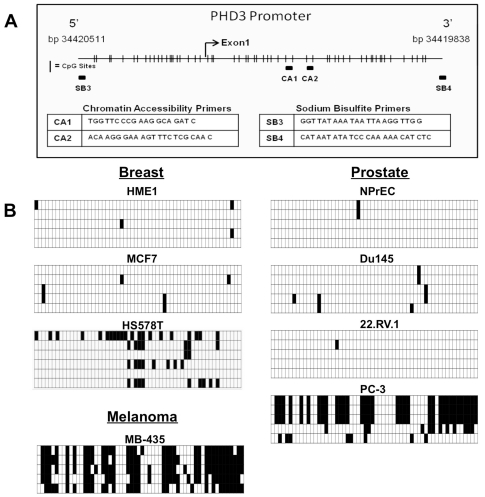
METHODOLOGY/PRINCIPAL FINDINGS: Using bisulfite sequencing and methylated DNA enrichment procedures, we identified human PHD3 promoter hypermethylation in prostate, breast, melanoma and renal carcinoma cell lines. In contrast, non-transformed human prostate and breast epithelial cell lines contained PHD3 CpG islands that were unmethylated and responded normally to hypoxia by upregulating PHD3 mRNA. Only treatment of cells lines containing PHD3 promoter hypermethylation with the demethylating drug 5-aza-2'-deoxycytidine significantly increased the expression of PHD3.
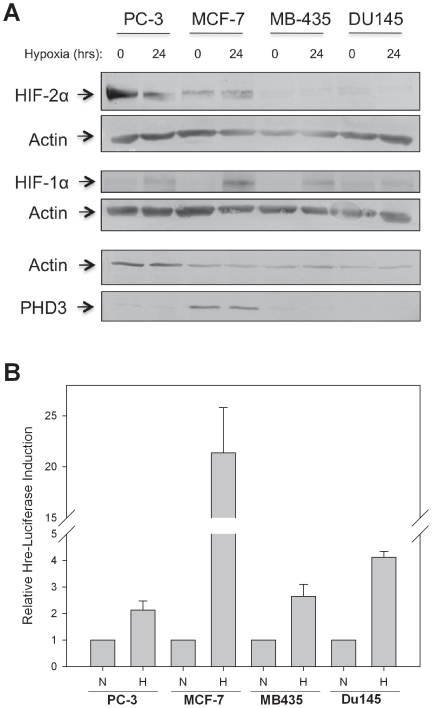
CONCLUSIONS/SIGNIFICANCE: We conclude that expression of PHD3 is silenced by aberrant CpG methylation of the PHD3 promoter in a subset of human carcinoma cell lines of diverse origin and that this aberrant cytosine methylation status is the mechanism by which these cancer cell lines fail to upregulate PHD3 mRNA. We further show that a loss of PHD3 expression does not correlate with an increase in HIF-1α protein levels or an increase in the transcriptional activity of HIF, suggesting that loss of PHD3 may convey a selective advantage in some cancers by affecting pathway(s) other than HIF.
脯氨酰羟化酶结构域家族的酶(PHD1-3)通过负调控 HIF-α 蛋白在细胞对缺氧的反应中起着重要作用。该过程的破坏可导致促进肿瘤发生的因子上调。我们观察到前列腺癌组织和代表不同组织来源的肿瘤细胞系中 PHD3 的基础表达降低。此外,一些癌细胞系在引入缺氧环境时显示出 PHD3mRNA 诱导失败。本研究探讨了恶性肿瘤既不在基础水平上表达 PHD3,也不在缺氧条件下诱导 PHD3 的机制。
方法/主要发现:使用亚硫酸氢盐测序和甲基化 DNA 富集程序,我们在前列腺癌、乳腺癌、黑色素瘤和肾细胞癌细胞系中鉴定出人 PHD3 启动子超甲基化。相比之下,未转化的人前列腺和乳腺上皮细胞系中的 PHD3CpG 岛未甲基化,并通过上调 PHD3mRNA 对缺氧正常反应。只有用去甲基化药物 5-氮杂-2'-脱氧胞苷处理含有 PHD3 启动子超甲基化的细胞系,才能显著增加 PHD3 的表达。
结论/意义:我们得出的结论是,在不同起源的人类癌细 胞系中,PHD3 表达被 PHD3 启动子的异常 CpG 甲基化沉默,并且这种异常的胞嘧啶甲基化状态是这些癌细胞系不能上调 PHD3mRNA 的机制。我们进一步表明,PHD3 表达的丧失与 HIF-1α 蛋白水平的增加或 HIF 的转录活性的增加无关,这表明 PHD3 的丧失可能通过影响 HIF 以外的途径而在某些癌症中提供选择性优势。