Fernández Ignacio, Darias Maria, Andree Karl B, Mazurais David, Zambonino-Infante Jose Luís, Gisbert Enric
Unitat de Cultius Experimentals, IRTA Centre de Sant Carles de la Ràpita (IRTA-SCR), Crta, del Poble Nou s/n, 43540 - Sant Carles de la Ràpita (Spain)
BMC Dev Biol. 2011 Feb 9;11:7. doi: 10.1186/1471-213X-11-7.
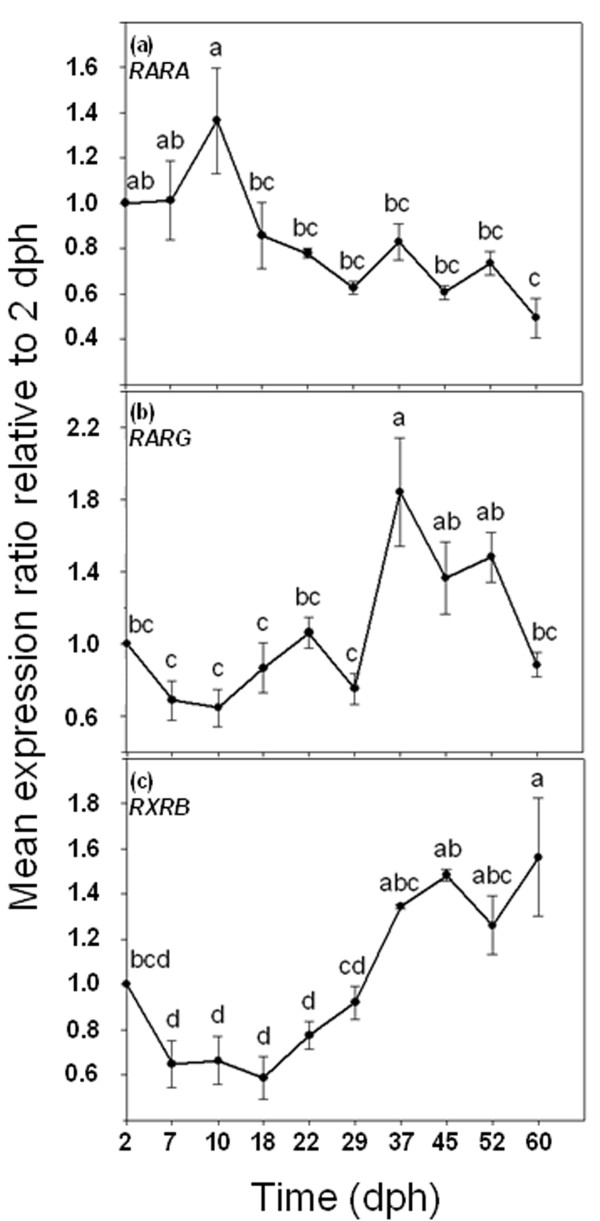
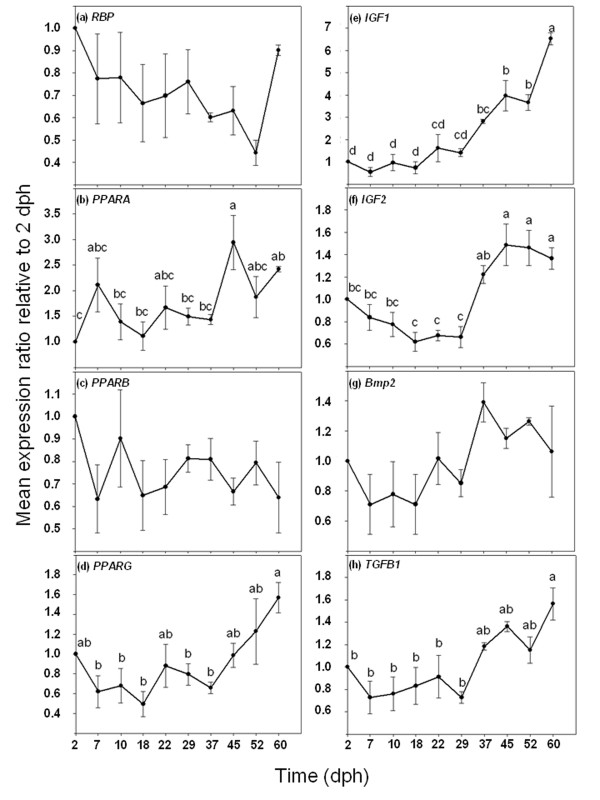
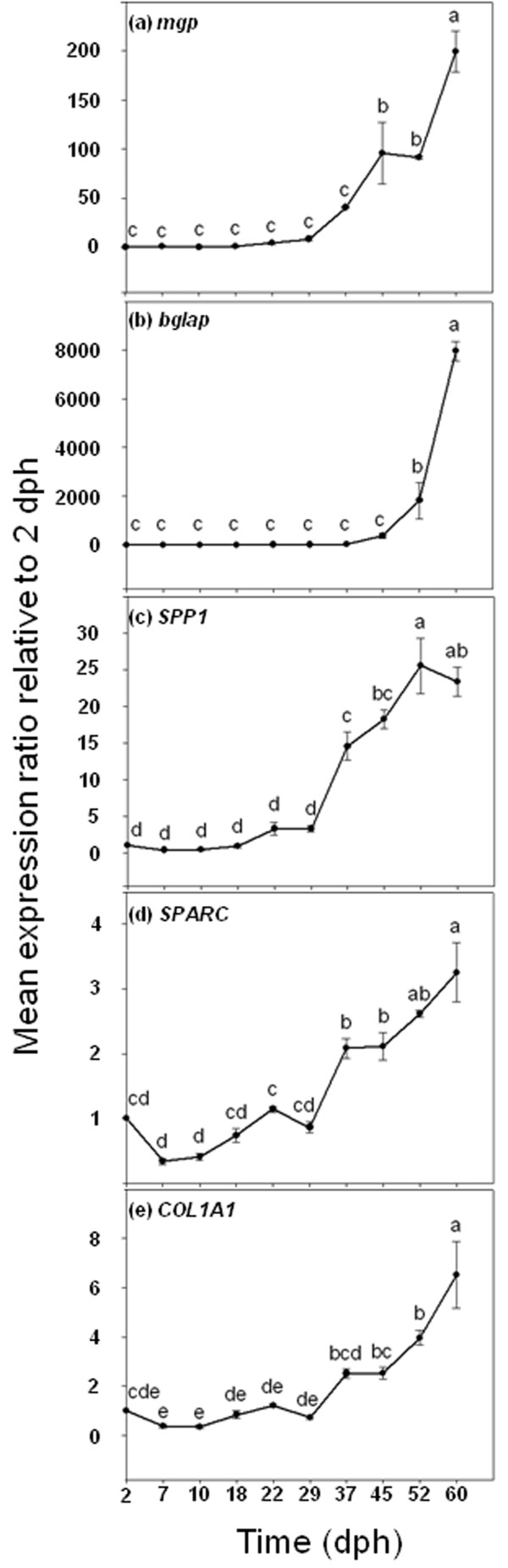
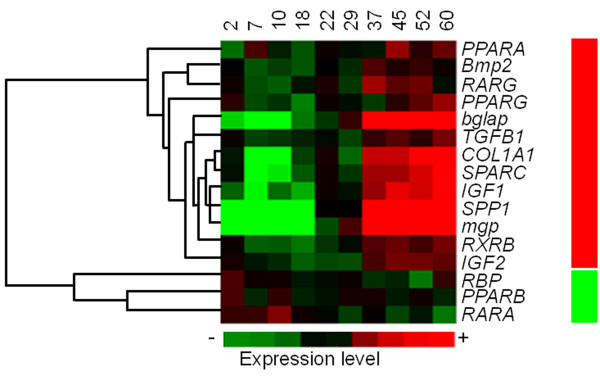
Vitamin A (VA) has a key role in vertebrate morphogenesis, determining body patterning and growth through the control of cell proliferation and differentiation processes. VA regulates primary molecular pathways of those processes by the binding of its active metabolite (retinoic acid) to two types of specific nuclear receptors: retinoic acid receptors (RARs) and retinoid X receptors (RXRs), which promote transcription of downstream target genes. This process is well known in most of higher vertebrates; however, scarce information is available regarding fishes. Therefore, in order to gain further knowledge of fish larval development and its disruption by nutritional VA imbalance, the relative expression of some RARs and RXRs, as well as several genes involved in morpho- and skeletogenesis such as peroxisome proliferator-activated receptors (PPARA, PPARB and PPARG); retinol-binding protein (RBP); insulin-like growth factors I and II (IGF1 and IGF2, respectively); bone morphogenetic protein 2 (Bmp2); transforming growth factor β-1 (TGFB1); and genes encoding different extracellular matrix (ECM) proteins such as matrix Gla protein (mgp), osteocalcin (bglap), osteopontin (SPP1), secreted protein acidic and rich in cysteine (SPARC) and type I collagen α1 chain (COL1A1) have been studied in gilthead sea bream.
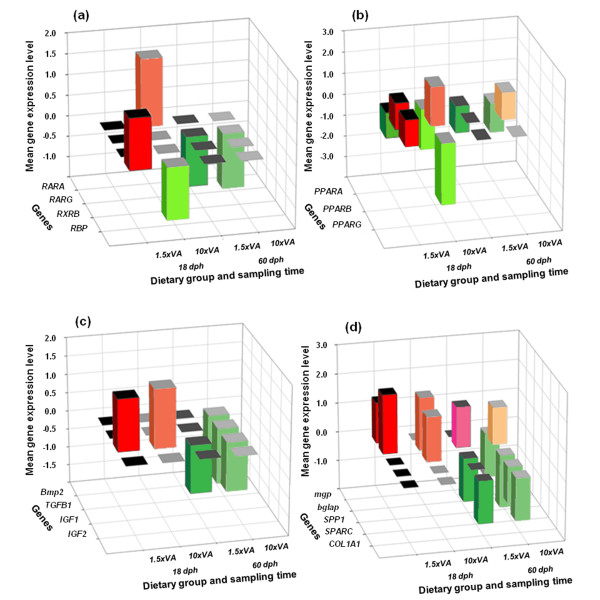
During gilthead sea bream larval development, specific expression profiles for each gene were tightly regulated during fish morphogenesis and correlated with specific morphogenetic events and tissue development. Dietary hypervitaminosis A during early larval development disrupted the normal gene expression profile for genes involved in RA signalling (RARA), VA homeostasis (RBP) and several genes encoding ECM proteins that are linked to skeletogenesis, such as bglap and mgp.
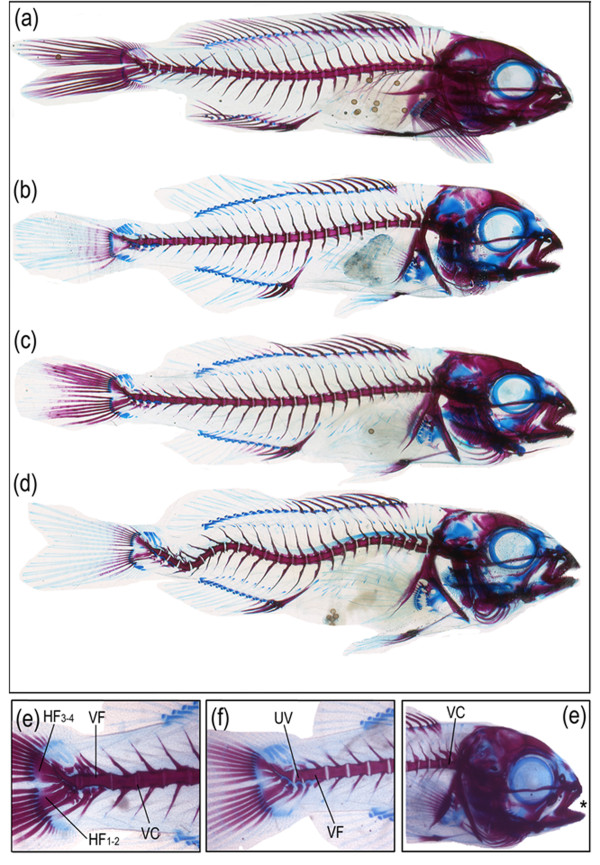
Present data reflects the specific gene expression patterns of several genes involved in larval fish RA signalling and skeletogenesis; and how specific gene disruption induced by a nutritional VA imbalance underlie the skeletal deformities. Our results are of basic interest for fish VA signalling and point out some of the potential molecular players involved in fish skeletogenesis. Increased incidences of skeletal deformities in gilthead sea bream fed with hypervitaminosis A were the likely ultimate consequence of specific gene expression disruption at critical development stages.
维生素A(VA)在脊椎动物形态发生中起关键作用,通过控制细胞增殖和分化过程来决定身体模式和生长。VA通过其活性代谢物(视黄酸)与两种特定核受体结合来调节这些过程的主要分子途径:视黄酸受体(RARs)和类视黄醇X受体(RXRs),它们促进下游靶基因的转录。这一过程在大多数高等脊椎动物中已为人熟知;然而,关于鱼类的信息却很少。因此,为了进一步了解鱼类幼体发育及其因营养性VA失衡而受到的干扰,研究了金头鲷中一些RARs和RXRs的相对表达,以及一些参与形态发生和骨骼形成的基因,如过氧化物酶体增殖物激活受体(PPARA、PPARB和PPARG);视黄醇结合蛋白(RBP);胰岛素样生长因子I和II(分别为IGF1和IGF2);骨形态发生蛋白2(Bmp2);转化生长因子β-1(TGFB1);以及编码不同细胞外基质(ECM)蛋白的基因,如基质Gla蛋白(mgp)、骨钙素(bglap)、骨桥蛋白(SPP1)、富含半胱氨酸的酸性分泌蛋白(SPARC)和I型胶原α1链(COL1A1)。
在金头鲷幼体发育过程中,每个基因的特定表达谱在鱼类形态发生过程中受到严格调控,并与特定的形态发生事件和组织发育相关。幼体发育早期的饮食性维生素A过多症扰乱了参与RA信号传导(RARA)、VA稳态(RBP)以及一些与骨骼形成相关的编码ECM蛋白的基因(如bglap和mgp)的正常基因表达谱。
目前的数据反映了参与幼体鱼类RA信号传导和骨骼形成的几个基因的特定基因表达模式;以及营养性VA失衡引起的特定基因破坏如何导致骨骼畸形。我们的结果对于鱼类VA信号传导具有重要的基础意义,并指出了一些参与鱼类骨骼形成的潜在分子参与者。喂食维生素A过多症的金头鲷骨骼畸形发生率增加可能是关键发育阶段特定基因表达破坏的最终结果。