National Institute of Oceanography, Israel Oceanographic and Limnological Research, Tel Shikmona, POB 8030, Haifa 31080, Israel.
BMC Mol Biol. 2010 May 12;11:37. doi: 10.1186/1471-2199-11-37.
The transforming growth factor-beta (TGF-beta) family constitutes of dimeric proteins that regulate the growth, differentiation and metabolism of many cell types, including that of skeletal muscle in mammals. The potential role of TGF-betas in fish muscle growth is not known.
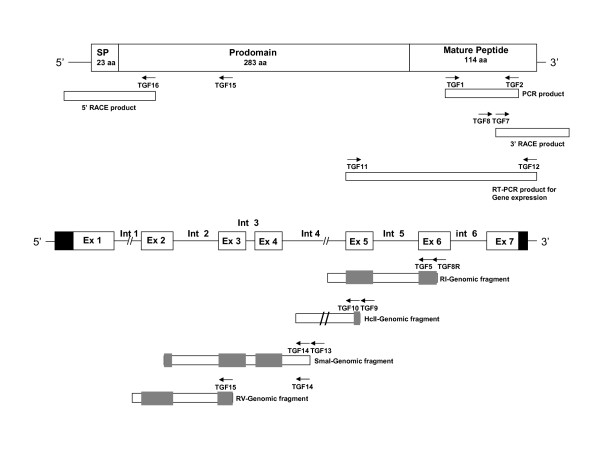
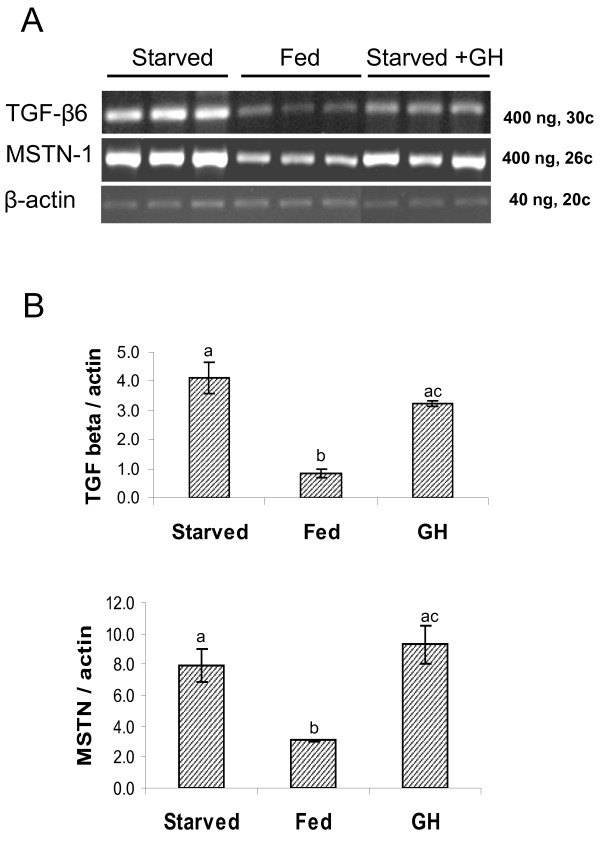
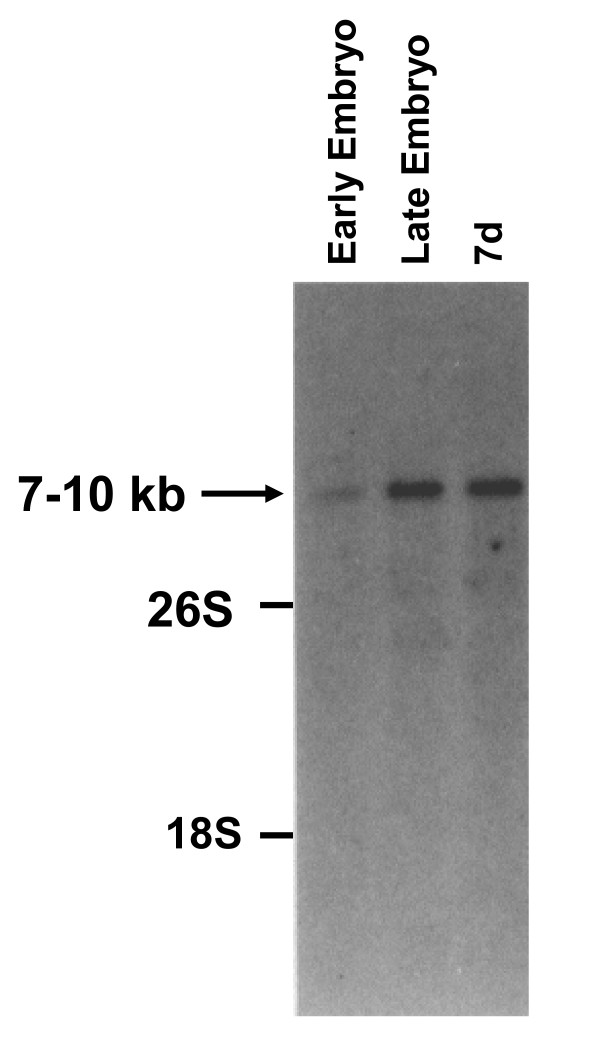
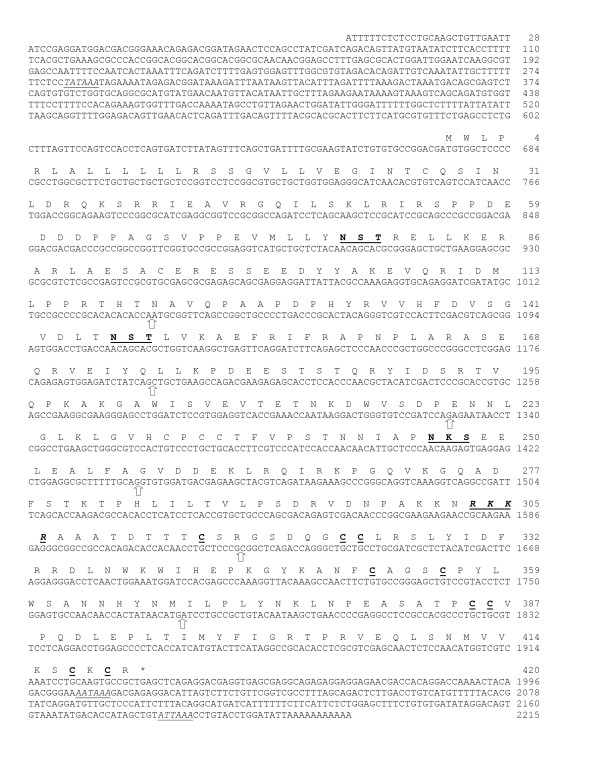
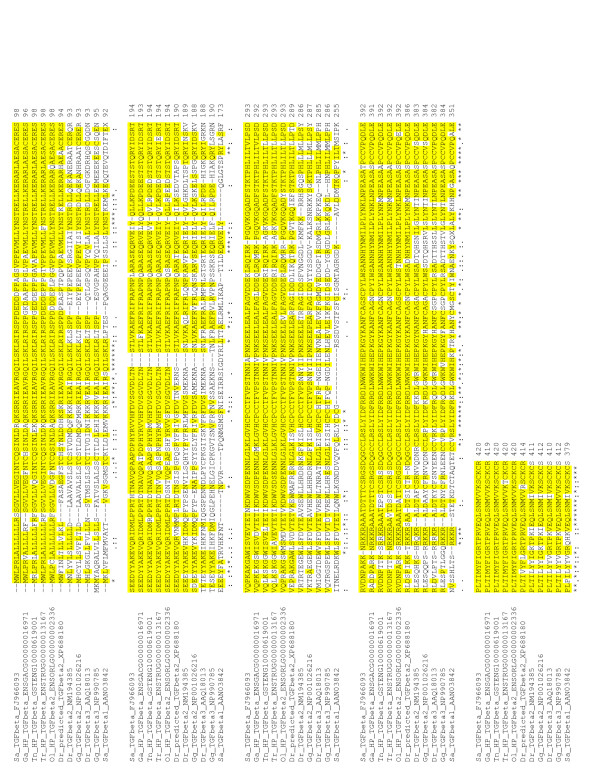
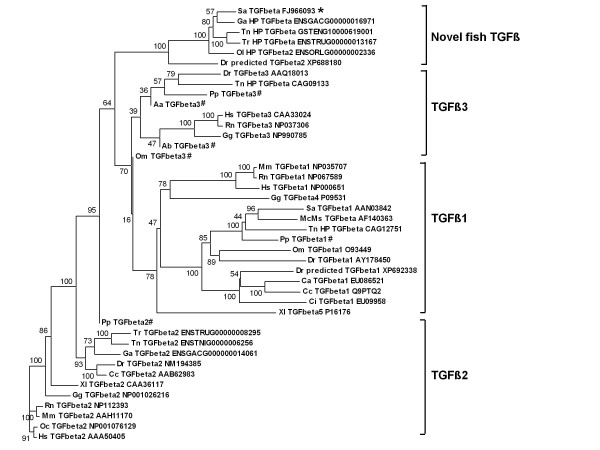
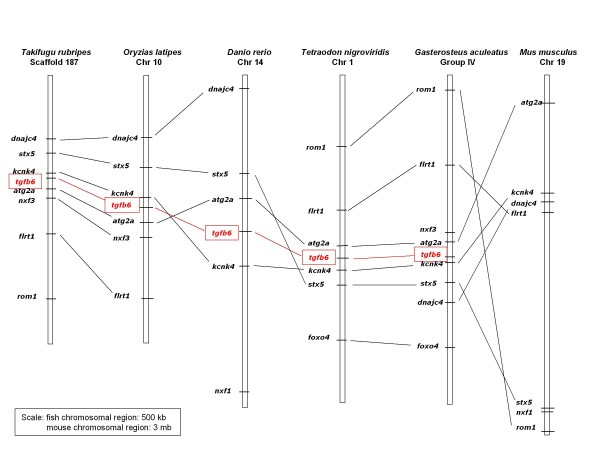
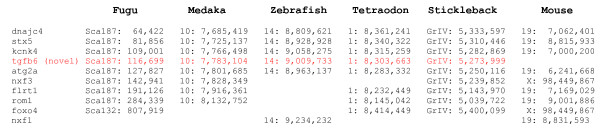
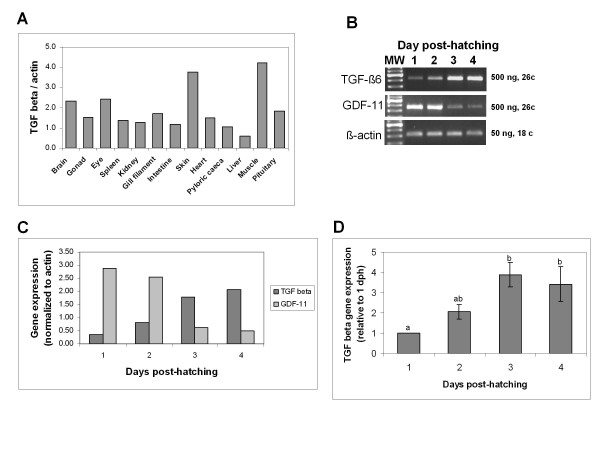
Here we report the molecular characterization, developmental and tissue expression and regulation by nutritional state of a novel TGF-beta gene from a marine fish, the gilthead sea bream Sparus aurata. S. aurata TGF-beta6 is encoded by seven exons 361, 164, 133, 111, 181, 154, and 156 bp in length and is translated into a 420-amino acid peptide. The exons are separated by six introns: >643, 415, 93, 1250, 425 and >287 bp in length. Although the gene organization is most similar to mouse and chicken TGF-beta2, the deduced amino acid sequence represents a novel TGF-beta that is unique to fish that we have named TGF-beta6. The molecule has conserved putative functional residues, including a cleavage motif (RXXR) and nine cysteine residues that are characteristic of TGF-beta. Semi-quantitative analysis of TGF-beta6 expression revealed differential expression in various tissues of adult fish with high levels in skin and muscle, very low levels in liver, and moderate levels in other tissues including brain, eye and pituitary. TGF-beta6 is expressed in larvae on day of hatching and increases as development progresses. A fasting period of five days of juvenile fish resulted in increased levels of TGF-beta6 expression in white skeletal muscle compared to that in fed fish, which was slightly attenuated by one injection of growth hormone.
Our findings provide valuable insights about genomic information and nutritional regulation of TGF-beta6 which will aid the further investigation of the S. aurata TGF-beta6 gene in association with muscle growth. The finding of a novel TGF-beta6 molecule, unique to fish, will contribute to the understanding of the evolution of the TGF-beta family of cytokines in vertebrates.
转化生长因子-β(TGF-β)家族由二聚体蛋白组成,这些蛋白调节许多细胞类型的生长、分化和代谢,包括哺乳动物的骨骼肌。TGF-βs 在鱼类肌肉生长中的潜在作用尚不清楚。
本文报道了来自海洋鱼类真鲷 Sparus aurata 的一种新型 TGF-β 基因的分子特征、发育和组织表达以及营养状态的调节。S. aurata TGF-β6 由七个外显子编码,长度分别为 361、164、133、111、181、154 和 156bp,翻译成 420 个氨基酸的肽。外显子由六个内含子隔开:长度分别为 >643、415、93、1250、425 和 >287bp。尽管基因组织与小鼠和鸡 TGF-β2 最为相似,但推导的氨基酸序列代表了一种独特的鱼类 TGF-β,我们将其命名为 TGF-β6。该分子具有保守的假定功能残基,包括切割基序(RXXR)和 9 个半胱氨酸残基,这是 TGF-β 的特征。TGF-β6 在成年鱼的各种组织中的表达进行半定量分析,结果显示皮肤和肌肉中表达水平较高,肝脏中表达水平较低,其他组织包括脑、眼和垂体中的表达水平适中。TGF-β6 在孵化当天的幼虫中表达,并随着发育的进行而增加。幼鱼禁食 5 天导致白色骨骼肌中 TGF-β6 的表达水平升高,与喂食鱼相比略有增加,而一次注射生长激素则略有减弱。
我们的研究结果提供了有关 TGF-β6 的基因组信息和营养调节的有价值的见解,这将有助于进一步研究 S. aurata TGF-β6 基因与肌肉生长的关系。发现一种独特的鱼类 TGF-β6 分子将有助于理解脊椎动物中 TGF-β 细胞因子家族的进化。