Clinical Research Department, Lilly, SA, Madrid, Spain.
Cardiovasc Diabetol. 2011 Feb 11;10:18. doi: 10.1186/1475-2840-10-18.
Type 2 diabetes (T2D) is strongly associated with cardiovascular risk and requires medications that improve glycemic control and other cardiovascular risk factors. The authors aimed to assess the relative effectiveness of pioglitazone (Pio), metformin (Met) and any sulfonylurea (SU) combinations in non-insulin-treated T2D patients who were failing previous hypoglycemic therapy.
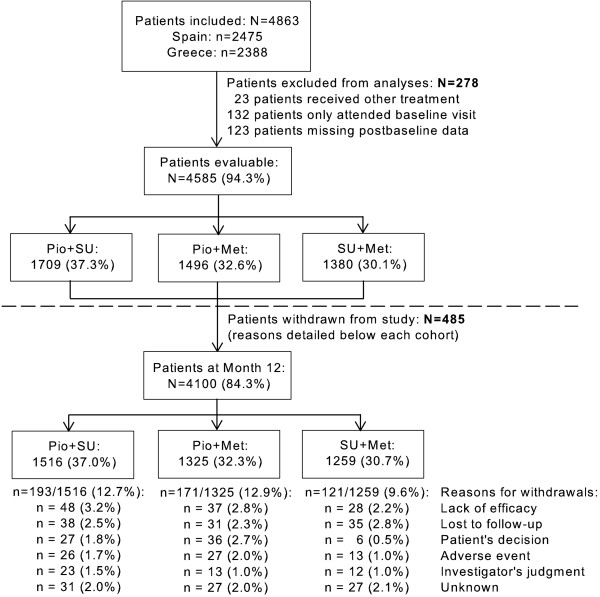
Over a 1-year period, two multicenter, open-labeled, controlled, 1-year, prospective, observational studies evaluated patients with T2D (n = 4585) from routine clinical practice in Spain and Greece with the same protocol. Patients were eligible if they had been prescribed Pio + SU, Pio + Met or SU + Met serving as a control cohort, once they had failed with previous therapy. Anthropometric measurements, lipid and glycemic profiles, blood pressure, and the proportions of patients at microvascular and macrovascular risk were assessed.
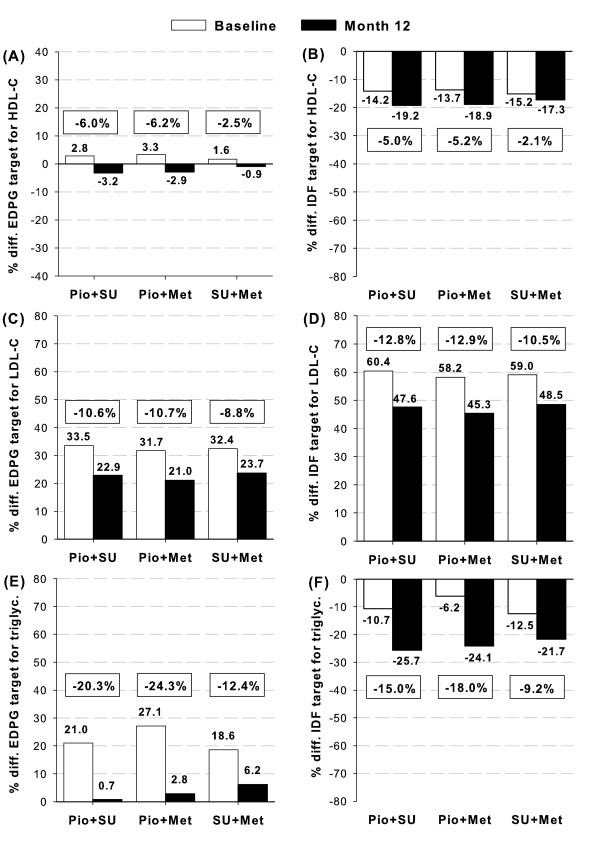
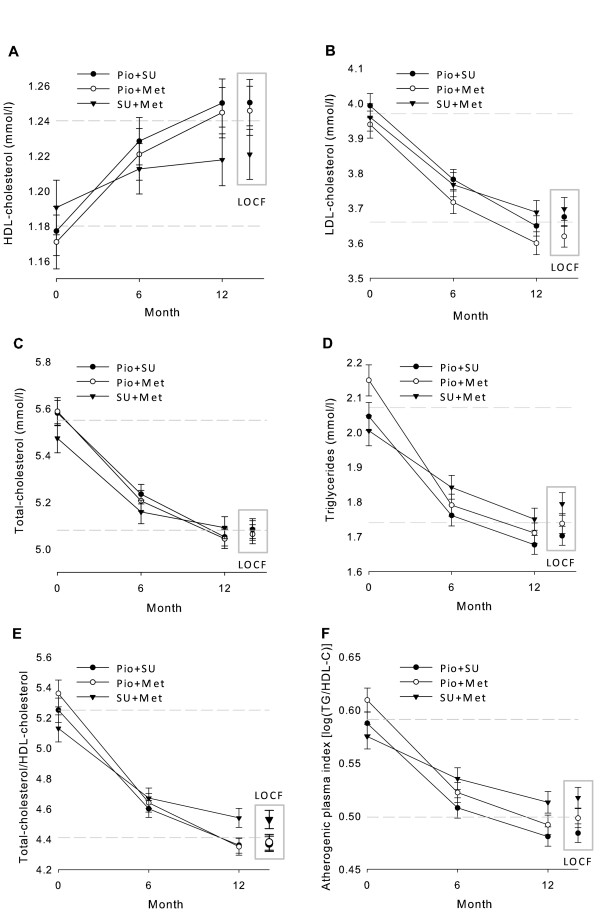
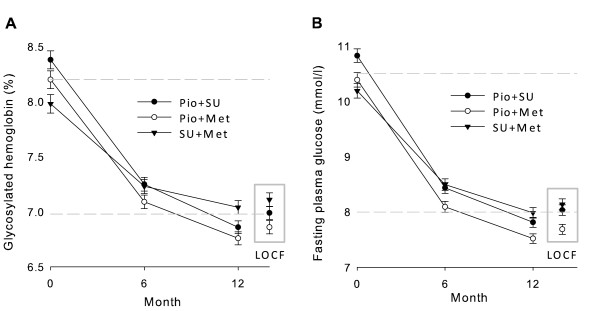
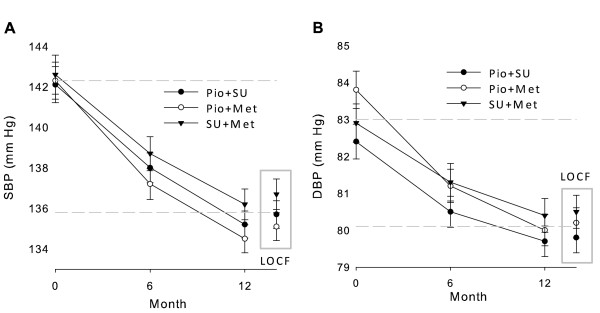
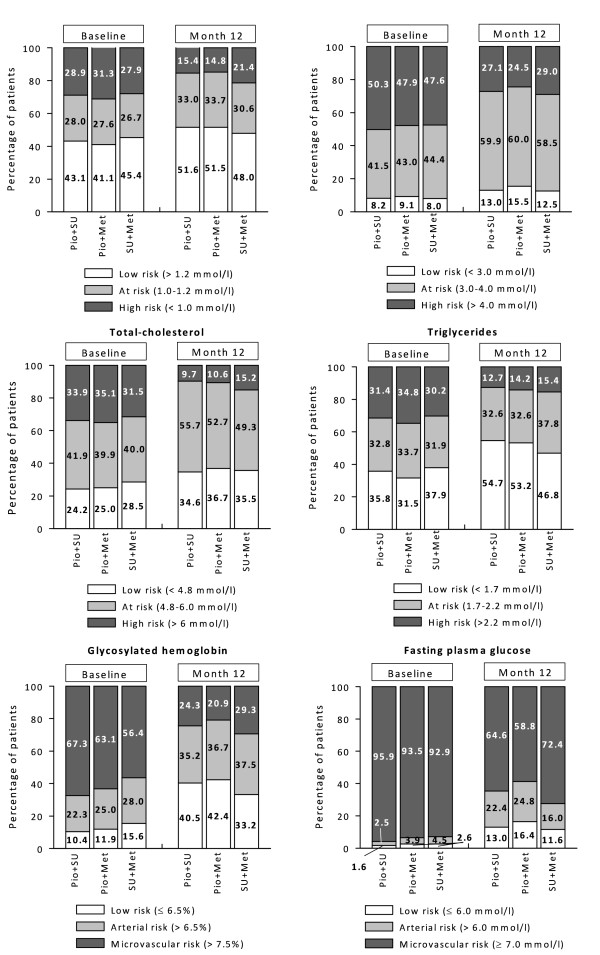
All study treatment combinations rendered progressive 6-month and 12-month lipid, glycemic, and blood pressure improvements. Pio combinations, especially Pio + Met, were associated with increases in HDL-cholesterol and decreases in triglycerides and in the atherogenic index of plasma. The proportion of patients at high risk decreased after 12 months in all study cohorts. Minor weight changes (gain or loss) and no treatment-related fractures occurred during the study. The safety profile was good and proved similar among treatments, except for more hypoglycemic episodes in patients receiving SU and for the occurrence of edema in patients using Pio combinations. Serious cardiovascular events were rarely reported.
In patients with T2D failing prior hypoglycemic therapies, Pio combinations with SU or Met (especially Pio + Met) improved blood lipid and glycemic profiles, decreasing the proportion of patients with a high microvascular or macrovascular risk. The combination of Pio with SU or Met may therefore be recommended for T2D second-line therapy in the routine clinical practice, particularly in patients with dyslipidemia.
2 型糖尿病(T2D)与心血管风险密切相关,需要药物来改善血糖控制和其他心血管风险因素。作者旨在评估吡格列酮(Pio)、二甲双胍(Met)和任何磺酰脲类药物(SU)联合治疗在之前低血糖治疗失败的非胰岛素治疗 T2D 患者中的相对有效性。
在为期 1 年的时间里,两项多中心、开放标签、对照、为期 1 年、前瞻性、观察性研究评估了来自西班牙和希腊常规临床实践中的 4585 例 T2D 患者(n = 4585),使用相同的方案。如果患者之前接受过 Pio + SU、Pio + Met 或 SU + Met 治疗失败,且符合以下标准,则符合入组条件:可测量的身体质量指数(BMI)、血脂和血糖谱、血压以及微血管和大血管风险患者的比例。
所有研究治疗组合在 6 个月和 12 个月时均能逐渐改善血脂、血糖和血压。Pio 联合治疗,特别是 Pio + Met,可增加高密度脂蛋白胆固醇(HDL-C),降低甘油三酯(TG)和血浆致动脉粥样硬化指数。所有研究队列中,在 12 个月后,处于高风险的患者比例均下降。在研究期间,体重出现轻微变化(增加或减少),且未发生与治疗相关的骨折。安全性状况良好,在治疗组之间相似,除了接受 SU 治疗的患者发生更多低血糖事件和使用 Pio 联合治疗的患者发生水肿外。很少报告严重心血管事件。
在之前低血糖治疗失败的 T2D 患者中,SU 或 Met 与 Pio 的联合治疗(特别是 Pio + Met)改善了血脂和血糖谱,降低了处于高微血管或大血管风险的患者比例。因此,在常规临床实践中,对于 T2D 的二线治疗,Pio 与 SU 或 Met 的联合治疗可能是一种推荐选择,特别是对于血脂异常的患者。