Homer H
Mammalian Oocyte and Embryo Research Laboratory, Department of Cell and Developmental Biology, Division of Biosciences and Institute for Women's Health, University College London, London, UK.
Cytogenet Genome Res. 2011;133(2-4):209-22. doi: 10.1159/000324118. Epub 2011 Feb 17.
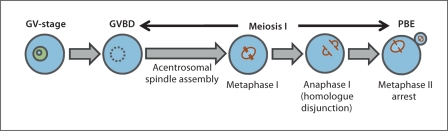
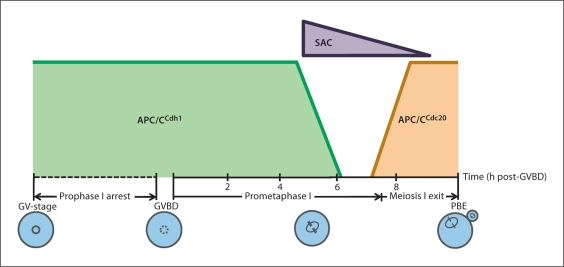
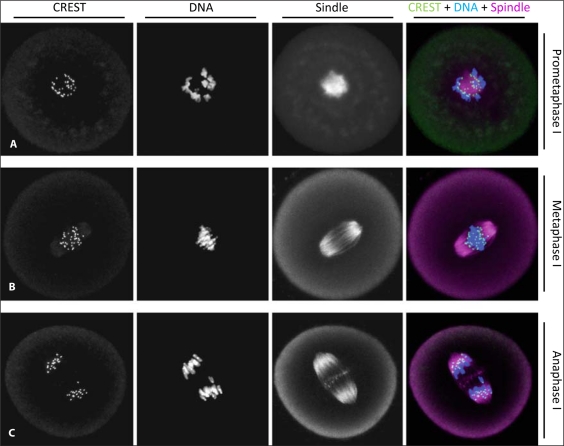
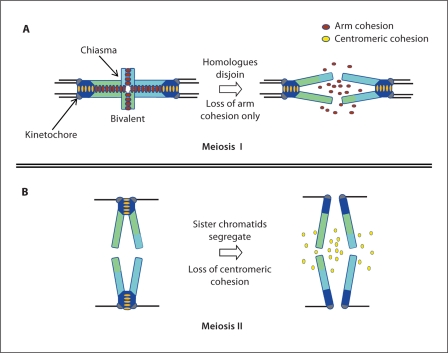
Mammalian oocytes execute a unique meiotic programme involving 2 arrest stages and an unusually protracted preamble to chromosome segregation during the first meiotic division (meiosis I). How mammalian oocytes successfully navigate their exceptional meiotic journey has long been a question of immense interest. Understanding the minutiae of female mammalian meiosis I is not merely of academic interest as 80-90% of human aneuploidy is the consequence of errors arising at this particular stage of oocyte maturation, a stage with a peculiar vulnerability to aging. Recent evidence indicates that oocytes employ many of the same cast of proteins during meiosis I as somatic cells do during mitosis, often to execute similar tasks, but intriguingly, occasionally delegate them to unexpected and unprecedented roles. This is epitomised by the master cell-cycle regulon, the anaphase-promoting complex or cyclosome (APC/C), acting in concert with a critical APC/C-targeted surveillance mechanism, the spindle assembly checkpoint (SAC). Together, the APC/C and the SAC are among the most influential entities overseeing the fidelity of cell-cycle progression and the precision of chromosome segregation. Here I review the current status of pivotal elements underpinning homologue disjunction in mammalian oocytes including spindle assembly, critical biochemical anaphase-initiating events, APC/C activity and SAC signalling along with contemporary findings relevant to progressive oocyte SAC dysfunction as a model for age-related human aneuploidy.
哺乳动物卵母细胞执行独特的减数分裂程序,包括两个停滞阶段,以及在第一次减数分裂(减数分裂I)期间染色体分离前异常漫长的准备阶段。哺乳动物卵母细胞如何成功完成其特殊的减数分裂之旅,长期以来一直是一个备受关注的问题。了解雌性哺乳动物减数分裂I的细节不仅具有学术意义,因为80%-90%的人类非整倍体是卵母细胞成熟这一特定阶段出现错误的结果,而这个阶段特别容易受到衰老的影响。最近的证据表明,卵母细胞在减数分裂I期间使用的许多蛋白质与体细胞在有丝分裂期间使用的相同,通常执行相似的任务,但有趣的是,偶尔会将它们用于意想不到和前所未有的角色。这集中体现在主要的细胞周期调控因子后期促进复合体或细胞周期体(APC/C)与关键的APC/C靶向监测机制纺锤体组装检查点(SAC)协同作用上。APC/C和SAC共同是监督细胞周期进程保真度和染色体分离精度最具影响力的因素之一。在这里,我回顾了哺乳动物卵母细胞中同源染色体分离关键要素的现状,包括纺锤体组装、关键的生化后期启动事件、APC/C活性和SAC信号传导,以及与渐进性卵母细胞SAC功能障碍相关的当代发现,该功能障碍可作为与年龄相关的人类非整倍体的模型。