Department of Biology, M.I.T., Cambridge, Massachusetts 02139, USA.
Nature. 2011 Feb 24;470(7335):554-7. doi: 10.1038/nature09758.
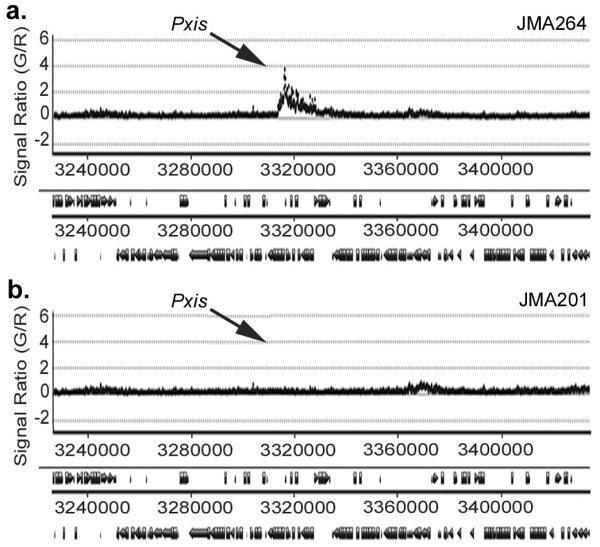
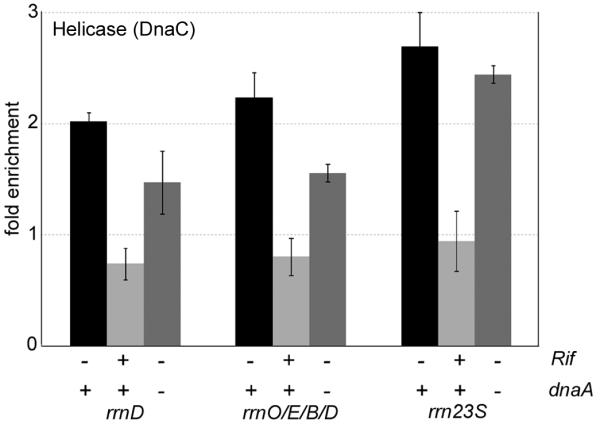
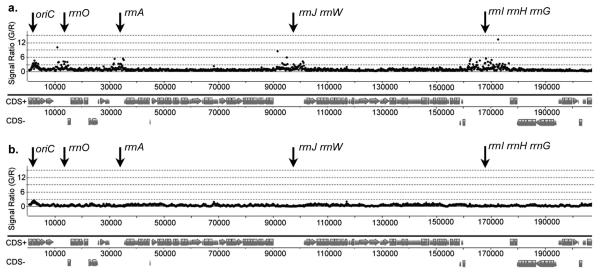
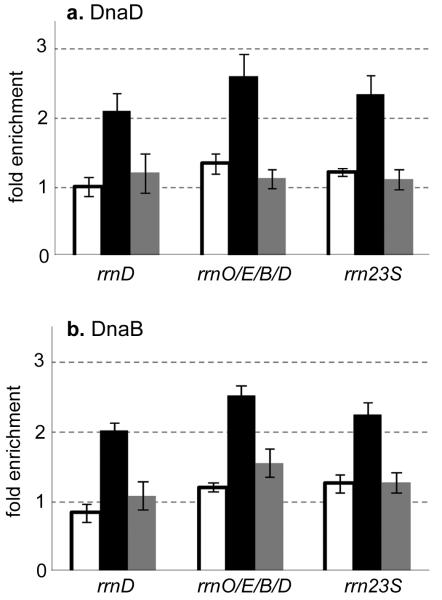
Head-on encounters between the replication and transcription machineries on the lagging DNA strand can lead to replication fork arrest and genomic instability. To avoid head-on encounters, most genes, especially essential and highly transcribed genes, are encoded on the leading strand such that transcription and replication are co-directional. Virtually all bacteria have the highly expressed ribosomal RNA genes co-directional with replication. In bacteria, co-directional encounters seem inevitable because the rate of replication is about 10-20-fold greater than the rate of transcription. However, these encounters are generally thought to be benign. Biochemical analyses indicate that head-on encounters are more deleterious than co-directional encounters and that in both situations, replication resumes without the need for any auxiliary restart proteins, at least in vitro. Here we show that in vivo, co-directional transcription can disrupt replication, leading to the involvement of replication restart proteins. We found that highly transcribed rRNA genes are hotspots for co-directional conflicts between replication and transcription in rapidly growing Bacillus subtilis cells. We observed a transcription-dependent increase in association of the replicative helicase and replication restart proteins where head-on and co-directional conflicts occur. Our results indicate that there are co-directional conflicts between replication and transcription in vivo. Furthermore, in contrast to the findings in vitro, the replication restart machinery is involved in vivo in resolving potentially deleterious encounters due to head-on and co-directional conflicts. These conflicts probably occur in many organisms and at many chromosomal locations and help to explain the presence of important auxiliary proteins involved in replication restart and in helping to clear a path along the DNA for the replisome.
滞后 DNA 链上复制和转录机制的正面碰撞会导致复制叉停滞和基因组不稳定性。为了避免正面碰撞,大多数基因,尤其是必需的和高度转录的基因,都被编码在先导链上,从而使转录和复制是共方向的。实际上,所有细菌的高度表达的核糖体 RNA 基因都与复制共方向。在细菌中,共方向的碰撞似乎是不可避免的,因为复制的速度大约是转录速度的 10-20 倍。然而,这些碰撞通常被认为是良性的。生化分析表明,正面碰撞比共方向碰撞更具危害性,而且在这两种情况下,复制都可以在不需要任何辅助重起始蛋白的情况下恢复,至少在体外是这样。在这里,我们表明在体内,共方向的转录可以破坏复制,导致复制重起始蛋白的参与。我们发现,在快速生长的枯草芽孢杆菌细胞中,高度转录的 rRNA 基因是复制和转录之间共方向冲突的热点。我们观察到,在发生正面碰撞和共方向冲突的地方,复制解旋酶和复制重起始蛋白的结合会随着转录的增加而增加。我们的结果表明,在体内存在复制和转录之间的共方向冲突。此外,与体外的发现相反,复制重起始机制在体内参与解决由于正面碰撞和共方向冲突而产生的潜在有害碰撞。这些冲突可能发生在许多生物体和许多染色体位置,并有助于解释参与复制重起始和帮助为复制体清除 DNA 路径的重要辅助蛋白的存在。