Department of Pediatrics, Yale University School of Medicine, New Haven, CT 06520, USA.
Virol J. 2011 Feb 25;8:84. doi: 10.1186/1743-422X-8-84.
Epstein-Barr virus (EBV)-driven B cell proliferation is critical to its subsequent persistence in the host and is a key event in the development of EBV-associated B cell diseases. Thus, inquiry into early cellular events that precede EBV-driven proliferation of B cells is essential for understanding the processes that can lead to EBV-associated B cell diseases.
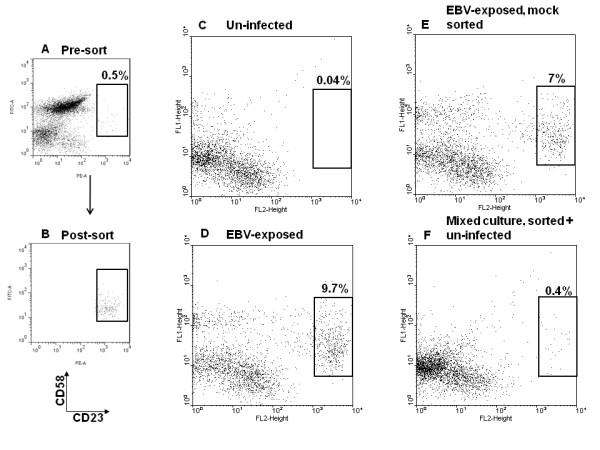
Infection with high titers of EBV of mixed, primary B cells in different stages of differentiation occurs during primary EBV infection and in the setting of T cell-immunocompromise that predisposes to development of EBV-lymphoproliferative diseases. Using an ex vivo system that recapitulates these conditions of infection, we correlated expression of selected B cell-surface markers and intracellular cytokines with expression of EBV latency genes and cell proliferation.
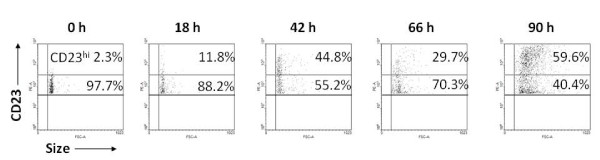
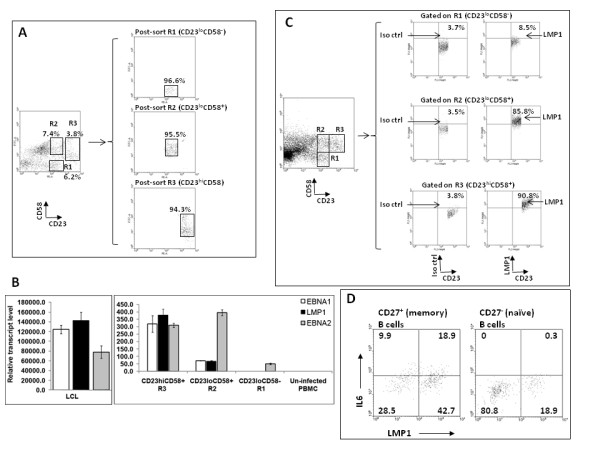
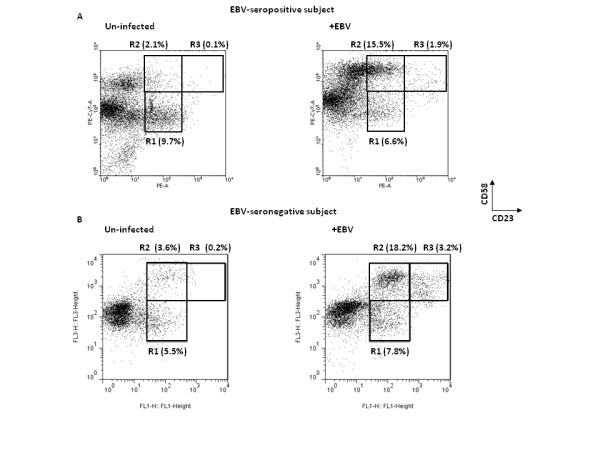
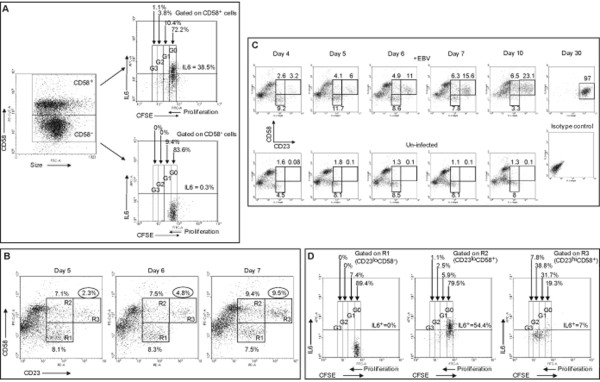
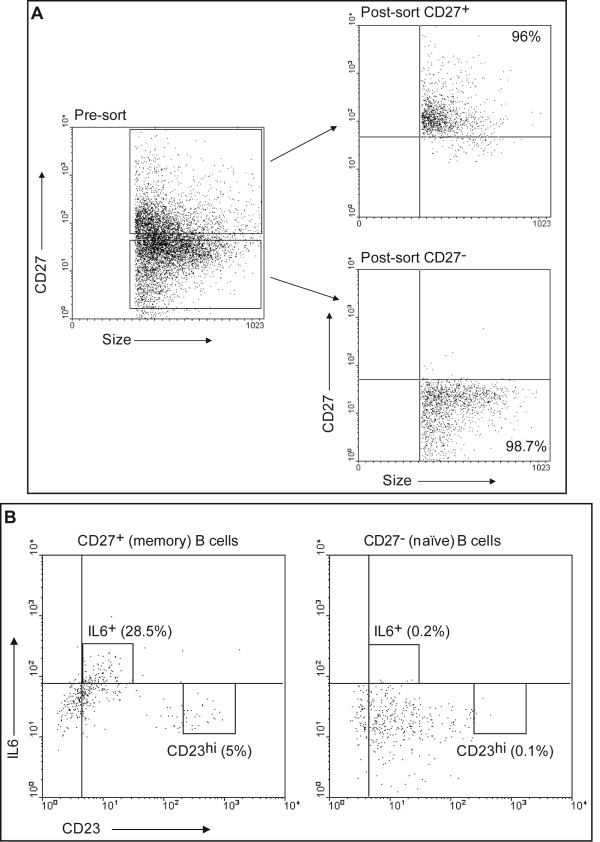
We identified CD23, CD58, and IL6, as molecules expressed at early times after EBV-infection. EBV differentially infected B cells into two distinct sub-populations of latently infected CD23+ cells: one fraction, marked as CD23hiCD58+IL6- by day 3, subsequently proliferated; another fraction, marked as CD23loCD58+, expressed IL6, a B cell growth factor, but failed to proliferate. High levels of LMP1, a critical viral oncoprotein, were expressed in individual CD23hiCD58+ and CD23loCD58+ cells, demonstrating that reduced levels of LMP1 did not explain the lack of proliferation of CD23loCD58+ cells. Differentiation stage of B cells did not appear to govern this dichotomy in outcome either. Memory or naïve B cells did not exclusively give rise to either CD23hi or IL6-expressing cells; rather memory B cells gave rise to both sub-populations of cells.
B cells are differentially susceptible to EBV-mediated proliferation despite expression of viral gene products known to be critical for continuous B cell growth. Cellular events, in addition to viral gene expression, likely play a critical role in determining the outcome of EBV infection. By indentifying cells predicted to undergo EBV-mediated proliferation, our study provides new avenues of investigation into EBV pathogenesis.
Epstein-Barr 病毒(EBV)驱动的 B 细胞增殖对于其在宿主中的后续持续存在至关重要,并且是 EBV 相关 B 细胞疾病发展的关键事件。因此,探究 EBV 驱动 B 细胞增殖之前的早期细胞事件对于理解可能导致 EBV 相关 B 细胞疾病的过程至关重要。
在原发性 EBV 感染期间以及在易发生 EBV 淋巴增生性疾病的 T 细胞免疫功能受损的情况下,混合高滴度 EBV 感染处于不同分化阶段的原发性 B 细胞。使用再现这些感染条件的体外系统,我们将选定的 B 细胞表面标志物和细胞内细胞因子的表达与 EBV 潜伏期基因的表达和细胞增殖相关联。
我们鉴定了 EBV 感染后早期表达的 CD23、CD58 和 IL6 等分子。EBV 以不同的方式将 B 细胞感染成两种不同的潜伏感染 CD23+细胞亚群:一个亚群,在第 3 天被标记为 CD23hiCD58+IL6-,随后增殖;另一个亚群,标记为 CD23loCD58+,表达 IL6,一种 B 细胞生长因子,但未能增殖。单个 CD23hiCD58+和 CD23loCD58+细胞中表达高水平的关键病毒癌蛋白 LMP1,表明 LMP1 水平降低并不能解释 CD23loCD58+细胞缺乏增殖的原因。B 细胞的分化阶段似乎也没有主导这种结果的二分法。记忆或幼稚 B 细胞并不专门产生 CD23hi 或 IL6 表达细胞;相反,记忆 B 细胞产生了这两种细胞亚群。
尽管表达了已知对持续 B 细胞生长至关重要的病毒基因产物,但 B 细胞对 EBV 介导的增殖具有不同的易感性。除了病毒基因表达之外,细胞事件可能在决定 EBV 感染的结果方面发挥关键作用。通过鉴定预测发生 EBV 介导的增殖的细胞,我们的研究为 EBV 发病机制的研究提供了新的途径。