Department of Biology, Emory University, 1510 Clifton Road, NE Atlanta, Georgia 30322, USA.
Nat Rev Genet. 2011 Apr;12(4):283-93. doi: 10.1038/nrg2957. Epub 2011 Mar 1.
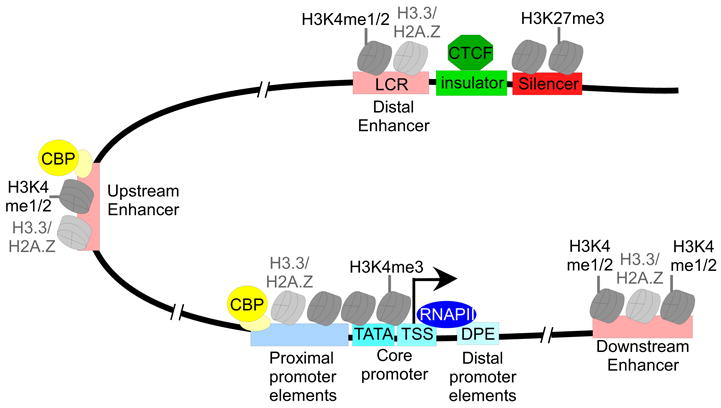
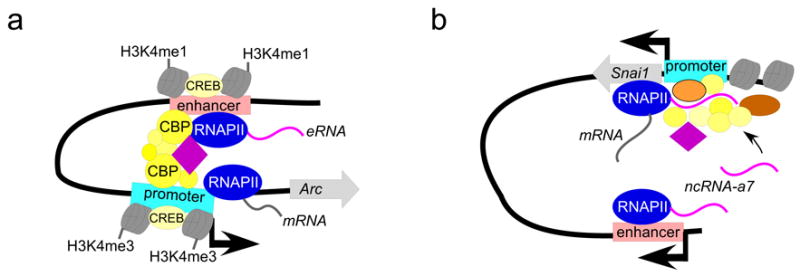
Enhancer function underlies regulatory processes by which cells establish patterns of gene expression. Recent results suggest that many enhancers are specified by particular chromatin marks in pluripotent cells, which may be modified later in development to alter patterns of gene expression and cell differentiation choices. These marks may contribute to the repertoire of epigenetic mechanisms responsible for cellular memory and determine the timing of transcription factor accessibility to the enhancer. Mechanistically, cohesin and non-coding RNAs are emerging as crucial players responsible for facilitating enhancer-promoter interactions at some genes. Surprisingly, these interactions may be required not only to facilitate initiation of transcription but also to activate the release of RNA polymerase II (RNAPII) from promoter-proximal pausing.
增强子功能是细胞建立基因表达模式的调控过程的基础。最近的研究结果表明,许多增强子是由多能细胞中特定的染色质标记所决定的,这些标记可能在发育后期被修饰,以改变基因表达模式和细胞分化选择。这些标记可能有助于细胞记忆的表观遗传机制的组成部分,并决定转录因子接近增强子的时间。从机制上讲,黏合蛋白(cohesin)和非编码 RNA 作为关键的调控因子,负责促进一些基因的增强子-启动子相互作用。令人惊讶的是,这些相互作用不仅需要促进转录的起始,而且还需要激活 RNA 聚合酶 II(RNAPII)从启动子近端暂停的释放。