Department of Neurology, Medical Centre Haaglanden, Postbus 432, 2501 CK, The Hague, The Netherlands,
J Neurol. 2011 Jun;258(6):1098-104. doi: 10.1007/s00415-010-5892-x. Epub 2011 Mar 4.
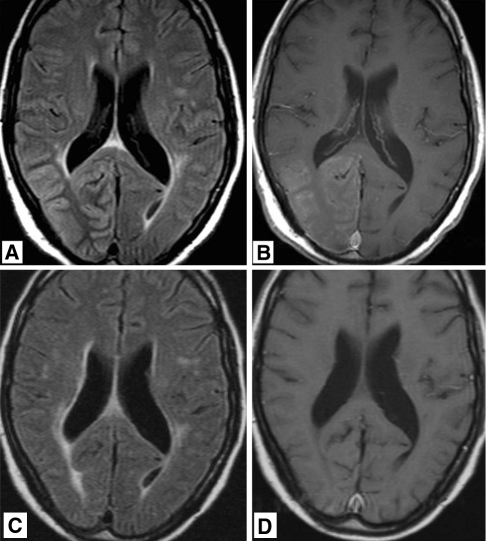
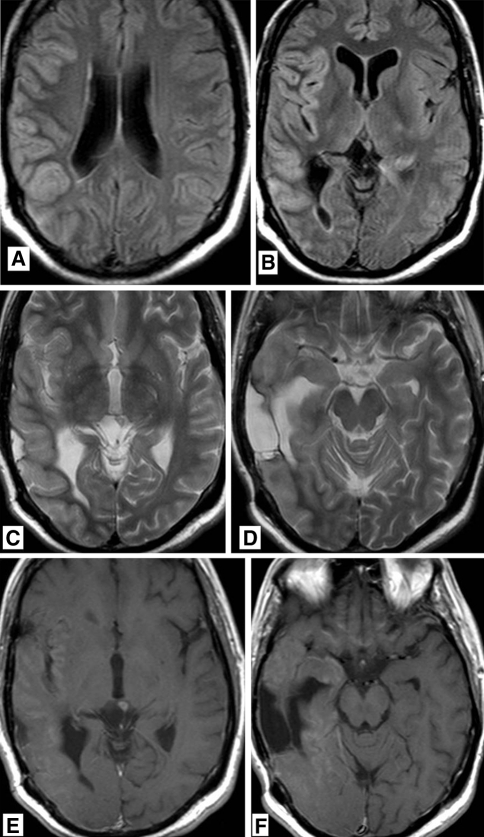
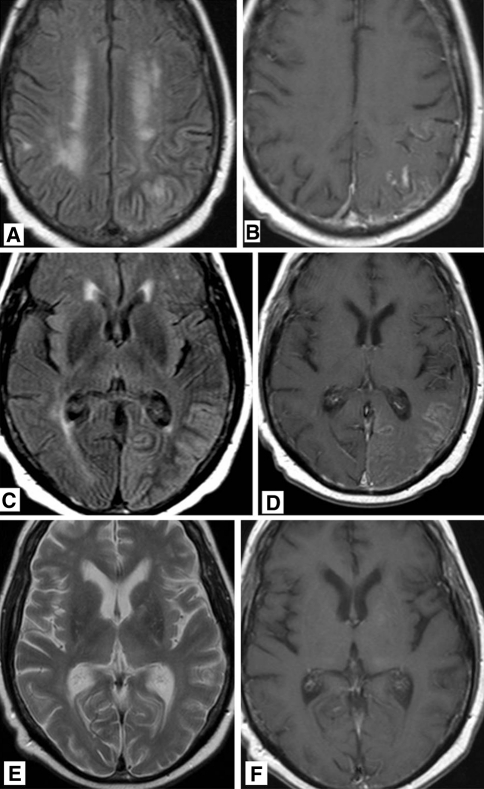
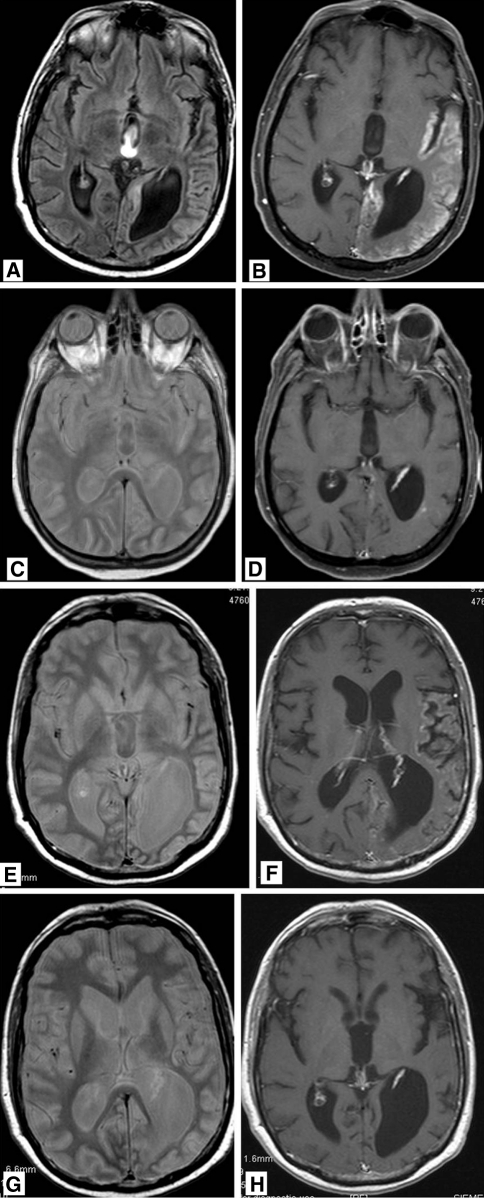
With intensified treatment leading to longer survival, complications of therapy for brain tumours are more frequently observed. Regarding radiation therapy, progressive and irreversible white matter disease with cognitive decline is most feared. We report on four patients with reversible clinical and radiological features occurring years after radiation for brain tumours, suggestive for the so called SMART syndrome (stroke-like migraine attacks after radiation therapy). All four patients (males, age 36-60 years) had been treated with focal brain radiation for a primary brain tumour or with whole-brain radiation therapy for brain metastases. Ranging from 2 to 10 years following radiation therapy patients presented with headache and focal neurological deficits, suggestive for tumour recurrence. Two patients also presented with focal seizures. MRI demonstrated typical cortical swelling and contrast enhancement, primarily in the parieto-occipital region. On follow-up both clinical and MRI features improved spontaneously. Three patients eventually proved to have tumour recurrence. The clinical and radiological picture of these patients is compatible with the SMART syndrome, a rare complication of radiation therapy which is probably under recognized in brain tumour patients. The pathophysiology of the SMART syndrome is poorly understood but bears similarities with the posterior reversible encephalopathy syndrome (PRES). These four cases underline that the SMART syndrome should be considered in patients formerly treated with radiation therapy for brain tumours, who present with new neurologic deficits. Before the diagnosis of SMART syndrome can be established other causes, such as local tumour recurrence, leptomeningeal disease or ischemic disease should be ruled out.
随着治疗强度的增加导致生存时间延长,脑肿瘤治疗的并发症也越来越常见。关于放射治疗,最令人担心的是进行性和不可逆的白质疾病伴认知能力下降。我们报告了 4 例患者,他们在脑肿瘤放疗多年后出现可逆的临床和影像学特征,提示所谓的 SMART 综合征(放疗后类似中风样偏头痛发作)。这 4 名患者(男性,年龄 36-60 岁)均因原发性脑肿瘤接受局部脑放疗或脑转移瘤行全脑放疗。在放疗后 2-10 年,患者出现头痛和局灶性神经功能缺损,提示肿瘤复发。2 例患者还出现局灶性癫痫发作。MRI 显示典型的皮质肿胀和对比增强,主要位于顶枕叶区域。随访时,临床和 MRI 特征均自发改善。3 例患者最终证实有肿瘤复发。这些患者的临床和影像学表现与 SMART 综合征相符,这是放疗的一种罕见并发症,在脑肿瘤患者中可能未被充分认识。SMART 综合征的病理生理学尚不清楚,但与后部可逆性脑病综合征(PRES)有相似之处。这 4 例病例强调,在以前接受过脑肿瘤放疗的患者中,出现新的神经功能缺损时,应考虑 SMART 综合征。在确立 SMART 综合征的诊断之前,应排除其他原因,如局部肿瘤复发、软脑膜疾病或缺血性疾病。