Department of Clinical Pharmacology, Faculty of Pharmaceutical Sciences, Niigata University of Pharmacy and Applied Life Sciences, Japan.
Int J Biol Sci. 2011 Feb 11;7(2):154-67. doi: 10.7150/ijbs.7.154.
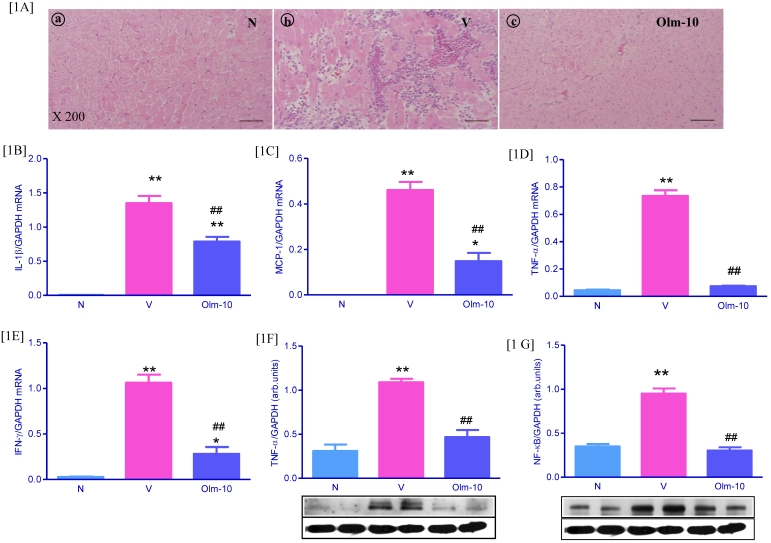
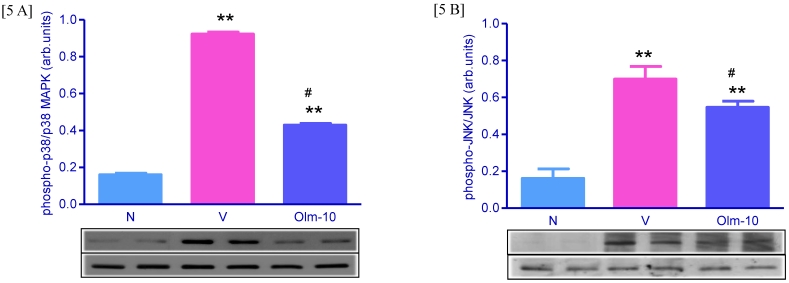
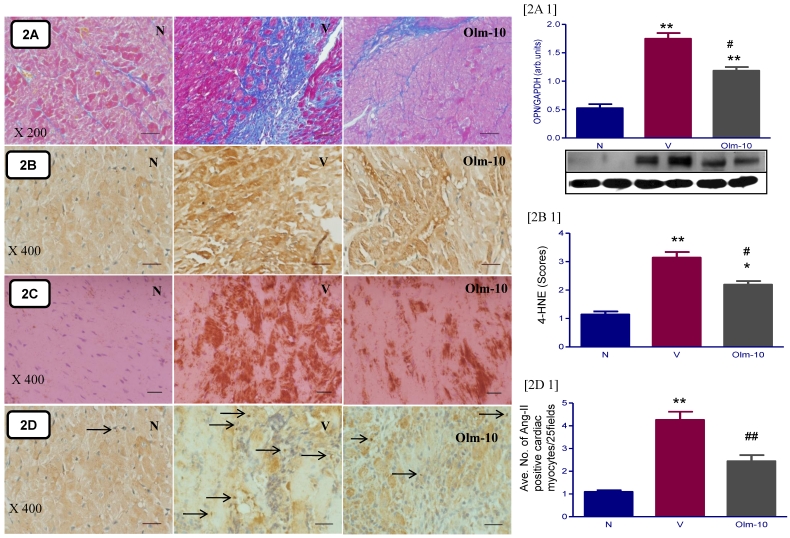
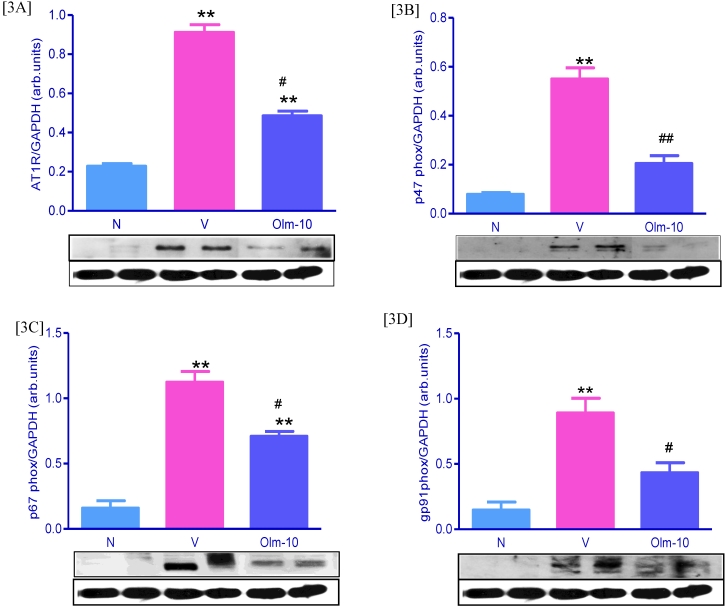
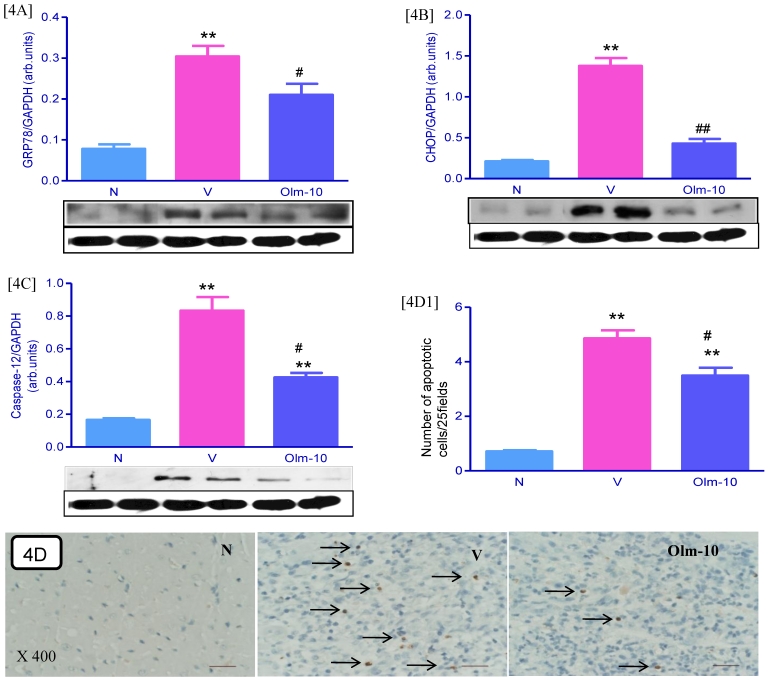
Studies have demonstrated that angiotensin II has been involved in immune and inflammatory responses which might contribute to the pathogenesis of immune-mediated diseases. Recent evidence suggests that oxidative stress may play a role in myocarditis. Here, we investigated whether olmesartan, an AT(1)R antagonist protects against experimental autoimmune myocarditis (EAM) by suppression of oxidative stress, endoplasmic reticulum (ER) stress and inflammatory cytokines. EAM was induced in Lewis rats by immunization with porcine cardiac myosin, were divided into two groups and treated with either olmesartan (10 mg/kg/day) or vehicle for a period of 21 days. Myocardial functional parameters measured by hemodynamic and echocardiographic analyses were significantly improved by the treatment with olmesartan compared with those of vehicle-treated rats. Treatment with olmesartan attenuated the myocardial mRNA expressions of proinflammatory cytokines, [Interleukin (IL)-1β, monocyte chemoattractant protein-1, tumor necrosis factor-α and interferon-γ)] and the protein expression of tumor necrosis factor-α compared with that of vehicle-treated rats. Myocardial protein expressions of AT(1)R, NADPH oxidase subunits (p47phox, p67phox, gp91phox) and the expression of markers of oxidative stress (3-nitrotyrosine and 4-hydroxy-2-nonenal), and the cardiac apoptosis were also significantly decreased by the treatment with olmesartan compared with those of vehicle-treated rats. Furthermore, olmesartan treatment down-regulated the myocardial expressions of glucose regulated protein-78, growth arrest and DNA damage-inducible gene, caspase-12, phospho-p38 mitogen-activated protein kinase (MAPK) and phospho-JNK. These findings suggest that olmesartan protects against EAM in rats, at least in part via suppression of oxidative stress, ER stress and inflammatory cytokines.
研究表明血管紧张素 II 参与了免疫和炎症反应,这可能有助于免疫介导性疾病的发病机制。最近的证据表明,氧化应激可能在心肌炎中起作用。在这里,我们研究了血管紧张素 II 受体拮抗剂奥美沙坦是否通过抑制氧化应激、内质网应激和炎症细胞因子来预防实验性自身免疫性心肌炎 (EAM)。通过用猪心肌肌球蛋白免疫诱导 Lewis 大鼠产生 EAM,将其分为两组,并用奥美沙坦(10mg/kg/天)或载体治疗 21 天。与载体处理的大鼠相比,奥美沙坦治疗显着改善了通过血流动力学和超声心动图分析测量的心肌功能参数。奥美沙坦治疗可减轻心肌促炎细胞因子 [白细胞介素 (IL)-1β、单核细胞趋化蛋白-1、肿瘤坏死因子-α和干扰素-γ] 和肿瘤坏死因子-α的心肌 mRNA 表达与载体处理的大鼠相比。与载体处理的大鼠相比,奥美沙坦治疗还显着降低了心肌 AT(1)R、NADPH 氧化酶亚基 (p47phox、p67phox、gp91phox) 和氧化应激标志物(3-硝基酪氨酸和 4-羟基-2-壬烯醛)的蛋白表达以及心脏细胞凋亡。此外,奥美沙坦治疗还下调了心肌葡萄糖调节蛋白-78、生长停滞和 DNA 损伤诱导基因、半胱天冬酶-12、磷酸化 p38 丝裂原活化蛋白激酶 (MAPK) 和磷酸化 JNK 的表达。这些发现表明奥美沙坦可预防大鼠 EAM,至少部分通过抑制氧化应激、内质网应激和炎症细胞因子。