Department of Pharmacy, Faculty of Medical Sciences, University of Kragujevac, 34000 Kragujevac, Serbia.
Department of Human Pathology, First Moscow State Medical University I.M. Sechenov, Moscow, Russia.
Oxid Med Cell Longev. 2022 Feb 28;2022:1344946. doi: 10.1155/2022/1344946. eCollection 2022.
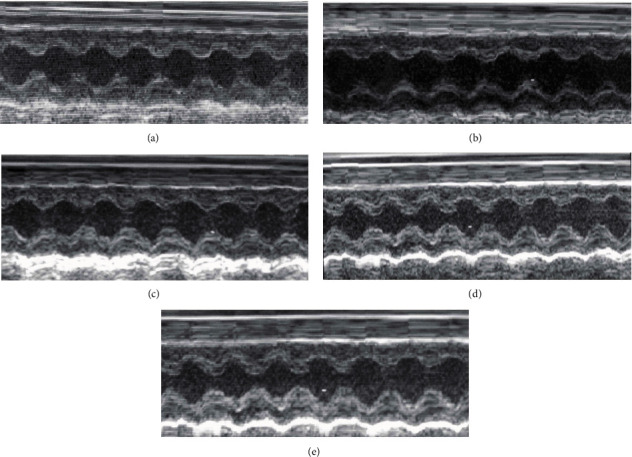
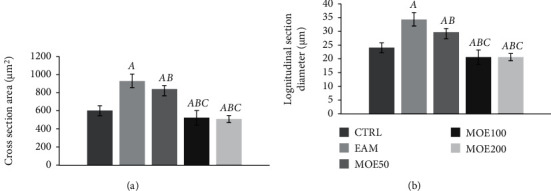
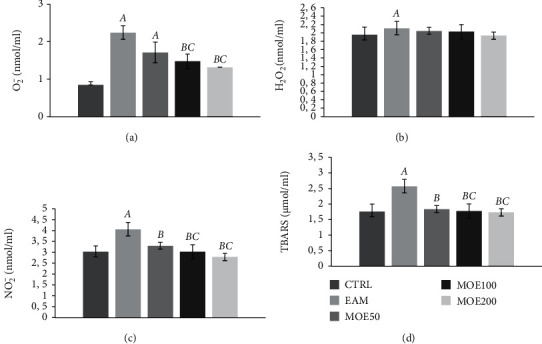
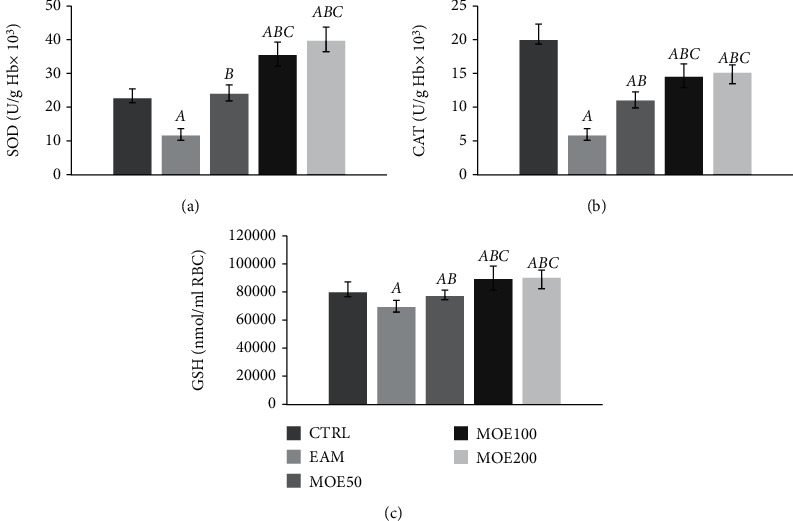
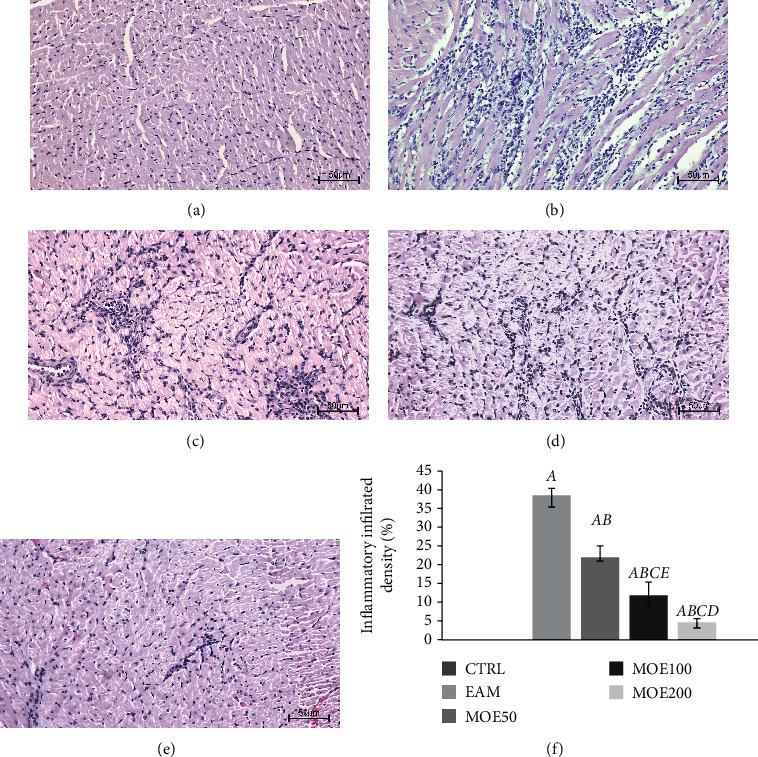
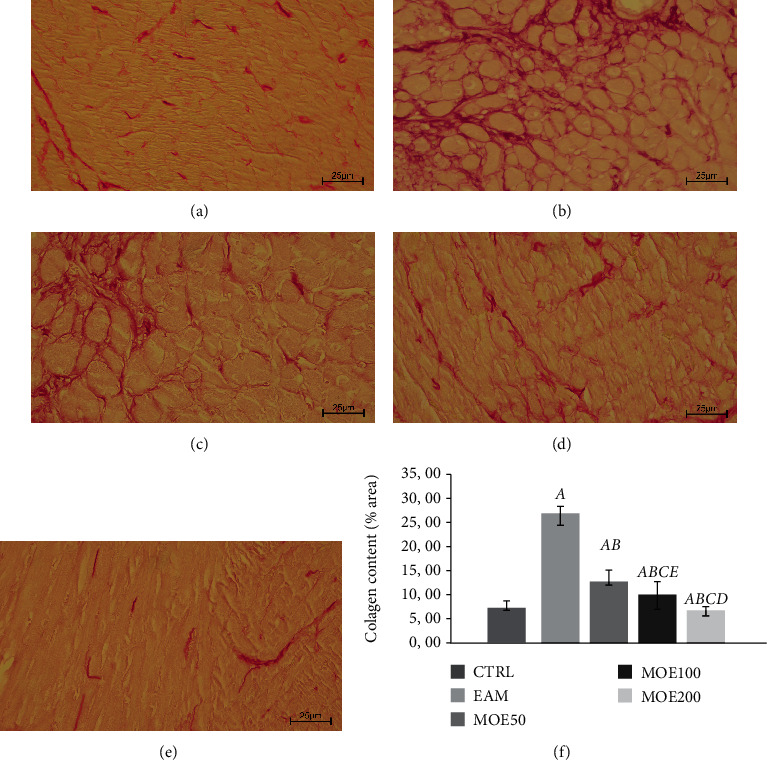
Due to existing evidence regarding antioxidant and anti-inflammatory effects of (MOEs), this study was aimed at investigating the potential of ethanolic MOE to prevent the development of myocarditis and its ability to ameliorate the severity of experimental autoimmune myocarditis (EAM) by investigating MOE effects on cardiac function, structure, morphology, and oxidative stress parameters. A total of 50 7-week-old male rats were enrolled in the study and randomly allocated into the following groups: CTRL, nontreated healthy rats; EAM, nontreated rats with EAM; MOE50, MOE100, and MOE200, rats with EAM treated with either 50, 100, or 200 mg/kg of MOE for 3 weeks . Myocarditis was induced by immunization of the rats with porcine myocardial myosin (0.5 mg) emulsion on day 0. Cardiac function and dimensions of the left ventricle (LV) were assessed via echocardiography. Additionally, the blood pressure and heart rate were measured. On day 21, rats were sacrificed and the hearts were isolated for further histopathological analyses (H/E and Picrosirius red staining). The blood samples were collected to determine oxidative stress parameters. The EAM group characteristically showed greater LV wall thickness and lower ejection fraction (50.33 ± 7.94% vs. 84.81 ± 7.74%) and fractional shortening compared to CTRL ( < 0.05). MOE significantly improved echocardiographic parameters (EF in MOE200 81.44 ± 5.51%) and also reduced inflammatory infiltrate (by 88.46%; < 0.001) and collagen content (by 76.39%; < 0.001) in the heart tissues, especially in the MOE200 group compared to the EAM group. In addition, MOEs induced a significant decrease of prooxidants production (O , HO, and TBARS) and improved antioxidant defense system via increase in GSH, SOD, and CAT compared to EAM, with medium and high dose being more effective than low dose ( < 0.05). The present study suggests that ethanolic MOEs, especially in a 200 mg/kg dose, improve cardiac function and myocardial architecture, possibly via oxidative stress mitigation, thus preventing heart remodeling, development of dilated cardiomyopathy, and subsequent heart failure connected with EAM. MOEs might be considered as a potentially helpful adjuvant therapy in patients with autoimmune myocarditis.
由于现有的关于(MOE)抗氧化和抗炎作用的证据,本研究旨在通过研究 MOE 对心脏功能、结构、形态和氧化应激参数的影响,来研究乙醇 MOE 预防心肌炎发展的潜力及其改善实验性自身免疫性心肌炎(EAM)严重程度的能力。共有 50 只 7 周龄雄性大鼠被纳入研究,并随机分为以下几组:CTRL,未治疗的健康大鼠;EAM,未治疗的 EAM 大鼠;MOE50、MOE100 和 MOE200,用 50、100 或 200mg/kg 的 MOE 治疗 3 周的 EAM 大鼠。通过在第 0 天给大鼠注射猪心肌肌球蛋白(0.5mg)乳液来诱导心肌炎。通过超声心动图评估心脏功能和左心室(LV)的尺寸。此外,还测量了血压和心率。第 21 天,处死大鼠并分离心脏进行进一步的组织病理学分析(H/E 和苦味酸红染色)。收集血液样本以确定氧化应激参数。EAM 组的 LV 壁厚度明显增加,射血分数(50.33±7.94%比 84.81±7.74%)和缩短分数明显降低,与 CTRL 相比(<0.05)。MOE 显著改善了超声心动图参数(MOE200 的 EF 为 81.44±5.51%),并减少了心脏组织中的炎症浸润(减少 88.46%;<0.001)和胶原含量(减少 76.39%;<0.001),尤其是在 MOE200 组与 EAM 组相比。此外,MOE 通过增加 GSH、SOD 和 CAT 来诱导产生的促氧化剂(O 、HO 和 TBARS)产生显著减少,并改善抗氧化防御系统,与 EAM 相比,中、高剂量比低剂量更有效(<0.05)。本研究表明,乙醇 MOE,特别是 200mg/kg 剂量,可改善心脏功能和心肌结构,可能通过减轻氧化应激来预防心脏重塑、扩张型心肌病的发展以及与 EAM 相关的心力衰竭。MOE 可被认为是自身免疫性心肌炎患者潜在的辅助治疗方法。