Department of Physiology, Ribeirão Preto School of Medicine, University of São Paulo, Ribeirão Preto, Brazil.
Mol Pain. 2011 Mar 7;7:17. doi: 10.1186/1744-8069-7-17.
MicroRNAs (miRNAs) are short non-coding RNAs that inhibit translation of target genes by binding to their mRNAs. The expression of numerous brain-specific miRNAs with a high degree of temporal and spatial specificity suggests that miRNAs play an important role in gene regulation in health and disease. Here we investigate the time course gene expression profile of miR-1, -16, and -206 in mouse dorsal root ganglion (DRG), and spinal cord dorsal horn under inflammatory and neuropathic pain conditions as well as following acute noxious stimulation.
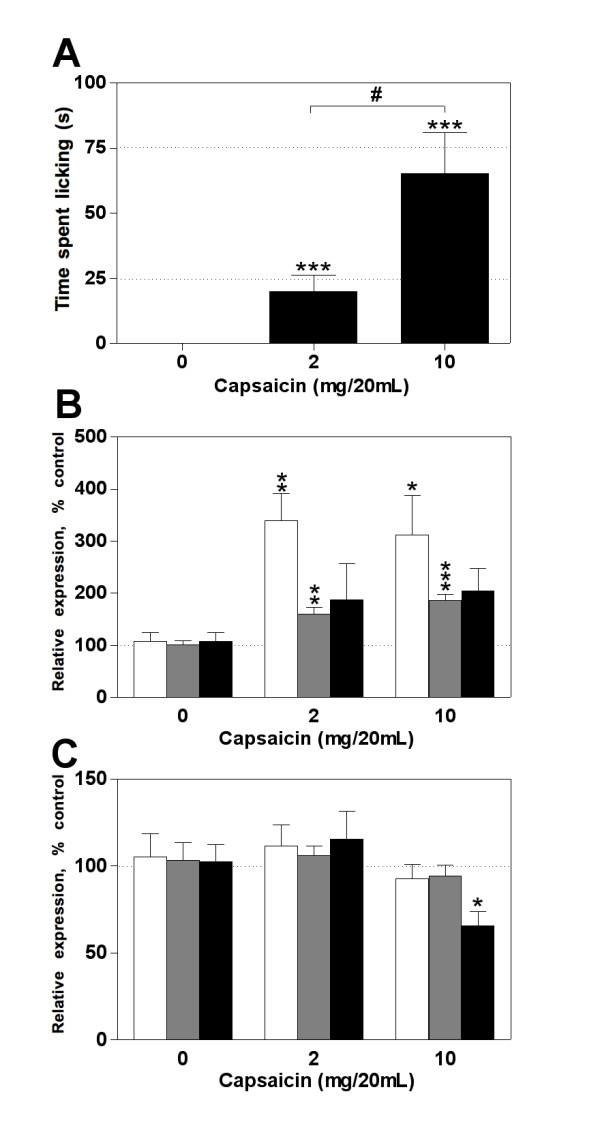
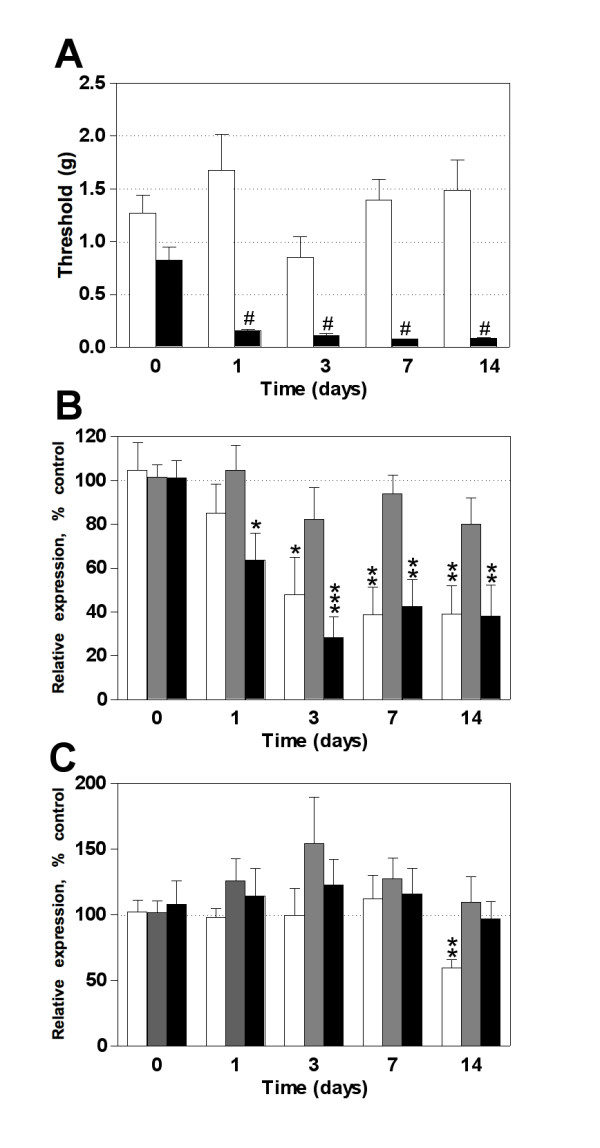
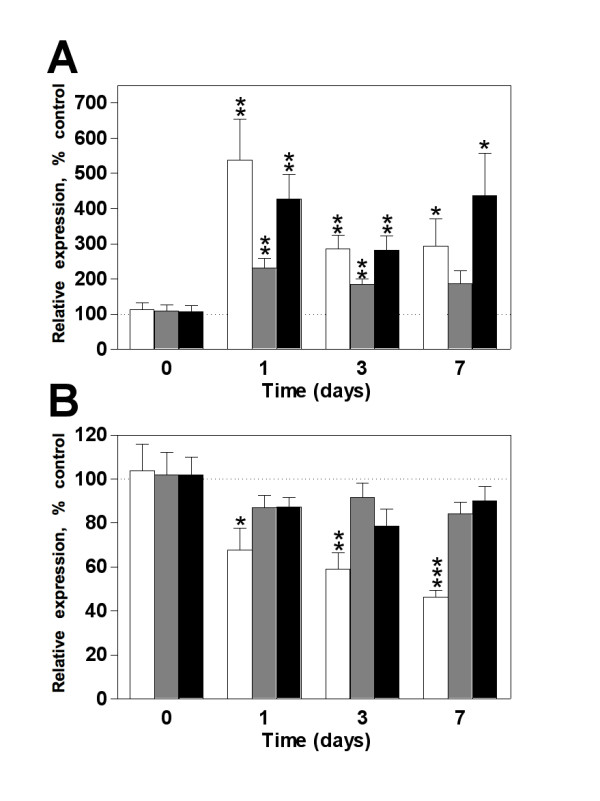
Quantitative real-time polymerase chain reaction analyses showed that the mature form of miR-1, -16 and -206, is expressed in DRG and the dorsal horn of the spinal cord. Moreover, CFA-induced inflammation significantly reduced miRs-1 and -16 expression in DRG whereas miR-206 was downregulated in a time dependent manner. Conversely, in the spinal dorsal horn all three miRNAs monitored were upregulated. After sciatic nerve partial ligation, miR-1 and -206 were downregulated in DRG with no change in the spinal dorsal horn. On the other hand, axotomy increases the relative expression of miR-1, -16, and 206 in a time-dependent fashion while in the dorsal horn there was a significant downregulation of miR-1. Acute noxious stimulation with capsaicin also increased the expression of miR-1 and -16 in DRG cells but, on the other hand, in the spinal dorsal horn only a high dose of capsaicin was able to downregulate miR-206 expression.
Our results indicate that miRNAs may participate in the regulatory mechanisms of genes associated with the pathophysiology of chronic pain as well as the nociceptive processing following acute noxious stimulation. We found substantial evidence that miRNAs are differentially regulated in DRG and the dorsal horn of the spinal cord under different pain states. Therefore, miRNA expression in the nociceptive system shows not only temporal and spatial specificity but is also stimulus-dependent.
MicroRNAs(miRNAs)是通过与靶基因的 mRNAs 结合来抑制翻译的短非编码 RNA。大量具有高度时空特异性的脑特异性 miRNAs 的表达表明,miRNAs 在健康和疾病中的基因调控中发挥着重要作用。在这里,我们研究了在炎症性和神经性疼痛条件下以及急性疼痛刺激后,miR-1、-16 和-206 在小鼠背根神经节(DRG)和脊髓背角中的时间过程基因表达谱。
实时定量聚合酶链反应分析显示,miR-1、-16 和-206 的成熟形式在 DRG 和脊髓背角中表达。此外,CFA 诱导的炎症显著降低了 DRG 中的 miR-1 和-16 表达,而 miR-206 则呈时间依赖性下调。相反,在脊髓背角中,所有三种 miRNA 均上调。坐骨神经部分结扎后,miR-1 和-206 在 DRG 下调,而脊髓背角无变化。另一方面,轴突切断术以时间依赖性方式增加 miR-1、-16 和 206 的相对表达,而在背角中,miR-1 的表达显著下调。辣椒素的急性疼痛刺激也增加了 DRG 细胞中 miR-1 和-16 的表达,但另一方面,只有高剂量的辣椒素能够下调脊髓背角中 miR-206 的表达。
我们的结果表明,miRNAs 可能参与与慢性疼痛病理生理学相关的基因的调节机制以及急性疼痛刺激后的伤害性处理。我们发现大量证据表明,在不同的疼痛状态下,miRNAs 在 DRG 和脊髓背角中差异调节。因此,伤害性系统中的 miRNA 表达不仅具有时间和空间特异性,而且还具有刺激依赖性。