Computational Neuroscience, Department of Physics, Universidad Autonoma de Occidente, Cali, Colombia.
PLoS One. 2011 Feb 28;6(2):e17060. doi: 10.1371/journal.pone.0017060.
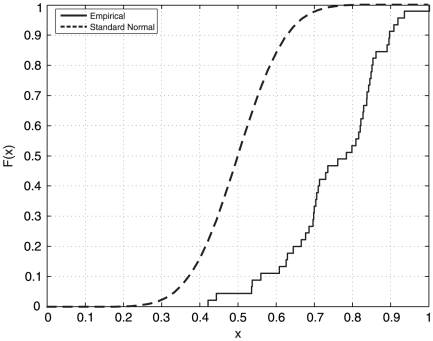
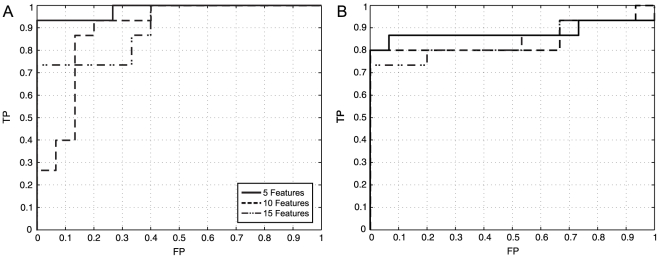
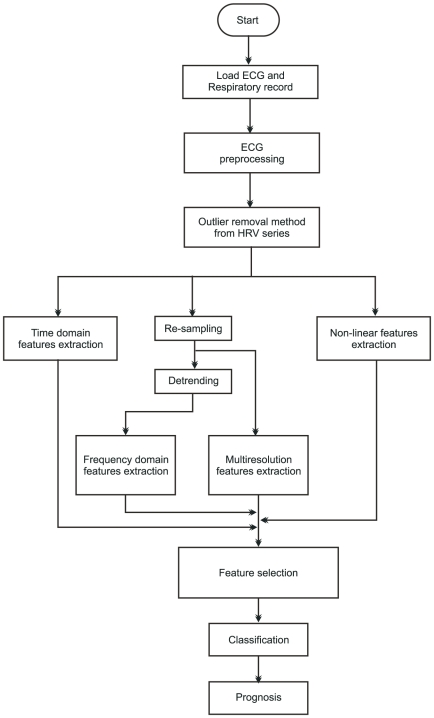
Statistical, spectral, multi-resolution and non-linear methods were applied to heart rate variability (HRV) series linked with classification schemes for the prognosis of cardiovascular risk. A total of 90 HRV records were analyzed: 45 from healthy subjects and 45 from cardiovascular risk patients. A total of 52 features from all the analysis methods were evaluated using standard two-sample Kolmogorov-Smirnov test (KS-test). The results of the statistical procedure provided input to multi-layer perceptron (MLP) neural networks, radial basis function (RBF) neural networks and support vector machines (SVM) for data classification. These schemes showed high performances with both training and test sets and many combinations of features (with a maximum accuracy of 96.67%). Additionally, there was a strong consideration for breathing frequency as a relevant feature in the HRV analysis.
统计、频谱、多分辨率和非线性方法被应用于与心血管风险预测分类方案相关的心率变异性(HRV)序列。总共分析了 90 个 HRV 记录:45 个来自健康受试者,45 个来自心血管风险患者。使用标准的两样本 Kolmogorov-Smirnov 检验(KS 检验)评估了所有分析方法的 52 个特征。统计过程的结果为多层感知器(MLP)神经网络、径向基函数(RBF)神经网络和支持向量机(SVM)提供了数据分类的输入。这些方案在训练集和测试集以及特征的许多组合(最高准确率为 96.67%)中都表现出了很高的性能。此外,还强烈考虑了呼吸频率作为 HRV 分析中的一个相关特征。