Centre of Excellence in Evolutionary Research, Department of Biological and Environmental Science, P.O. Box 35, 40014 University of Jyväskylä, Finland.
BMC Evol Biol. 2011 Mar 14;11:68. doi: 10.1186/1471-2148-11-68.
Widely distributed species with populations adapted to different environmental conditions can provide valuable opportunities for tracing the onset of reproductive incompatibilities and their role in the speciation process. Drosophila montana, a D. virilis group species found in high latitude boreal forests in Nearctic and Palearctic regions around the globe, could be an excellent model system for studying the early stages of speciation, as a wealth of information concerning this species' ecology, mating system, life history, genetics and phylogeography is available. However, reproductive barriers between populations have hereto not been investigated.
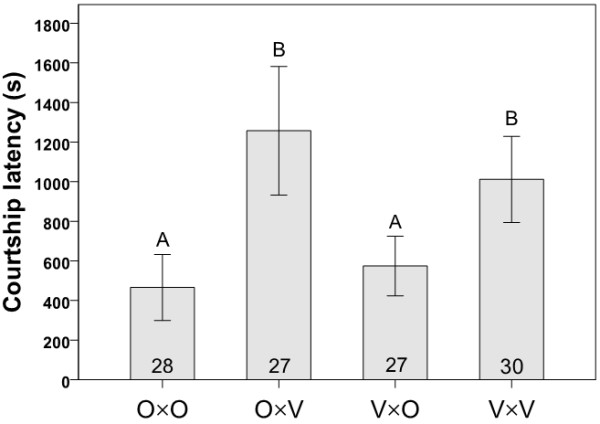
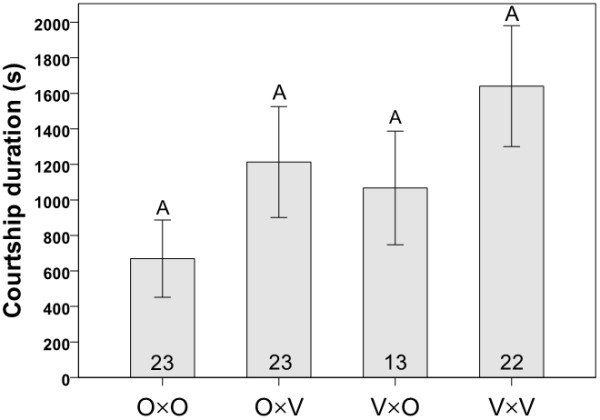
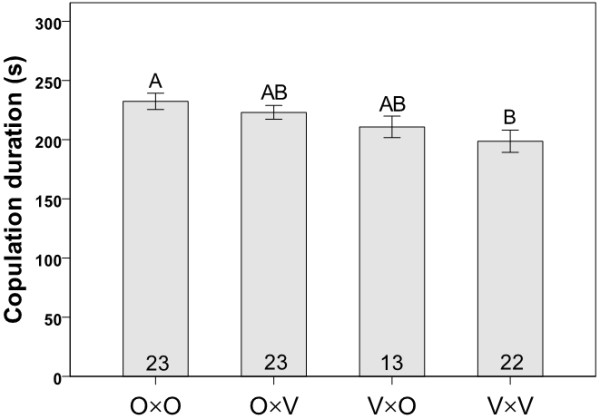
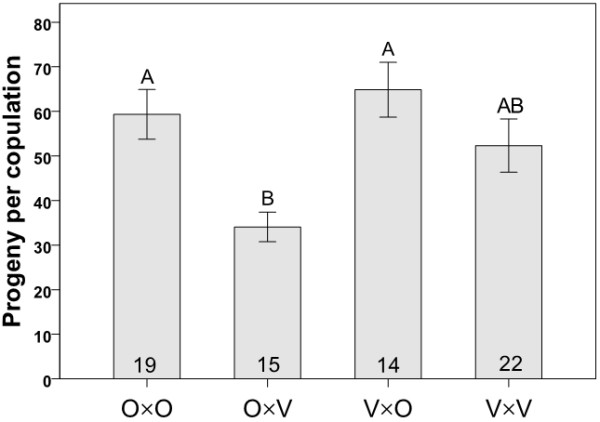
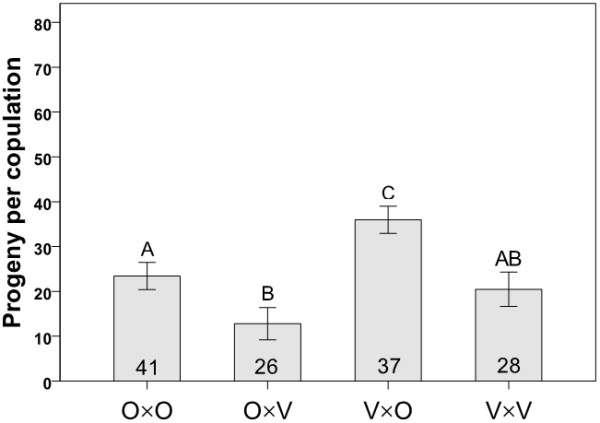
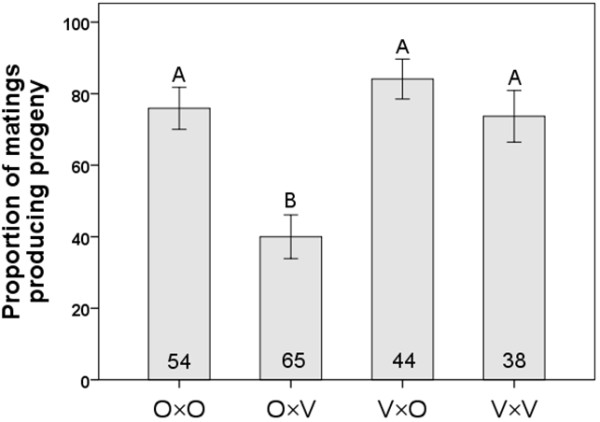
We report both pre- and postmating barriers to reproduction between flies from European (Finnish) and North American (Canadian) populations of Drosophila montana. Using a series of mate-choice designs, we show that flies from these two populations mate assortatively (i.e., exhibit significant sexual isolation) while emphasizing the importance of experimental design in these kinds of studies. We also assessed potential postmating isolation by quantifying egg and progeny production in intra- and interpopulation crosses and show a significant one-way reduction in progeny production, affecting both male and female offspring equally.
We provide evidence that allopatric D. montana populations exhibit reproductive isolation and we discuss the potential mechanisms involved. Our data emphasize the importance of experimental design in studies on premating isolation between recently diverged taxa and suggest that postmating barriers may be due to postcopulatory-prezygotic mechanisms. D. montana populations seem to be evolving multiple barriers to gene flow in allopatry and our study lays the groundwork for future investigations of the genetic and phenotypic mechanisms underlying these barriers.
分布广泛的物种,其种群适应不同的环境条件,可以为追踪生殖不相容的起源及其在物种形成过程中的作用提供有价值的机会。Drosophila montana 是一种分布于全球近北极和北极地区高纬度北方森林的 D. virilis 组物种,可能是研究物种形成早期阶段的绝佳模式系统,因为有关该物种生态学、交配系统、生活史、遗传学和系统地理学的大量信息可用。然而,种群之间的生殖障碍尚未得到研究。
我们报告了来自欧洲(芬兰)和北美的 Drosophila montana 种群(加拿大)的果蝇之间存在交配前和交配后的生殖障碍。通过一系列的配偶选择设计,我们表明来自这两个种群的果蝇进行了有选择性的交配(即表现出显著的性隔离),同时强调了在这些研究中设计实验的重要性。我们还通过量化种内和种间杂交中的卵子和后代的产量来评估潜在的交配后隔离,并显示出显著的单向后代产量降低,影响雄性和雌性后代的数量相等。
我们提供了证据表明,地理上隔离的 Drosophila montana 种群表现出生殖隔离,并且我们讨论了所涉及的潜在机制。我们的数据强调了在最近分化的分类群之间进行交配前隔离的研究中实验设计的重要性,并表明交配后障碍可能是由于交配后预合子机制造成的。Drosophila montana 种群似乎在异地形成了多种基因流障碍,我们的研究为未来研究这些障碍背后的遗传和表型机制奠定了基础。