Ala-Honkola Outi, Ritchie Michael G, Veltsos Paris
Department of Biological and Environmental Science University of Jyvaskyla PO Box 35 FI- 40014 Jyvaskyla Finland.
Centre for Biological Diversity School of Biology University of St Andrews St Andrews KY16 9TS UK.
Ecol Evol. 2016 Feb 16;6(6):1679-91. doi: 10.1002/ece3.1995. eCollection 2016 Mar.
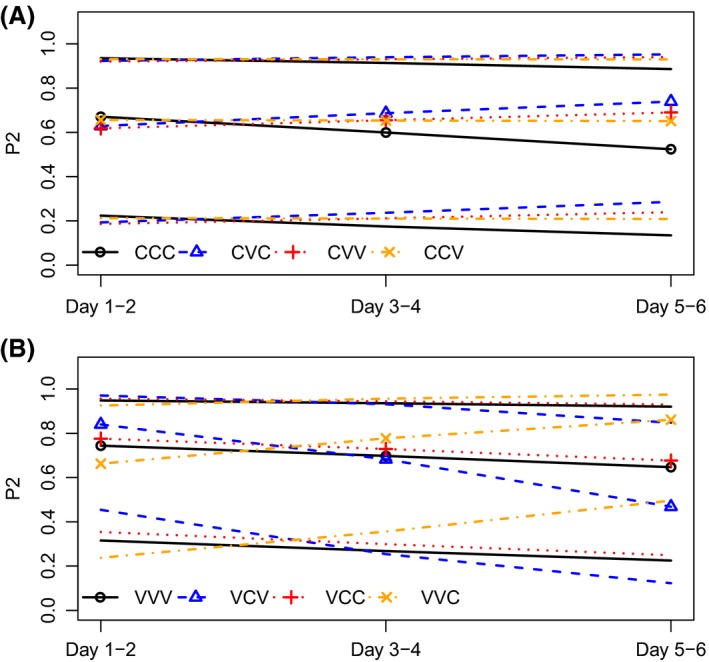
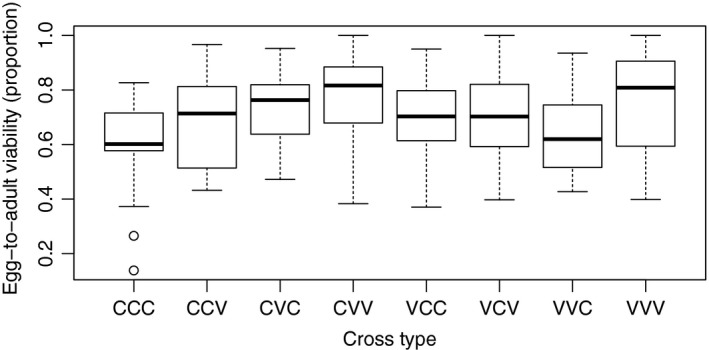
Postmating but prezygotic (PMPZ) interactions are increasingly recognized as a potentially important early-stage barrier in the evolution of reproductive isolation. A recent study described a potential example between populations of the same species: single matings between Drosophila montana populations resulted in differential fertilisation success because of the inability of sperm from one population (Vancouver) to penetrate the eggs of the other population (Colorado). As the natural mating system of D. montana is polyandrous (females remate rapidly), we set up double matings of all possible crosses between the same populations to test whether competitive effects between ejaculates influence this PMPZ isolation. We measured premating isolation in no-choice tests, female fecundity, fertility and egg-to-adult viability after single and double matings as well as second-male paternity success (P2). Surprisingly, we found no PMPZ reproductive isolation between the two populations under a competitive setting, indicating no difficulty of sperm from Vancouver males to fertilize Colorado eggs after double matings. While there were subtle differences in how P2 changed over time, suggesting that Vancouver males' sperm are somewhat less competitive in a first-male role within Colorado females, these effects did not translate into differences in overall P2. Fertilisation success can thus differ dramatically between competitive and noncompetitive conditions, perhaps because the males that mate second produce higher quality ejaculates in response to sperm competition. We suggest that unlike in more divergent species comparisons, where sperm competition typically increases reproductive isolation, ejaculate tailoring can reduce the potential for PMPZ isolation when recently diverged populations interbreed.
交配后但合子形成前(PMPZ)的相互作用日益被认为是生殖隔离进化中一个潜在的重要早期障碍。最近一项研究描述了同一物种不同种群之间的一个潜在例子:蒙大拿果蝇不同种群之间的单次交配导致受精成功率存在差异,原因是一个种群(温哥华种群)的精子无法穿透另一个种群(科罗拉多种群)的卵子。由于蒙大拿果蝇的自然交配系统是多雄交配制(雌性快速再次交配),我们进行了同一种群间所有可能杂交组合的双重交配实验,以测试射精之间的竞争效应是否会影响这种PMPZ隔离。我们在无选择测试中测量了交配前隔离、单次和双重交配后雌性的繁殖力、生育力以及卵到成虫的存活率,还有第二只雄蝇的父权成功率(P2)。令人惊讶的是,我们发现在竞争环境下这两个种群之间不存在PMPZ生殖隔离,这表明双重交配后温哥华雄蝇的精子使科罗拉多种群的卵子受精没有困难。虽然P2随时间变化存在细微差异,这表明温哥华雄蝇的精子在科罗拉多雌蝇体内作为第一只交配雄蝇时竞争力稍弱,但这些效应并未转化为总体P2的差异。因此,受精成功率在竞争和非竞争条件下可能会有显著差异,这可能是因为第二次交配的雄蝇会因精子竞争而产生质量更高的射精产物。我们认为,与在差异更大的物种比较中不同,在那种情况下精子竞争通常会增加生殖隔离,而当最近分化的种群杂交时,射精产物的调整会降低PMPZ隔离的可能性。