Department of Biological and Environmental Science, University of Jyväskylä, Finland.
Center for Biological Diversity, School of Biology, University of St. Andrews, Fife, United Kingdom.
Genome Biol Evol. 2018 Aug 1;10(8):2086-2101. doi: 10.1093/gbe/evy147.
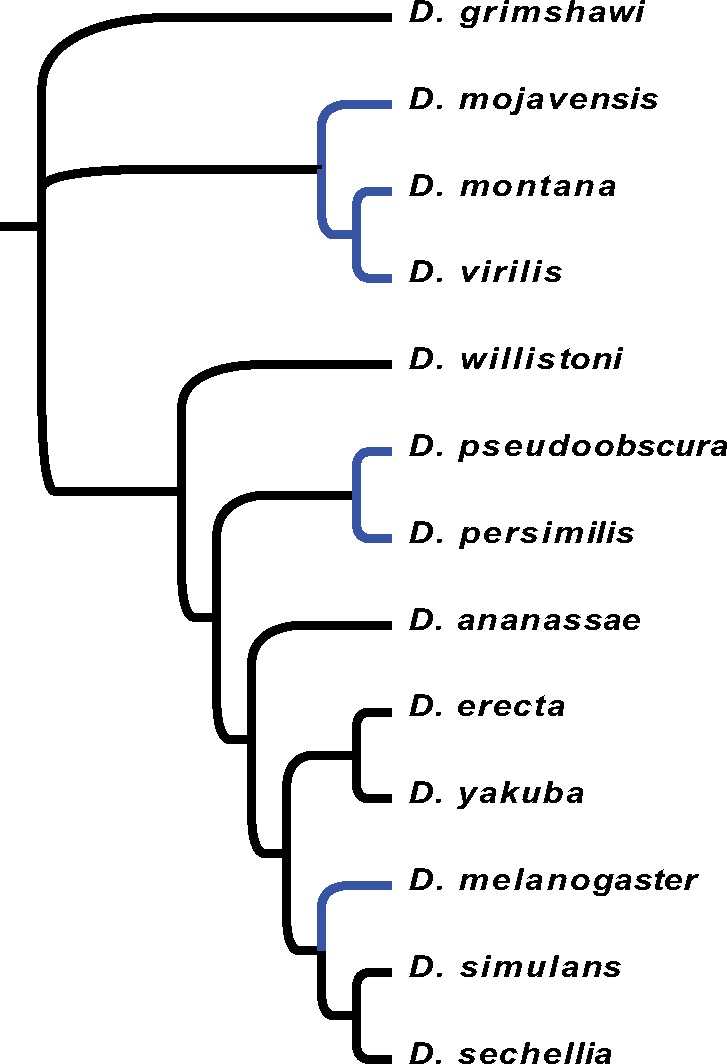
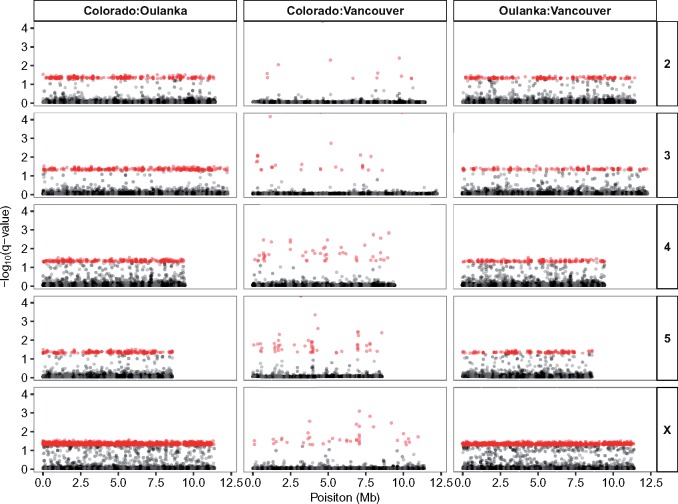
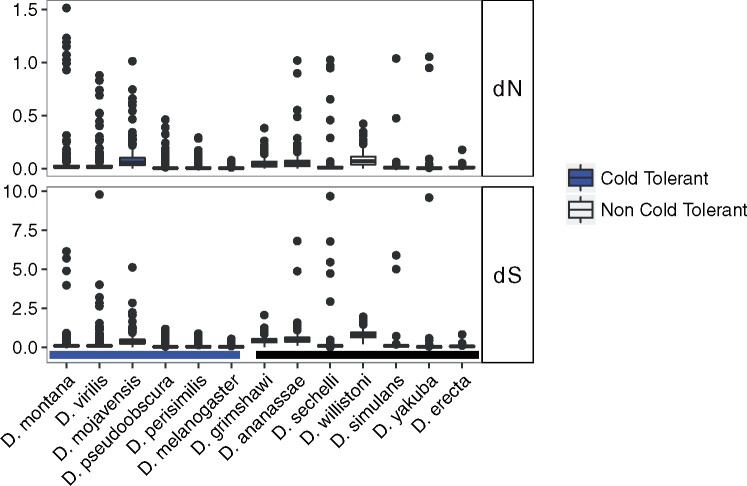
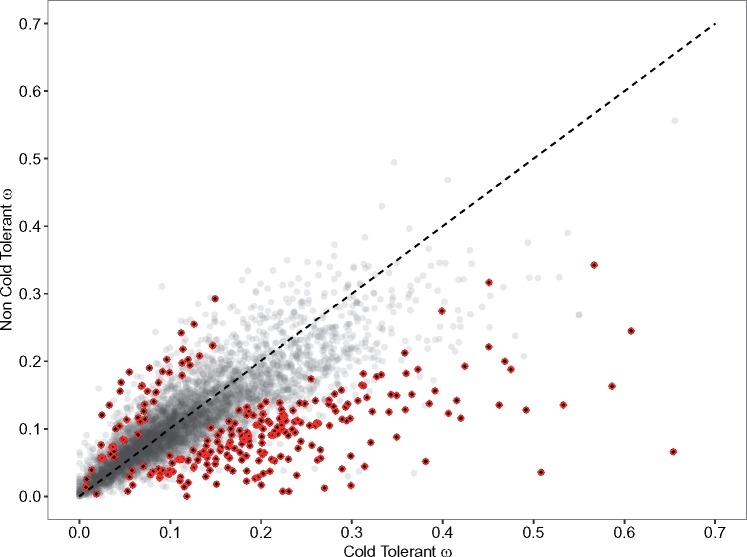
The genomes of species that are ecological specialists will likely contain signatures of genomic adaptation to their niche. However, distinguishing genes related to ecological specialism from other sources of selection and more random changes is a challenge. Here, we describe the genome of Drosophila montana, which is the most extremely cold-adapted Drosophila species known. We use branch tests to identify genes showing accelerated divergence in contrasts between cold- and warm-adapted species and identify about 250 genes that show differences, possibly driven by a lower synonymous substitution rate in cold-adapted species. We also look for evidence of accelerated divergence between D. montana and D. virilis, a previously sequenced relative, but do not find strong evidence for divergent selection on coding sequence variation. Divergent genes are involved in a variety of functions, including cuticular and olfactory processes. Finally, we also resequenced three populations of D. montana from across its ecological and geographic range. Outlier loci were more likely to be found on the X chromosome and there was a greater than expected overlap between population outliers and those genes implicated in cold adaptation between Drosophila species, implying some continuity of selective process at these different evolutionary scales.
生态专化物种的基因组可能包含其生态位适应的基因组特征。然而,区分与生态专化相关的基因与其他选择和更随机变化的来源是一个挑战。在这里,我们描述了已知最极端耐寒的果蝇属物种——黑腹果蝇 montana 的基因组。我们使用分支测试来识别在冷适应和暖适应物种之间对比中显示出加速分化的基因,并鉴定出约 250 个可能由于冷适应物种中同义替换率较低而导致差异的基因。我们还寻找了黑腹果蝇 montana 与已测序的亲缘种 D. virilis 之间加速分化的证据,但没有发现编码序列变异的分化选择的有力证据。分化基因涉及各种功能,包括表皮和嗅觉过程。最后,我们还对其生态和地理分布范围内的三个黑腹果蝇 montana 种群进行了重测序。在外显子区域更多地发现了极值位点,而且在种群极值位点和果蝇属物种之间与寒冷适应相关的基因之间存在超出预期的重叠,这意味着在这些不同的进化尺度上,选择过程具有一定的连续性。