Department of Osteology and Biomechanics, University Medical Center Hamburg-Eppendorf, 20246 Hamburg, Germany.
J Cell Biol. 2011 Mar 21;192(6):1057-72. doi: 10.1083/jcb.201008012. Epub 2011 Mar 14.
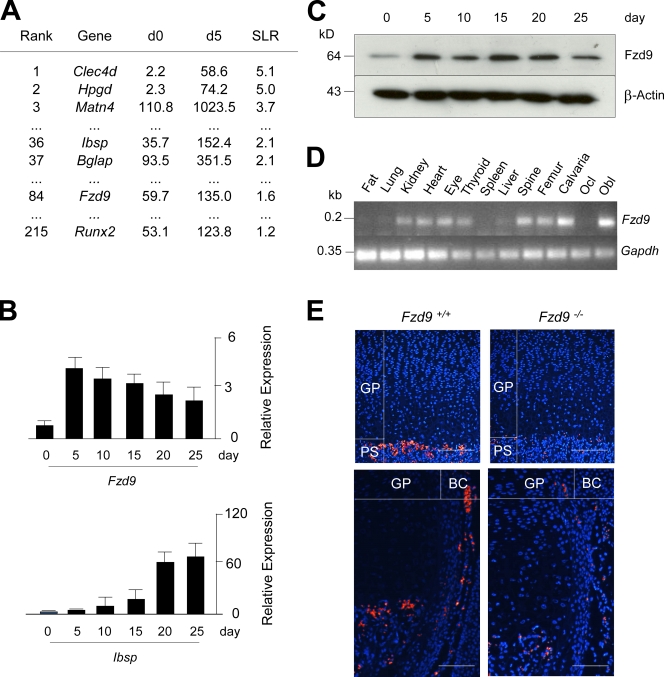
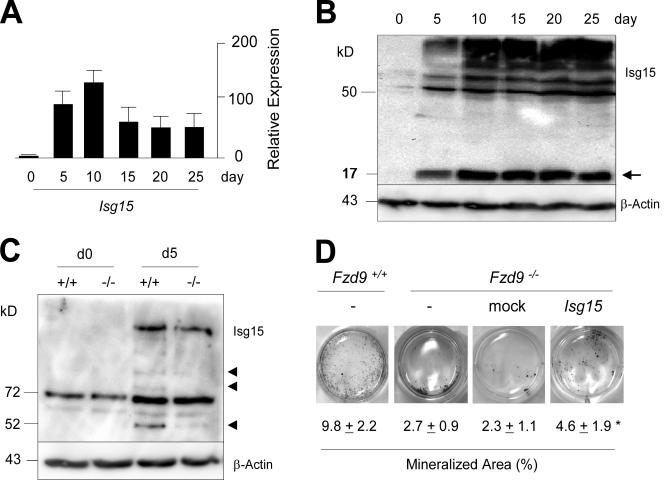
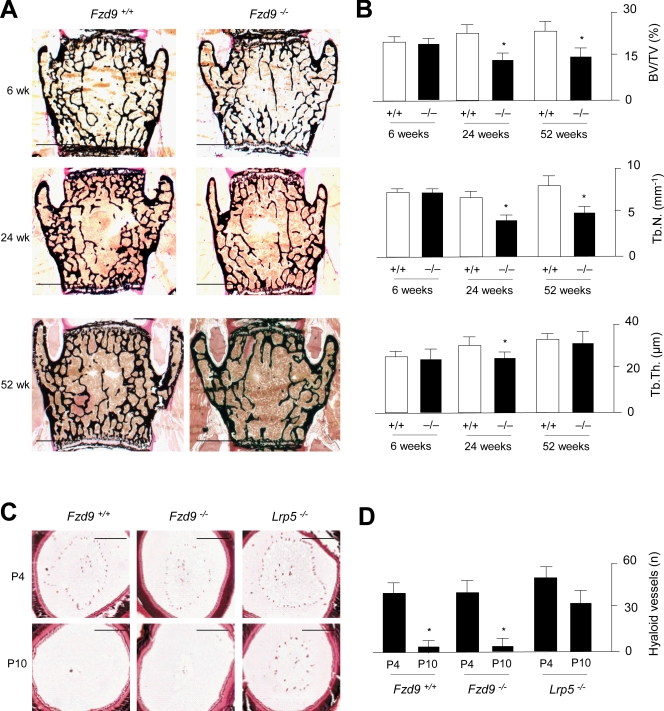
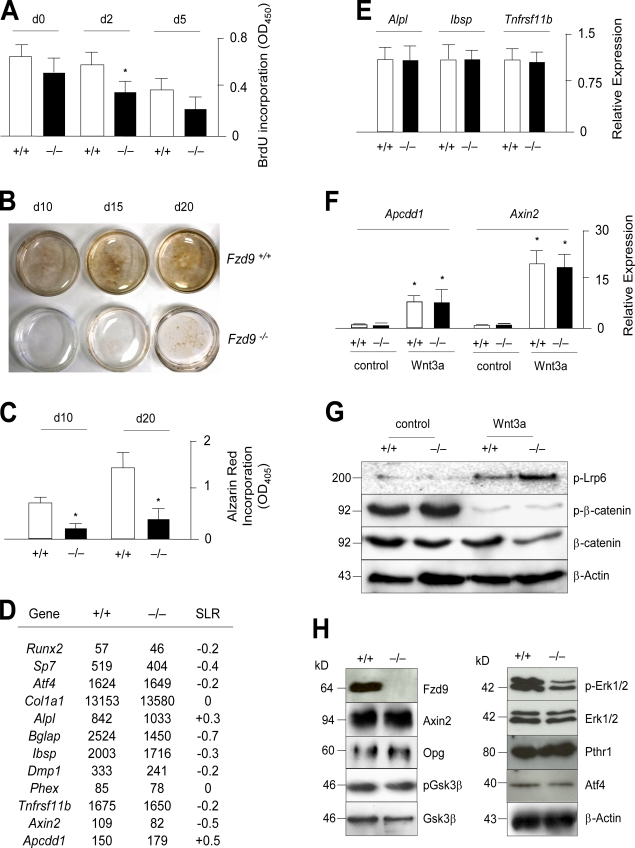
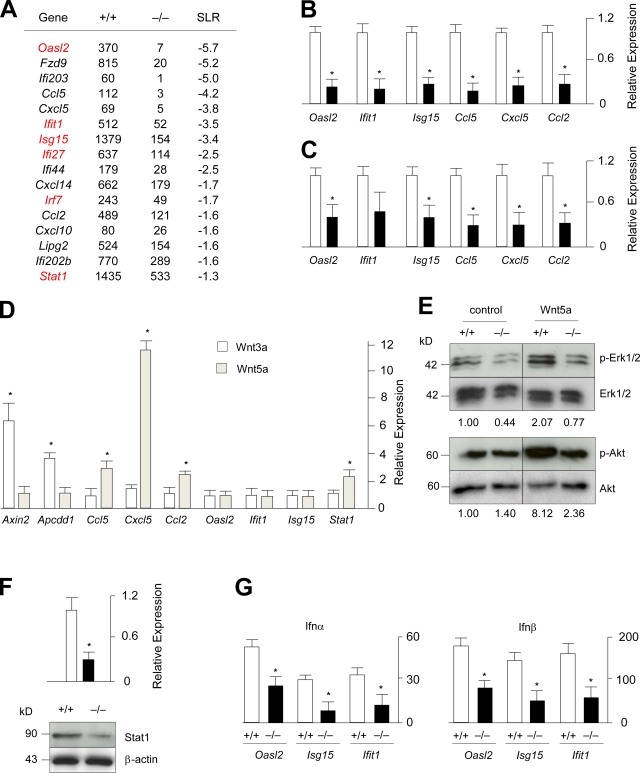
Although Wnt signaling in osteoblasts is of critical importance for the regulation of bone remodeling, it is not yet known which specific Wnt receptors of the Frizzled family are functionally relevant in this process. In this paper, we show that Fzd9 is induced upon osteoblast differentiation and that Fzd9(-/-) mice display low bone mass caused by impaired bone formation. Our analysis of Fzd9(-/-) primary osteoblasts demonstrated defects in matrix mineralization in spite of normal expression of established differentiation markers. In contrast, we observed a reduced expression of chemokines and interferon-regulated genes in Fzd9(-/-) osteoblasts. We also identified the ubiquitin-like modifier Isg15 as one potential downstream mediator of Fzd9 in these cells. Importantly, our molecular analysis further revealed that canonical Wnt signaling is not impaired in the absence of Fzd9, thus explaining the absence of a bone resorption phenotype. Collectively, our results reveal a previously unknown function of Fzd9 in osteoblasts, a finding that may have therapeutic implications for bone loss disorders.
尽管 Wnt 信号在成骨细胞中对于骨重塑的调节至关重要,但目前尚不清楚 Frizzled 家族的哪些特定 Wnt 受体在该过程中具有功能相关性。在本文中,我们表明 Fzd9 在成骨细胞分化时被诱导表达,并且 Fzd9(-/-) 小鼠由于骨形成受损而表现出低骨量。我们对 Fzd9(-/-) 原代成骨细胞的分析表明,尽管存在已确立的分化标志物的正常表达,但基质矿化存在缺陷。相比之下,我们观察到 Fzd9(-/-) 成骨细胞中趋化因子和干扰素调节基因的表达减少。我们还鉴定了泛素样修饰物 Isg15 作为这些细胞中 Fzd9 的一个潜在下游介质。重要的是,我们的分子分析进一步表明,在没有 Fzd9 的情况下,经典 Wnt 信号不受影响,这解释了缺乏骨吸收表型的原因。总之,我们的结果揭示了 Fzd9 在成骨细胞中以前未知的功能,这一发现可能对骨丢失疾病具有治疗意义。