Brabnikova Maresova Kristyna
Institute of Rheumatology, Slupi 4, 128 50, Prague 2, Czech Republic.
J Osteoporos. 2011 Feb 20;2011:569417. doi: 10.4061/2011/569417.
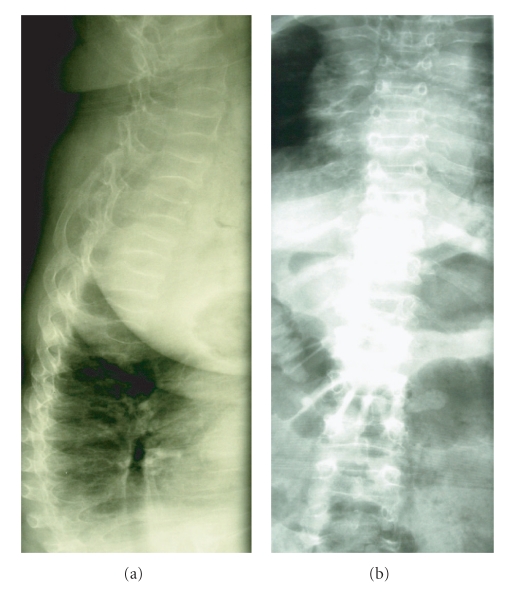
Bone disease in patients with juvenile idiopathic arthritis (JIA) is associated with focal (joint erosion and juxtaarticular osteopenia) and systemic bone loss (generalized osteopenia or reduction of bone mass density). Pathophysiology of bone loss is multifactorial and involves particularly proinflammatory cytokines and deleterious effects of glucocorticoid therapy. Clinical studies in patients with JIA indicate excessive activation of osteoclastogenesis and reduction of bone formation. Reduction of physical activity, muscle atrophy caused by high disease activity, and compulsory restriction in movements are also associated with bone loss. In patients with JIA, the disease can be complicated by growth cartilage involvement and systemic or local growth retardation. In the absence of preventive measures, fragility fractures can occur even at an early age.
青少年特发性关节炎(JIA)患者的骨病与局部(关节侵蚀和关节周围骨质减少)和全身性骨质流失(全身性骨质减少或骨密度降低)有关。骨质流失的病理生理学是多因素的,尤其涉及促炎细胞因子和糖皮质激素治疗的有害作用。对JIA患者的临床研究表明破骨细胞生成过度激活和骨形成减少。体力活动减少、疾病活动度高导致的肌肉萎缩以及运动的强制性限制也与骨质流失有关。在JIA患者中,该疾病可因生长软骨受累以及全身性或局部生长发育迟缓而复杂化。在缺乏预防措施的情况下,即使在幼年也可能发生脆性骨折。