National Heart and Lung Institute, Imperial College, London, United Kingdom.
Circ Arrhythm Electrophysiol. 2011 Jun;4(3):362-72. doi: 10.1161/CIRCEP.110.961615. Epub 2011 Mar 15.
Sarcoplasmic reticulum calcium ATPase 2a (SERCA2a) gene therapy improves mechanical function in heart failure and is under evaluation in a clinical trial. A critical question is whether SERCA2a gene therapy predisposes to increased sarcoplasmic reticulum calcium (SR Ca(2+)) leak, cellular triggered activity, and ventricular arrhythmias in the failing heart.
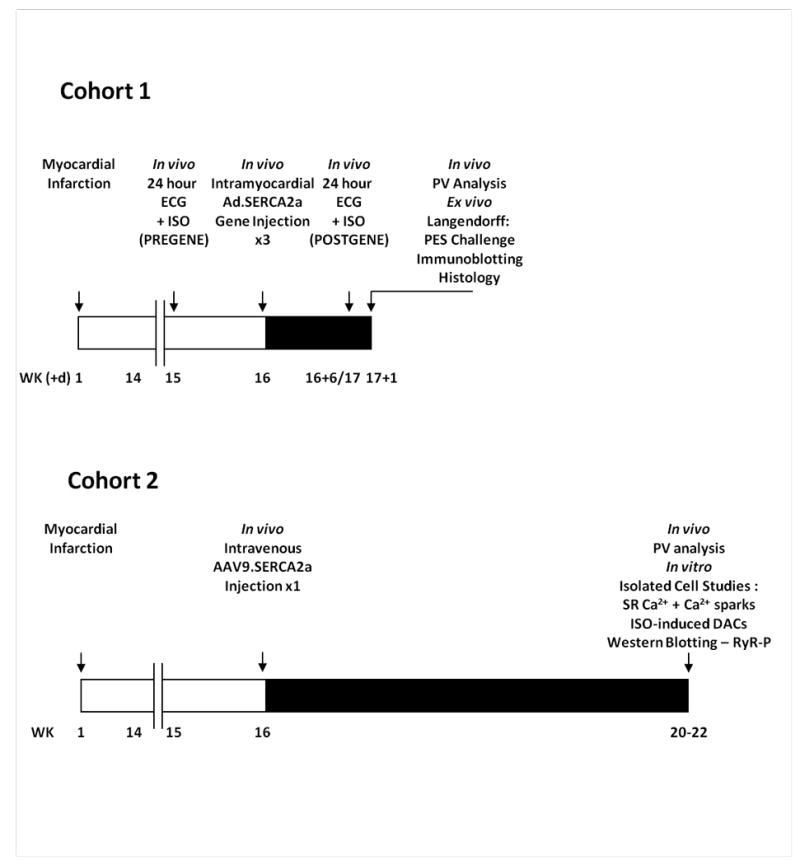
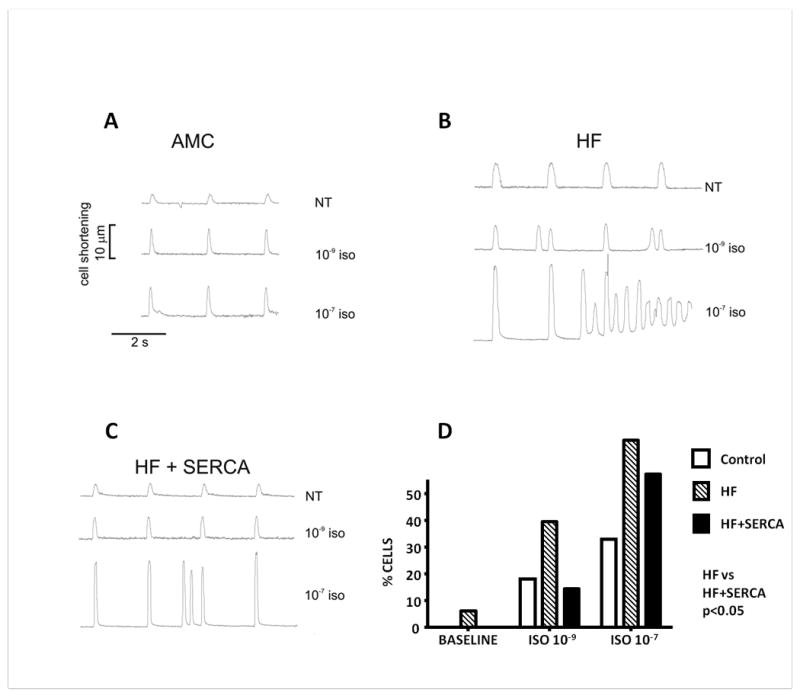
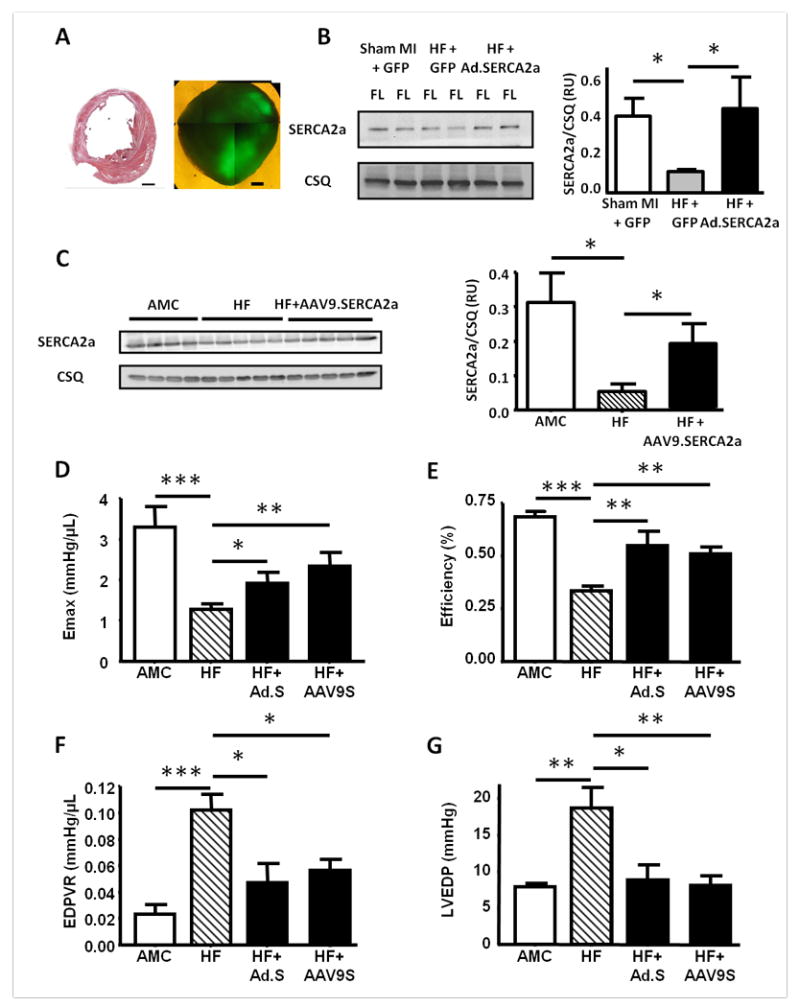
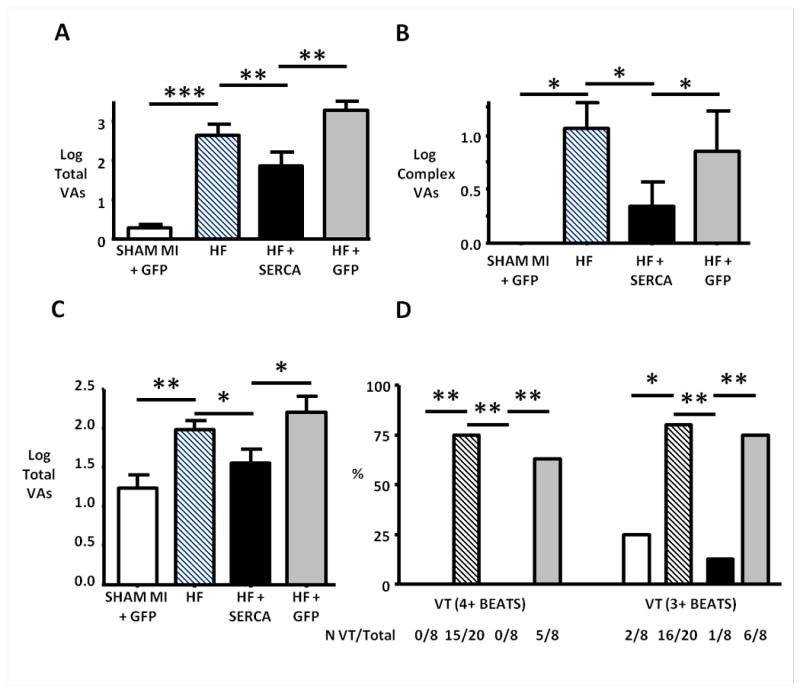
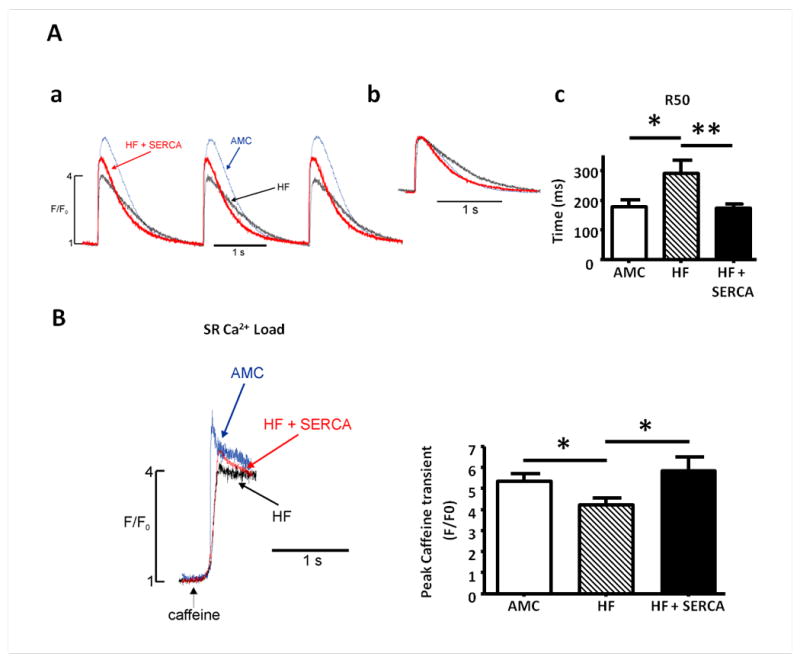
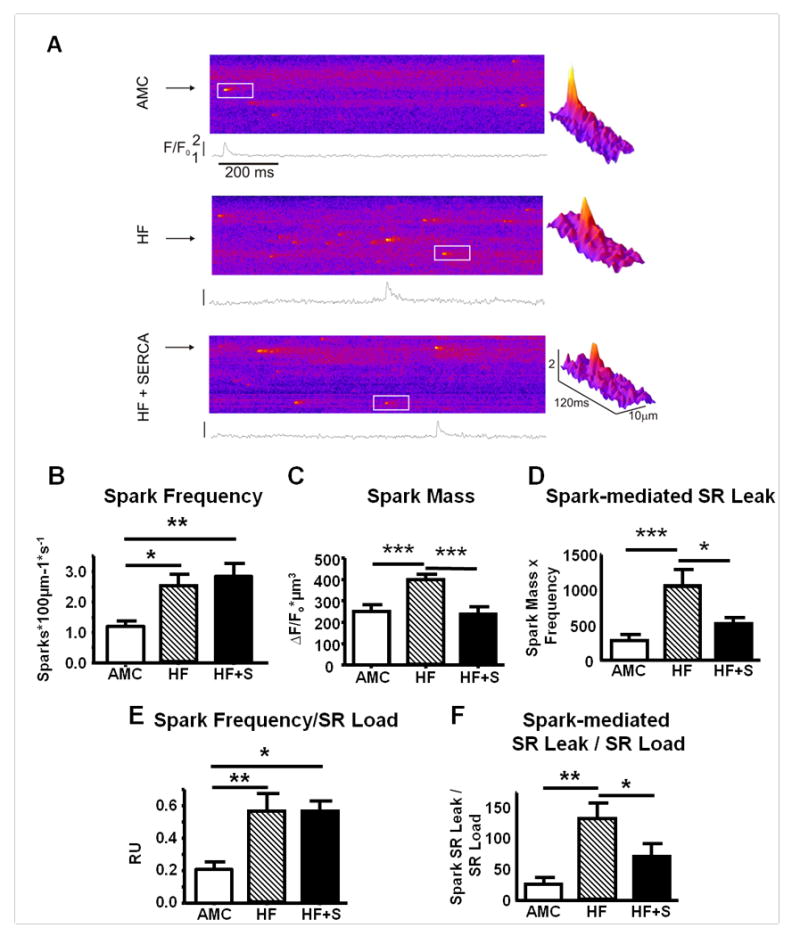
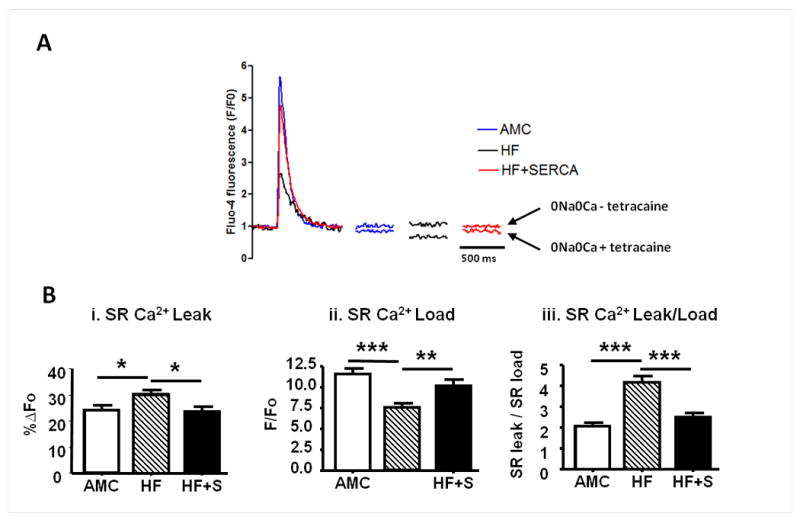
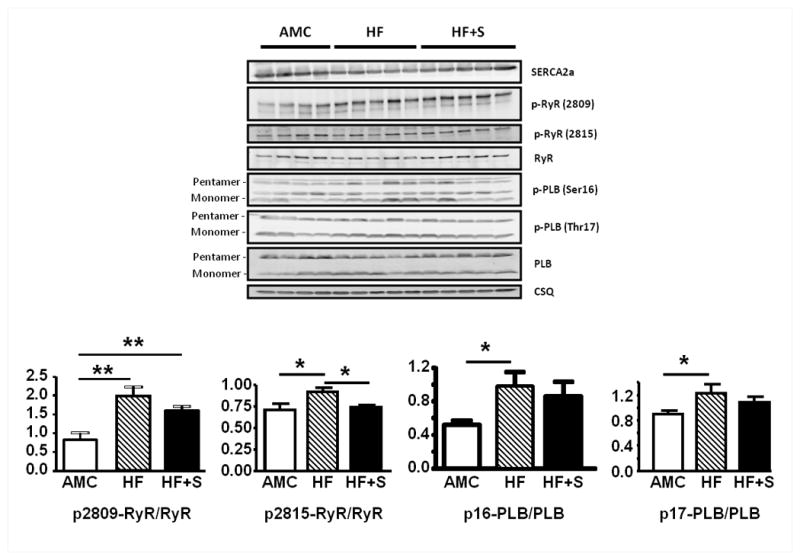
We studied the influence of SERCA2a gene therapy on ventricular arrhythmogenesis in a rat chronic heart failure model. ECG telemetry studies revealed a significant antiarrhythmic effect of SERCA2a gene therapy with reduction of both spontaneous and catecholamine-induced arrhythmias in vivo. SERCA2a gene therapy also reduced susceptibility to reentry arrhythmias in ex vivo programmed electrical stimulation studies. Subcellular Ca(2+) homeostasis and spontaneous SR Ca(2+) leak characteristics were measured in failing cardiomyocytes transfected in vivo with a novel AAV9.SERCA2a vector. SR Ca(2+) leak was reduced after SERCA2a gene therapy, with reversal of the greater spark mass observed in the failing myocytes, despite normalization of SR Ca(2+) load. SERCA2a reduced ryanodine receptor phosphorylation, thereby resetting SR Ca(2+) leak threshold, leading to reduced triggered activity in vitro. Both indirect effects of reverse remodeling and direct SERCA2a effects appear to underlie the antiarrhythmic action.
SERCA2a gene therapy stabilizes SR Ca(2+) load, reduces ryanodine receptor phosphorylation and decreases SR Ca(2+) leak, and reduces cellular triggered activity in vitro and spontaneous and catecholamine-induced ventricular arrhythmias in vivo in failing hearts. SERCA2a gene therapy did not therefore predispose to arrhythmias and may represent a novel antiarrhythmic strategy in heart failure.
肌浆网钙 ATP 酶 2a(SERCA2a)基因治疗可改善心力衰竭患者的机械功能,目前正在临床试验中进行评估。一个关键问题是 SERCA2a 基因治疗是否会导致心力衰竭时肌浆网钙(SR Ca(2+))渗漏、细胞触发活动和室性心律失常增加。
我们研究了 SERCA2a 基因治疗对大鼠慢性心力衰竭模型中心律失常发生的影响。心电图遥测研究显示,SERCA2a 基因治疗具有显著的抗心律失常作用,可减少体内自发性和儿茶酚胺诱导的心律失常。SERCA2a 基因治疗还降低了在体程控电刺激研究中折返性心律失常的易感性。用新型 AAV9.SERCA2a 载体在体内转染心力衰竭的心肌细胞,测量亚细胞 Ca(2+)稳态和自发性 SR Ca(2+)渗漏特征。SERCA2a 基因治疗后 SR Ca(2+)渗漏减少,尽管 SR Ca(2+)负荷正常化,但衰竭心肌细胞中观察到的更大火花质量得到逆转。SERCA2a 降低了肌浆网钙释放通道蛋白(ryanodine receptor)的磷酸化,从而重置了 SR Ca(2+)渗漏的阈值,导致体外触发活动减少。反向重构的间接作用和 SERCA2a 的直接作用似乎都为抗心律失常作用提供了基础。
SERCA2a 基因治疗稳定了 SR Ca(2+)负荷,降低了肌浆网钙释放通道蛋白(ryanodine receptor)的磷酸化,减少了 SR Ca(2+)渗漏,减少了体外的细胞触发活动,以及体内自发性和儿茶酚胺诱导的心力衰竭室性心律失常。因此,SERCA2a 基因治疗不会导致心律失常,可能成为心力衰竭的一种新的抗心律失常策略。