Department of Epidemiology, Center for Urban Epidemiologic Studies, New York Academy of Medicine, Mailman School of Public Health, Columbia University, New York, NY 10029, USA.
J Acquir Immune Defic Syndr. 2010 Dec;55 Suppl 2(Suppl 2):S84-7. doi: 10.1097/QAI.0b013e3181fbca5a.
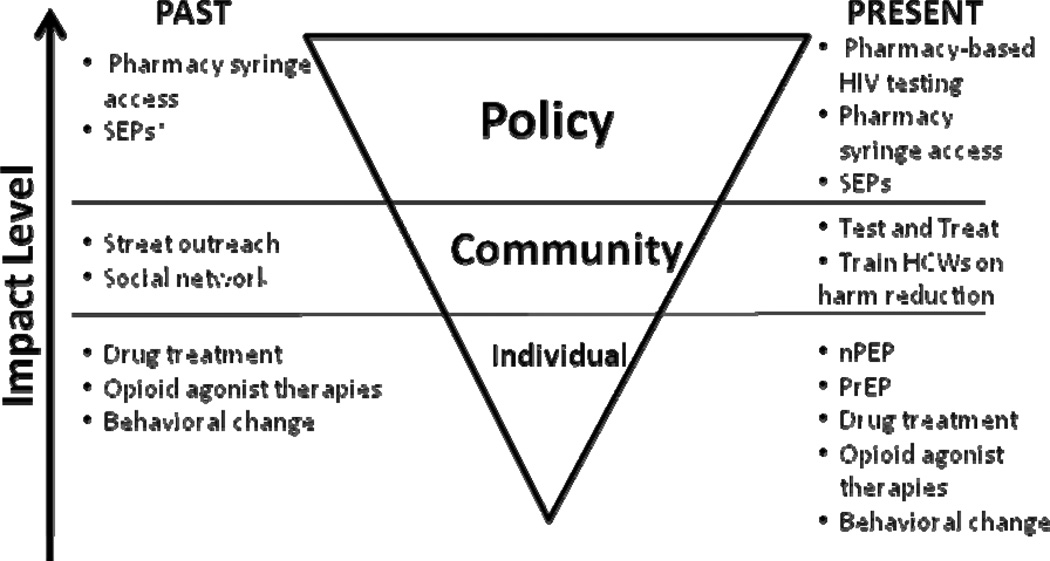
Substantial progress has been made in reducing HIV among injection drug users (IDUs) in the United States, despite political and social resistance that reduced resources and restricted access to services. The record for HIV prevention among noninjecting drug users is less developed, although they are more numerous than IDUs. Newer treatments for opiate and alcohol abuse can now be integrated into primary HIV care; treatment for stimulant abuse is less developed. All drug users present challenges for newer HIV prevention strategies (eg, "test and treat," nonoccupational postexposure prophylaxis and preexposure prophylaxis, contingency management, and conditional cash transfer). A comprehensive HIV prevention program that includes multicomponent multilevel approaches (ie, individual, network, structural) has been effective in HIV prevention among IDUs. Expanding these approaches to noninjecting drug users, especially those at highest risk (eg, minority men who have sex with men) and incorporating these newer approaches is a public health priority.
尽管存在政治和社会阻力,导致资源减少和服务获取受限,但美国在减少注射吸毒者(IDU)中的艾滋病毒方面已经取得了重大进展。非注射吸毒者的艾滋病毒预防记录不太完善,尽管他们的数量比 IDU 多。现在可以将新型阿片类药物和酒精滥用治疗方法纳入初级艾滋病毒护理中;兴奋剂滥用治疗方法的发展则较为欠缺。所有吸毒者都对新型艾滋病毒预防策略提出了挑战(例如,“检测和治疗”、非职业性暴露后预防和暴露前预防、应急管理和有条件现金转移)。包括多成分多层次方法(即个人、网络、结构)的综合性艾滋病毒预防方案已在 IDU 中预防艾滋病毒方面取得了成效。将这些方法扩展到非注射吸毒者,特别是那些风险最高的人群(例如,与男性发生性关系的少数族裔男性),并纳入这些新方法是公共卫生的重点。