Institute for Stem Cell Biology and Regenerative Medicine, Department of Obstetrics and Gynecology, Stanford University School of Medicine, Stanford University, Palo Alto, CA 94305, USA.
Hum Mol Genet. 2011 Jun 1;20(11):2238-50. doi: 10.1093/hmg/ddr114. Epub 2011 Mar 19.
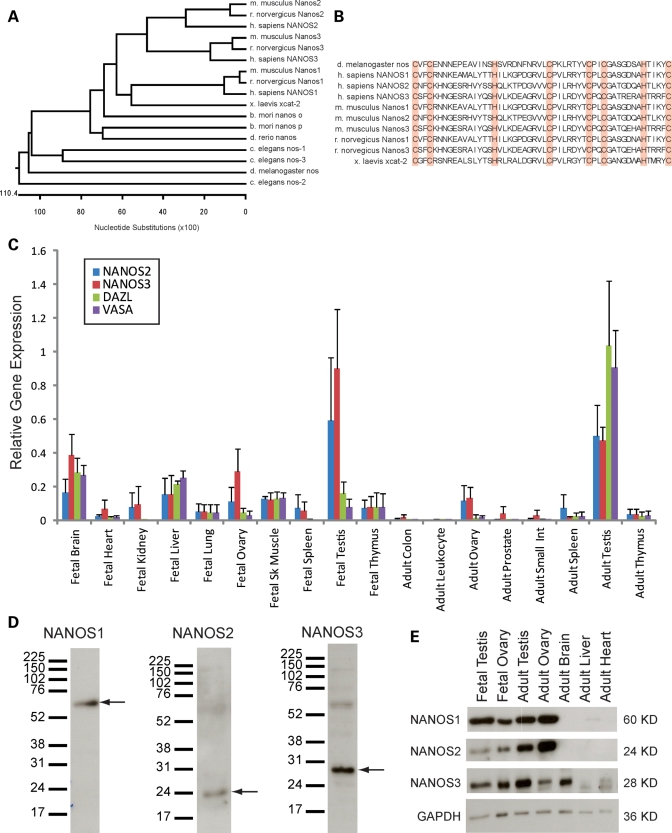
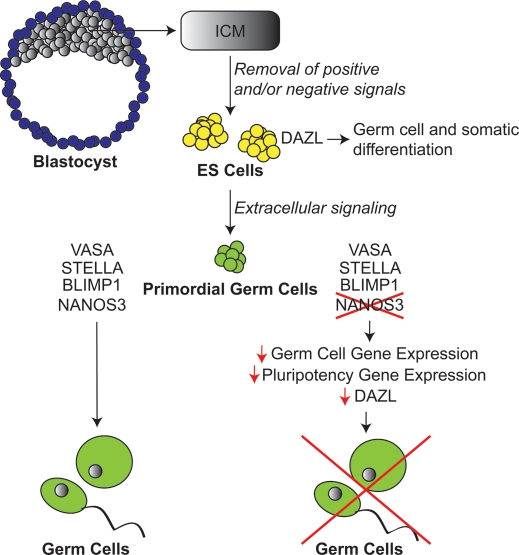
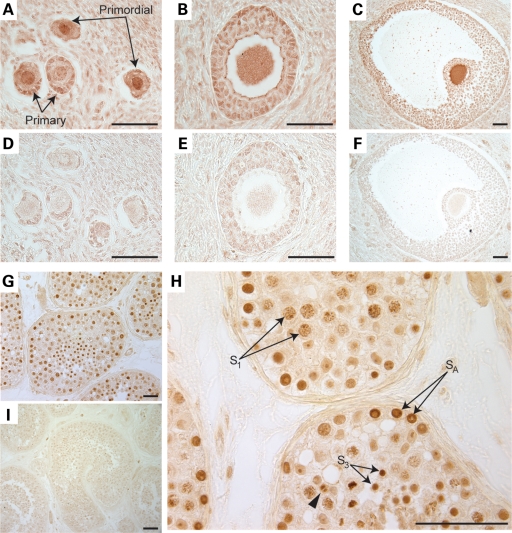
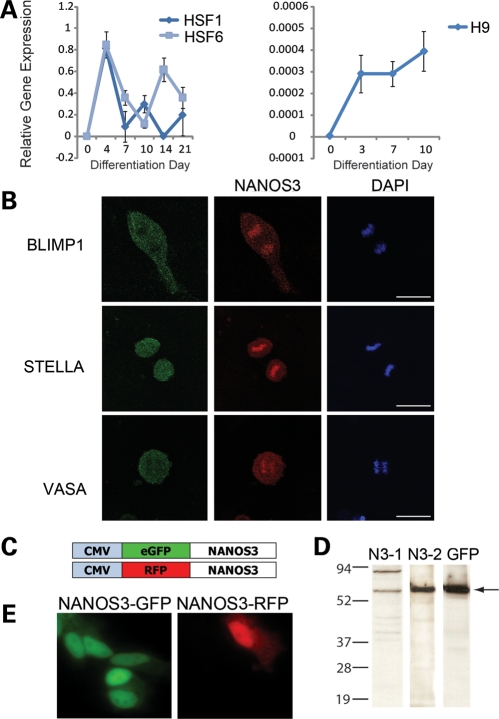
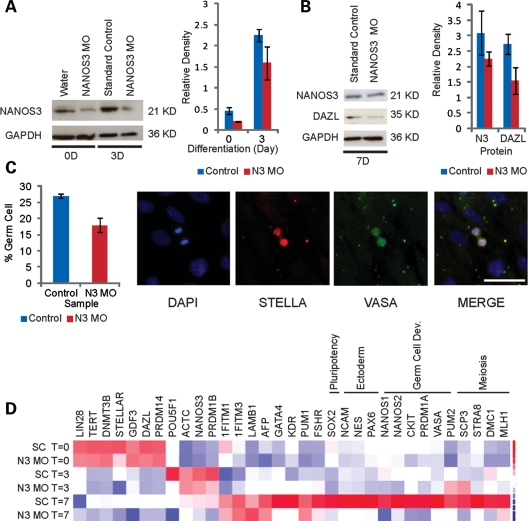
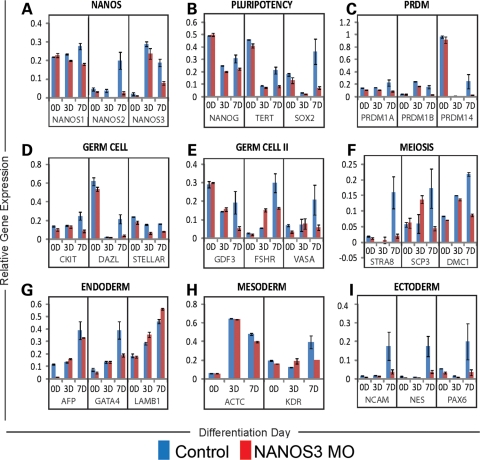
Human infertility is common and frequently linked to poor germ cell development. Yet, human germ cell development is poorly understood, at least in part due to the inaccessibility of germ cells to study especially during fetal development. Here, we explored the function of a highly conserved family of genes, the NANOS genes, in the differentiation of human germ cells from human embryonic stem cells. We observed that NANOS-1, -2 and -3 mRNAs and proteins were expressed in human gonads. We also noted that NANOS3 was expressed in germ cells throughout spermatogenesis and oogenesis and thus, focused further efforts on this family member. NANOS3 expression was highest in human germ cell nuclei where the protein co-localized with chromosomal DNA during mitosis/meiosis. Reduced expression of NANOS3 (via morpholinos or short hairpin RNA) resulted in a reduction in germ cell numbers and decreased expression of germ cell-intrinsic genes required for the maintenance of pluripotency and meiotic initiation and progression. These data provide the first direct experimental evidence that NANOS3 functions in human germ cell development; indeed, NANOS3 is now one of just two genes that has been directly shown to function in germ cell development across diverse species from flies, worms, frogs and mice to humans [the other is BOULE, a member of the Deleted in Azoospermia (DAZ) gene family]. Findings may contribute to our understanding of the basic biology of human germ cell development and may provide clinical insights regarding infertility.
人类不孕不育较为常见,且常与生殖细胞发育不良有关。然而,人类生殖细胞的发育过程仍知之甚少,至少部分原因是生殖细胞在胎儿发育过程中难以获取,从而难以研究。在此,我们研究了高度保守的 NANOS 基因家族在人类胚胎干细胞向生殖细胞分化中的作用。我们观察到 NANOS-1、-2 和 -3mRNA 和蛋白质在人类性腺中表达。我们还注意到 NANOS3 在整个精子发生和卵子发生过程中在生殖细胞中表达,因此,我们进一步集中研究了这个家族成员。NANOS3 在人类生殖细胞核中的表达最高,在有丝分裂/减数分裂过程中,该蛋白与染色体 DNA 共定位。NANOS3 表达降低(通过形态发生或短发夹 RNA)导致生殖细胞数量减少,以及维持多能性和减数分裂起始和进展所必需的生殖细胞内在基因表达降低。这些数据首次提供了直接的实验证据,表明 NANOS3 在人类生殖细胞发育中发挥作用;事实上,NANOS3 是仅有的两个已被直接证明在从苍蝇、蠕虫、青蛙和老鼠到人类等多种物种的生殖细胞发育中发挥作用的基因之一[另一个是 BOULE,Deleted in Azoospermia (DAZ) 基因家族的成员]。研究结果可能有助于我们理解人类生殖细胞发育的基本生物学,并为不孕不育的临床研究提供思路。