Department of Molecular Medicine and Surgery, Center for Molecular Medicine, Karolinska Institutet, Karolinska University Hospital, CMM L8:01, Stockholm, Sweden.
PLoS One. 2011 Mar 14;6(3):e14757. doi: 10.1371/journal.pone.0014757.
Picropodophyllin (PPP) is a promising novel anti-neoplastic agent that efficiently kills tumor cells in vitro and causes tumor regression and increased survival in vivo. We have previously reported that PPP treatment induced moderate tolerance in two out of 10 cell lines only, and here report the acquired genomic and expression alterations associated with PPP selection over 1.5 years of treatment.
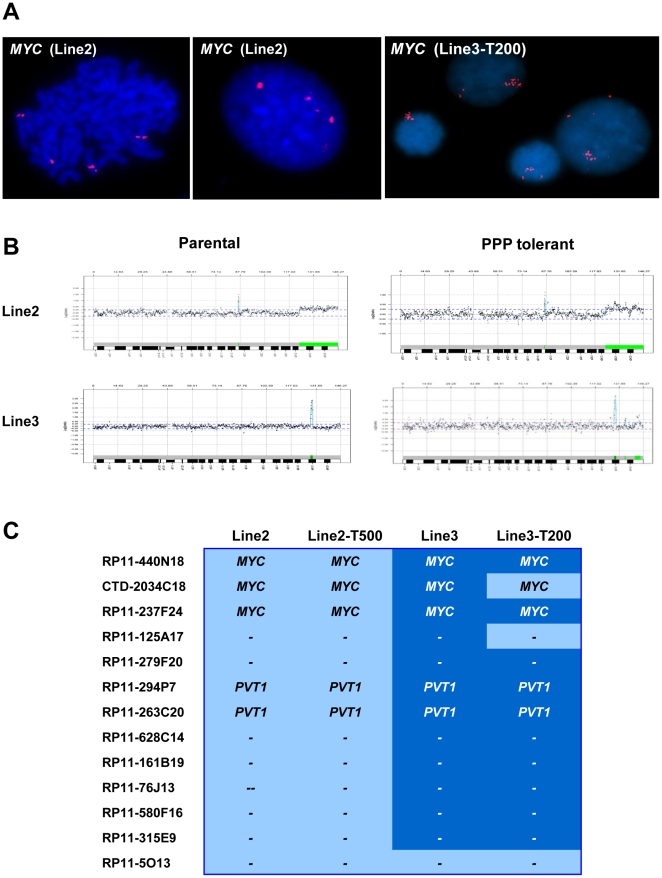
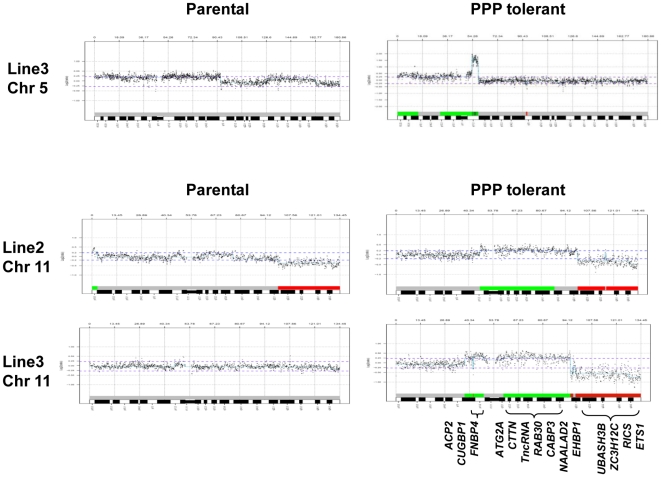
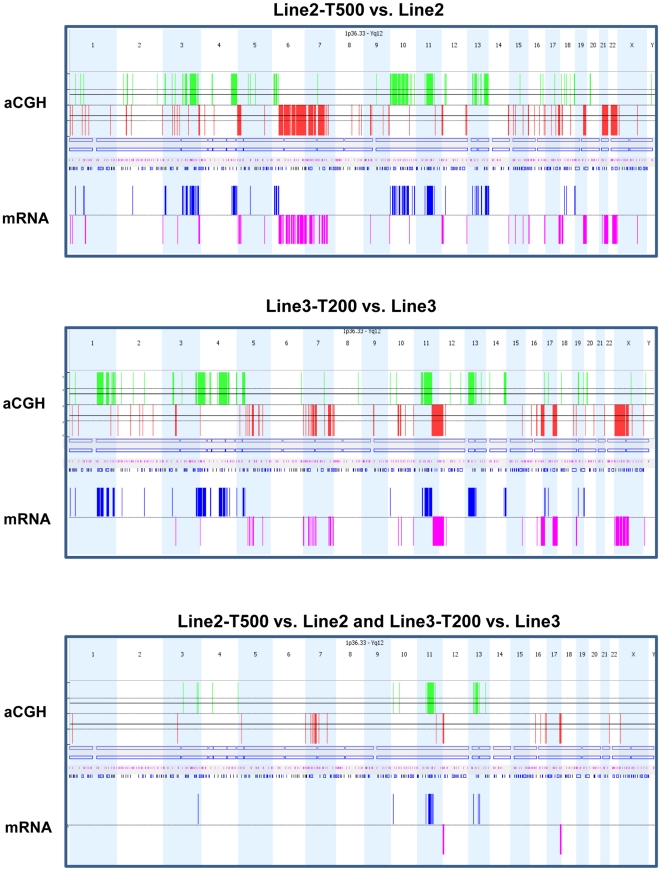
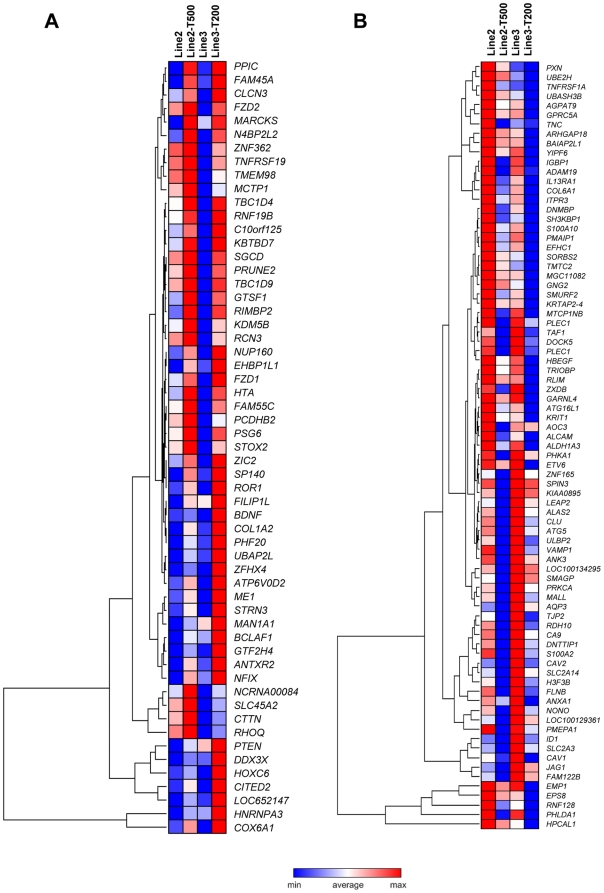
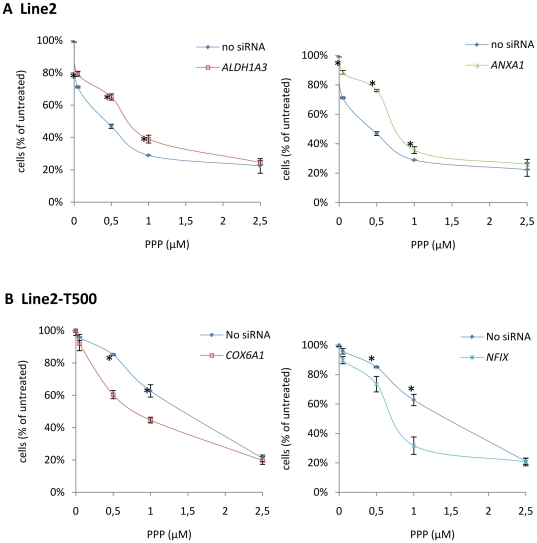
METHODOLOGY/PRINCIPAL FINDINGS: Copy number alterations monitored using metaphase and array-based comparative genomic hybridization analyses revealed largely overlapping alterations in parental and maximally tolerant cells. Gain/amplification of the MYC and PVT1 loci in 8q24.21 were verified on the chromosome level. Abnormalities observed in connection to PPP treatment included regular gains and losses, as well as homozygous losses in 10q24.1-q24.2 and 12p12.3-p13.2 in one of the lines and amplification at 5q11.2 in the other. Abnormalities observed in both tolerant derivatives include amplification/gain of 5q11.2, gain of 11q12.1-q14.3 and gain of 13q33.3-qter. Using Nexus software analysis we combined the array-CGH data with data from gene expression profilings and identified genes that were altered in both inputs. A subset of genes identified as downregulated (ALDH1A3, ANXA1, TLR4 and RAB5A) or upregulated (COX6A1, NFIX, ME1, MAPK and TAP2) were validated by siRNA in the tolerant or parental cells to alter sensitivity to PPP and confirmed to alter sensitivity to PPP in further cell lines.
Long-term PPP selection lead to altered gene expression in PPP tolerant cells with increase as well as decrease of genes involved in cell death such as PTEN and BCL2. In addition, acquired genomic copy number alterations were observed that were often reflected by altered mRNA expression levels for genes in the same regions.
苦鬼臼毒素(PPP)是一种很有前途的新型抗肿瘤药物,它在体外能有效地杀死肿瘤细胞,并在体内引起肿瘤消退和存活率的提高。我们之前曾报道过,PPP 治疗仅在 10 个细胞系中的 2 个中诱导出适度的耐受性,在此我们报告了在 1.5 年的治疗过程中,与 PPP 选择相关的获得性基因组和表达改变。
方法/主要发现:使用中期和基于阵列的比较基因组杂交分析监测的拷贝数改变显示,在亲本和最大耐受细胞中存在大量重叠的改变。在染色体水平上验证了 8q24.21 上 MYC 和 PVT1 基因座的增益/扩增。与 PPP 治疗相关的异常包括常染色体的增益和丢失,以及在一条染色体上的 10q24.1-q24.2 和 12p12.3-p13.2 上的纯合性丢失,以及在另一条染色体上的 5q11.2 上的扩增。在两条耐受衍生物中观察到的异常包括 5q11.2 的扩增/增益、11q12.1-q14.3 的增益和 13q33.3-qter 的增益。使用 Nexus 软件分析,我们将阵列-CGH 数据与基因表达谱数据相结合,鉴定出在两个输入中都改变的基因。一组被鉴定为下调(ALDH1A3、ANXA1、TLR4 和 RAB5A)或上调(COX6A1、NFIX、ME1、MAPK 和 TAP2)的基因,在耐受或亲本细胞中通过 siRNA 进行验证,以改变对 PPP 的敏感性,并在进一步的细胞系中证实改变对 PPP 的敏感性。
长期 PPP 选择导致 PPP 耐受细胞中基因表达的改变,涉及细胞死亡的基因(如 PTEN 和 BCL2)的增加和减少。此外,还观察到获得性基因组拷贝数改变,这些改变常常反映出同一区域内基因的 mRNA 表达水平的改变。