Discipline of Anatomy and Pathology, School of Medical Sciences, University of Adelaide, Frome Road, Adelaide, SA 5005, Australia.
Arthritis Res Ther. 2011 Mar 24;13(2):R51. doi: 10.1186/ar3294.
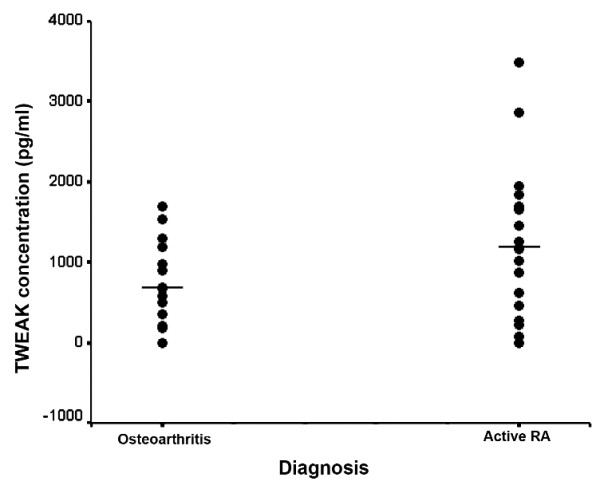
TNF-like weak inducer of apoptosis (TWEAK) has been proposed as a mediator of inflammation and bone erosion in rheumatoid arthritis (RA). This study aimed to investigate TWEAK and TWEAK receptor (Fn14) expression in synovial tissue from patients with active and inactive rheumatoid arthritis (RA), osteoarthritis (OA) and normal controls and assess soluble (s)TWEAK levels in the synovial fluids from patients with active RA and OA. Effects of sTWEAK on osteoclasts and osteoblasts were investigated in vitro.
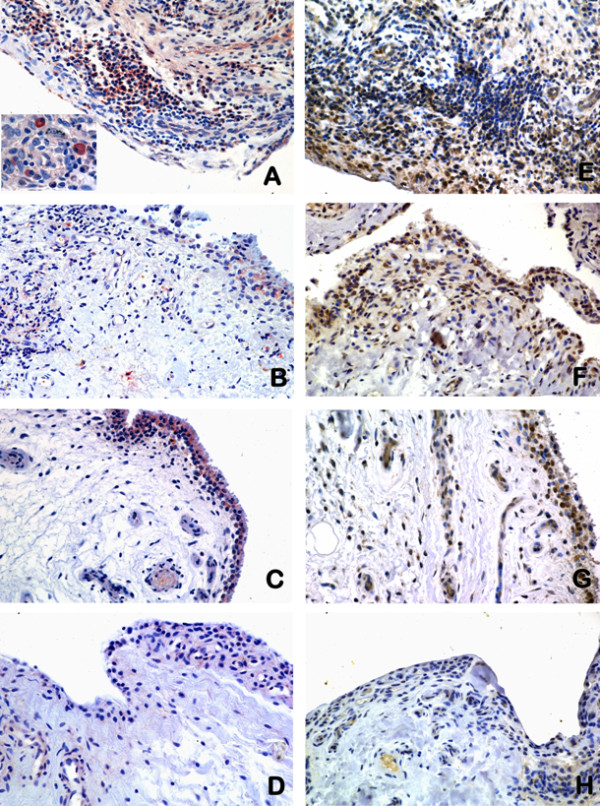
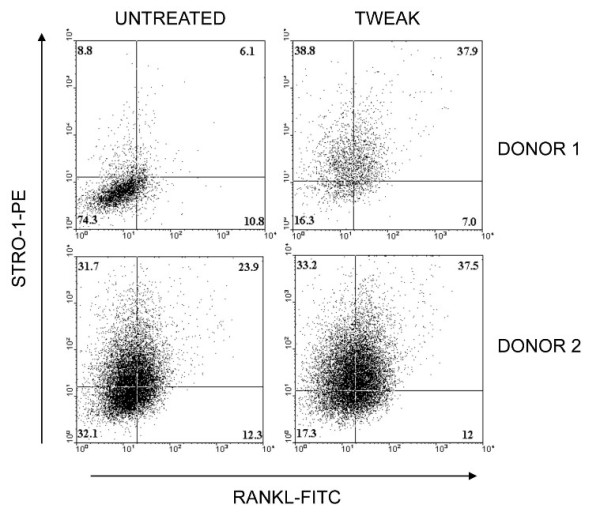
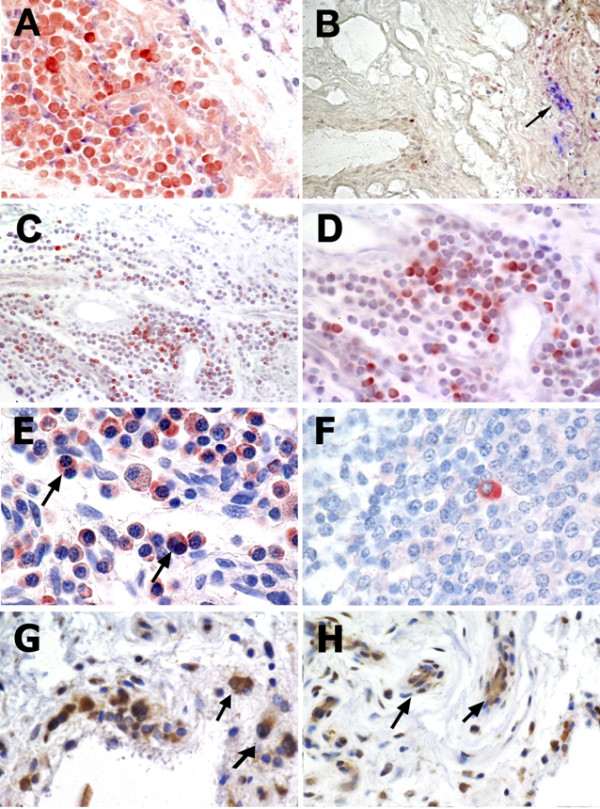
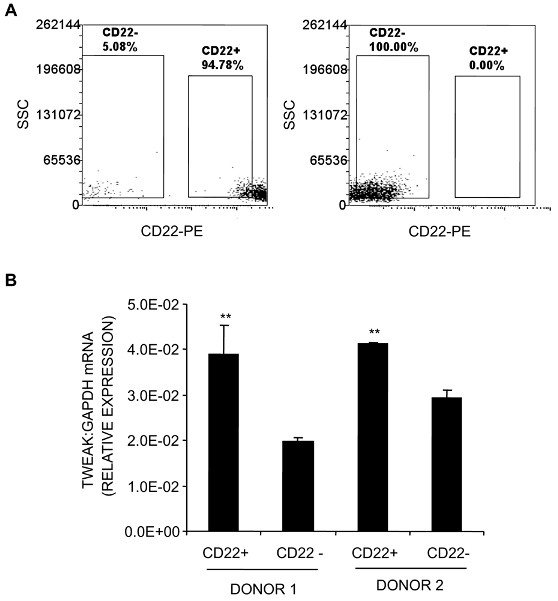
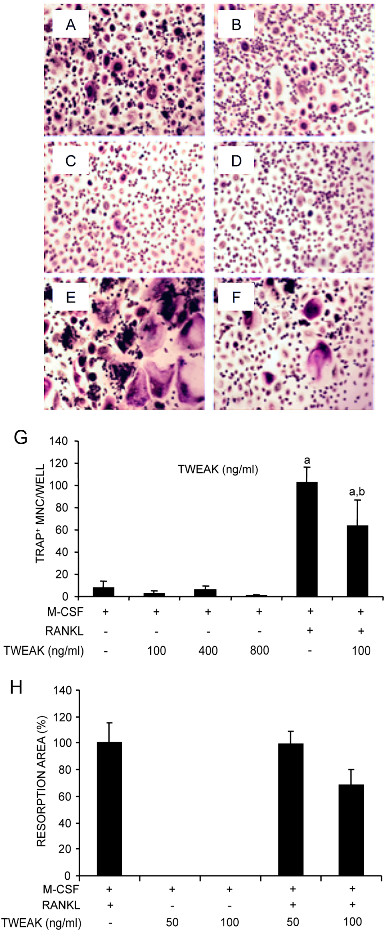
TWEAK and Fn14 expression were detected in synovial tissues by immunohistochemistry (IHC). Selected tissues were dual labelled with antibodies specific for TWEAK and lineage-selective cell surface markers CD68, Tryptase G, CD22 and CD38. TWEAK mRNA expression was examined in human peripheral blood mononuclear cells (PBMC) sorted on the basis of their expression of CD22. sTWEAK was detected in synovial fluid from OA and RA patients by ELISA. The effect of sTWEAK on PBMC and RAW 264.7 osteoclastogenesis was examined. The effect of sTWEAK on cell surface receptor activator of NF Kappa B Ligand (RANKL) expression by human osteoblasts was determined by flow cytometry.
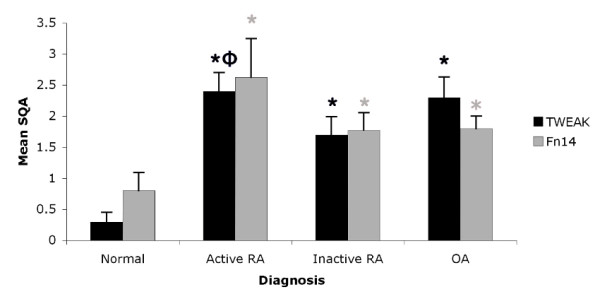
TWEAK and Fn14 expression were significantly higher in synovial tissue from all patient groups compared to the synovial tissue from control subjects (P < 0.05). TWEAK was significantly higher in active compared with inactive RA tissues (P < 0.05). TWEAK expression co-localised with a subset of CD38+ plasma cells and with CD22+ B-lymphocytes in RA tissues. Abundant TWEAK mRNA expression was detected in normal human CD22+ B cells. Higher levels of sTWEAK were observed in synovial fluids isolated from active RA compared with OA patients. sTWEAK did not stimulate osteoclast formation directly from PBMC, however, sTWEAK induced the surface expression of RANKL by human immature, STRO-1+ osteoblasts.
The expression of TWEAK by CD22+ B cells and CD38+ plasma cells in RA synovium represents a novel potential pathogenic pathway. High levels of sTWEAK in active RA synovial fluid and of TWEAK and Fn14 in active RA tissue, together with the effect of TWEAK to induce osteoblastic RANKL expression, is consistent with TWEAK/Fn14 signalling being important in the pathogenesis of inflammation and bone erosion in RA.
TNF 样凋亡弱诱导因子(TWEAK)被认为是类风湿关节炎(RA)中炎症和骨侵蚀的介质。本研究旨在探讨滑膜组织中 TWEAK 和 TWEAK 受体(Fn14)在活动期和非活动期类风湿关节炎(RA)、骨关节炎(OA)和正常对照患者中的表达,并评估活动期 RA 和 OA 患者滑液中可溶性(s)TWEAK 水平。研究了 sTWEAK 对破骨细胞和成骨细胞的体外作用。
采用免疫组织化学(IHC)检测滑膜组织中 TWEAK 和 Fn14 的表达。用针对 TWEAK 和谱系选择细胞表面标志物 CD68、Tryptase G、CD22 和 CD38 的特异性抗体对选定的组织进行双重标记。通过基于 CD22 表达对人外周血单核细胞(PBMC)进行分选,检测 TWEAK mRNA 的表达。通过 ELISA 检测 OA 和 RA 患者滑液中的 sTWEAK。研究了 sTWEAK 对 PBMC 和 RAW 264.7 破骨细胞生成的影响。通过流式细胞术测定 sTWEAK 对人成骨细胞表面核因子 κB 配体受体激活剂(RANKL)表达的影响。
与对照组相比,所有患者组的滑膜组织中 TWEAK 和 Fn14 的表达均显著升高(P < 0.05)。与非活动期 RA 组织相比,活动期 RA 组织中的 TWEAK 显著升高(P < 0.05)。TWEAK 在 RA 组织中与 CD38+浆细胞的一部分和 CD22+B 淋巴细胞共定位。在正常人类 CD22+B 细胞中检测到大量 TWEAK mRNA 的表达。与 OA 患者相比,来自活动期 RA 患者的滑膜液中 sTWEAK 水平较高。sTWEAK 不能直接从 PBMC 刺激破骨细胞形成,但 sTWEAK 诱导人类幼稚、STRO-1+成骨细胞表面表达 RANKL。
RA 滑膜中 CD22+B 细胞和 CD38+浆细胞表达 TWEAK 代表了一种新的潜在致病途径。活动期 RA 滑膜液中 sTWEAK 水平升高,活动期 RA 组织中 TWEAK 和 Fn14 水平升高,以及 TWEAK 诱导成骨细胞 RANKL 表达的作用,表明 TWEAK/Fn14 信号在 RA 炎症和骨侵蚀的发病机制中很重要。