Neuroscience Research Center and Department of Medical Genetics, School of Medicine, Shahid Beheshti University of Medical Sciences, Tehran, Iran.
Nat Neurosci. 2011 May;14(5):578-86. doi: 10.1038/nn.2798. Epub 2011 Mar 27.
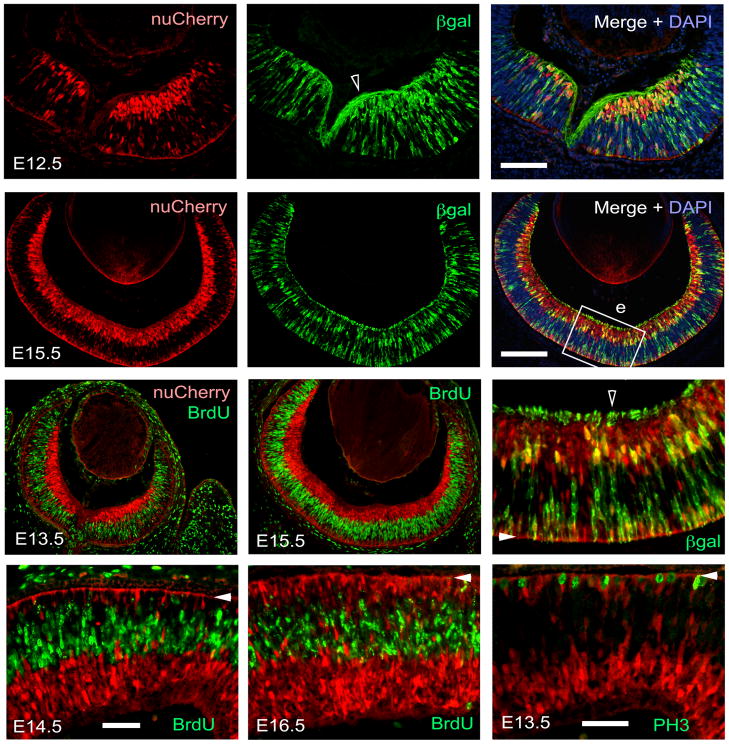
Individuals with nonsyndromic congenital retinal nonattachment (NCRNA) are totally blind from birth. The disease afflicts ∼1% of Kurdish people living in a group of neighboring villages in North Khorasan, Iran. We found that NCRNA is caused by a 6,523-bp deletion that spans a remote cis regulatory element 20 kb upstream from ATOH7 (Math5), a bHLH transcription factor gene that is required for retinal ganglion cell (RGC) and optic nerve development. In humans, the absence of RGCs stimulates massive neovascular growth of fetal blood vessels in the vitreous and early retinal detachment. The remote ATOH7 element appears to act as a secondary or 'shadow' transcriptional enhancer. It has minimal sequence similarity to the primary enhancer, which is close to the ATOH7 promoter, but drives transgene expression with an identical spatiotemporal pattern in the mouse retina. The human transgene also functions appropriately in zebrafish, reflecting deep evolutionary conservation. These dual enhancers may reinforce ATOH7 expression during early critical stages of eye development when retinal neurogenesis is initiated.
非综合征性先天性视网膜脱离(NCRNA)患者从出生起就完全失明。这种疾病影响了居住在伊朗北呼罗珊省的一群相邻村庄中的约 1%的库尔德人。我们发现,NCRNA 是由一个 6523bp 的缺失引起的,该缺失跨越了 ATOH7(Math5)上游 20kb 的远程顺式调控元件,该基因是视网膜神经节细胞(RGC)和视神经发育所必需的 bHLH 转录因子基因。在人类中,RGC 的缺失会刺激玻璃体和早期视网膜脱离中胎儿血管的大量新生血管生长。远程 ATOH7 元件似乎充当二次或“阴影”转录增强子。它与靠近 ATOH7 启动子的主要增强子几乎没有序列相似性,但在小鼠视网膜中以相同的时空模式驱动转基因表达。人类转基因在斑马鱼中也能正常发挥作用,反映了其在进化上的深度保守性。这两个双重增强子可能在视网膜神经发生开始的眼部发育早期的关键阶段增强 ATOH7 的表达。