Anatomy and Neurobiology, Center for Microelectrode Technology, University of Kentucky, College of Medicine, Lexington, USA.
ASN Neuro. 2011 Apr 21;3(2):e00057. doi: 10.1042/AN20110005.
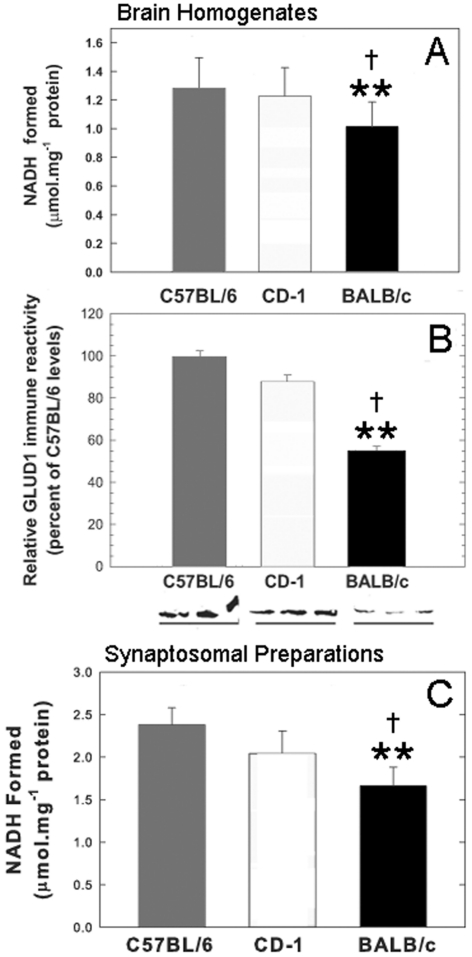
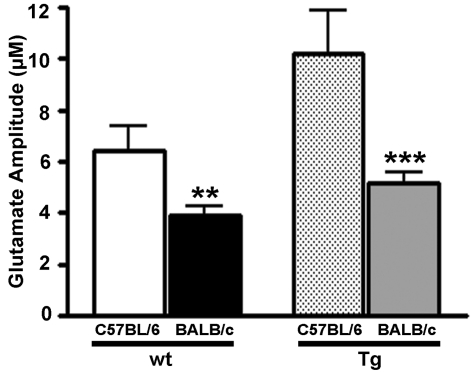
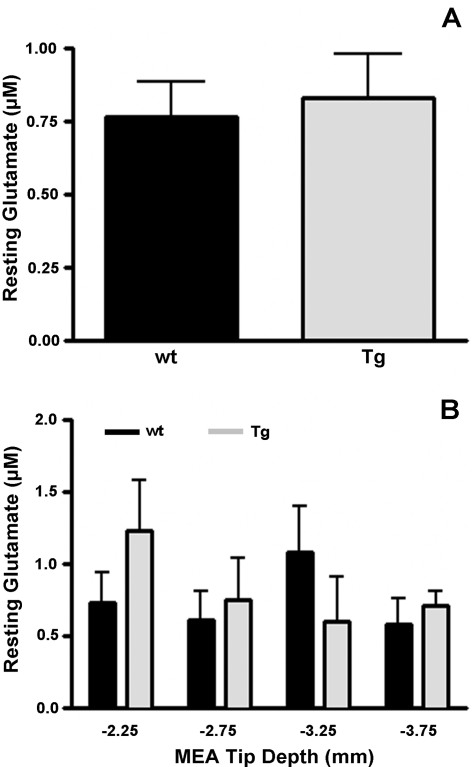
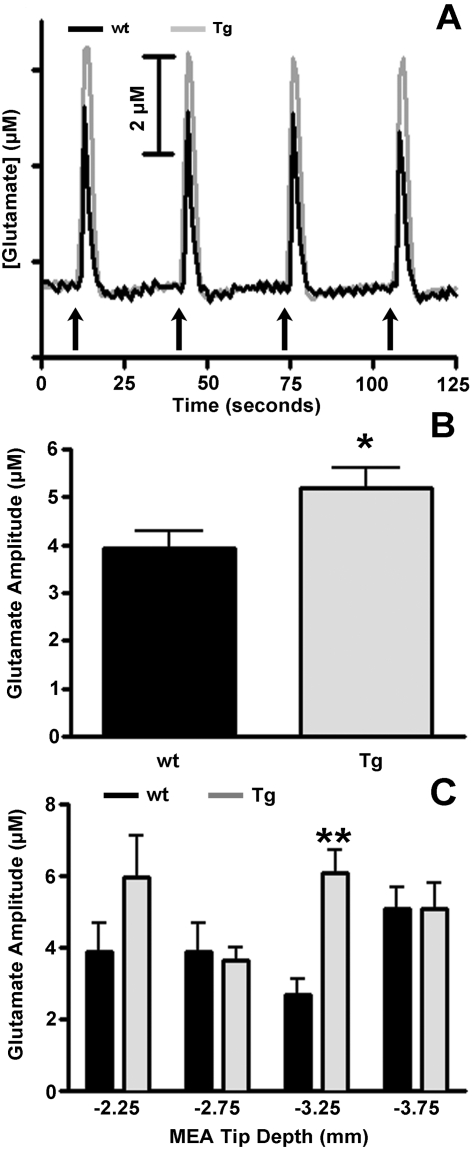
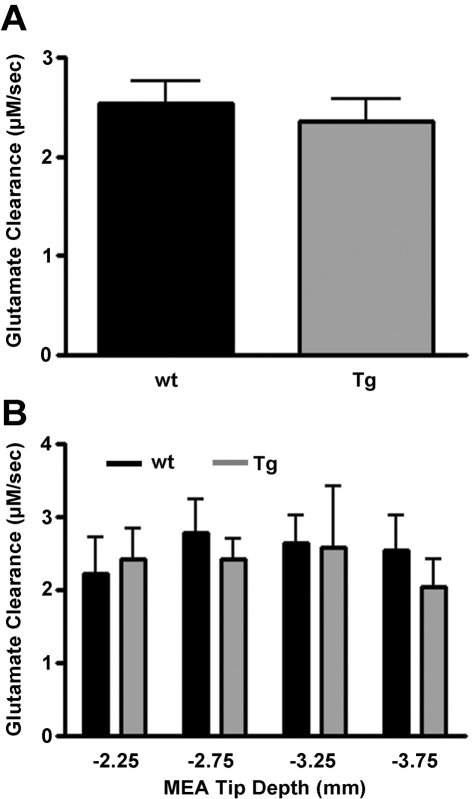
We have previously shown that overexpression of the Glud1 (glutamate dehydrogenase 1) gene in neurons of C57BL/6 mice results in increased depolarization-induced glutamate release that eventually leads to selective neuronal injury and cell loss by 12 months of age. However, it is known that isogenic lines of Tg (transgenic) mice produced through back-crossing with one strain may differ in their phenotypic characteristics from those produced using another inbred mouse strain. Therefore, we decided to introduce the Glud1 transgene into the Balb/c strain that has endogenously lower levels of GLUD1 (glutamate dehydrogenase 1) enzyme activity in the brain as compared with C57BL/6. Using an enzyme-based MEA (microelectrode array) that is selective for measuring glutamate in vivo, we measured depolarization-induced glutamate release. Within a discrete layer of the striatum, glutamate release was significantly increased in Balb/c Tg mice compared with wt (wild-type) littermates. Furthermore, Balb/c mice released approx. 50-60% of the amount of glutamate compared with C57BL/6 mice. This is similar to the lower levels of endogenous GLUD1 protein in Balb/c compared with C57BL/6 mice. The development of these Glud1-overexpressing mice may allow for the exploration of key molecular events produced by chronic exposure of neurons to moderate, transient increases in glutamate release, a process hypothesized to occur in neurodegenerative disorders.
我们之前已经证明,在 C57BL/6 小鼠的神经元中过表达 Glud1(谷氨酸脱氢酶 1)基因会导致去极化诱导的谷氨酸释放增加,最终导致选择性神经元损伤和细胞死亡,这一过程在 12 个月大时发生。然而,人们知道,通过与一个品系进行回交产生的同基因系 Tg(转基因)小鼠,其表型特征可能与使用另一个近交系小鼠产生的不同。因此,我们决定将 Glud1 转基因引入 Balb/c 品系,该品系大脑中的 GLUD1(谷氨酸脱氢酶 1)酶活性的内源性水平低于 C57BL/6 品系。使用一种基于酶的 MEA(微电极阵列),该技术专门用于活体测量谷氨酸,我们测量了去极化诱导的谷氨酸释放。在纹状体的一个离散层中,Balb/c Tg 小鼠的谷氨酸释放明显高于 wt(野生型)同窝仔鼠。此外,与 C57BL/6 小鼠相比,Balb/c 小鼠释放的谷氨酸量约为 50-60%。这与 Balb/c 小鼠中内源性 GLUD1 蛋白水平较低的情况相似。这些 Glud1 过表达小鼠的发展可能允许探索神经元慢性暴露于适度、短暂增加的谷氨酸释放所产生的关键分子事件,这一过程被假设发生在神经退行性疾病中。