Department of Microbiology and Molecular Genetics, IMRIC, The Hebrew University-Hadassah Medical School, Jerusalem 91120, Israel.
Nucleic Acids Res. 2011 Jul;39(13):5704-14. doi: 10.1093/nar/gkr126. Epub 2011 Mar 30.
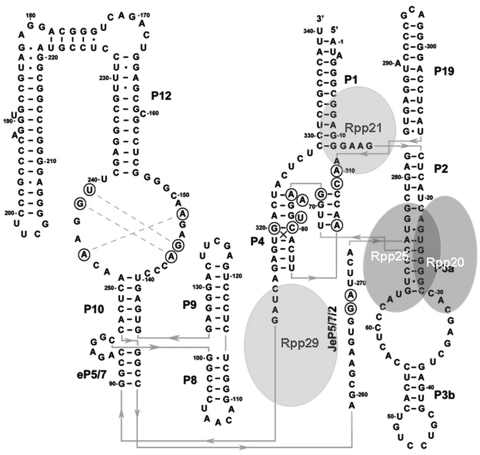
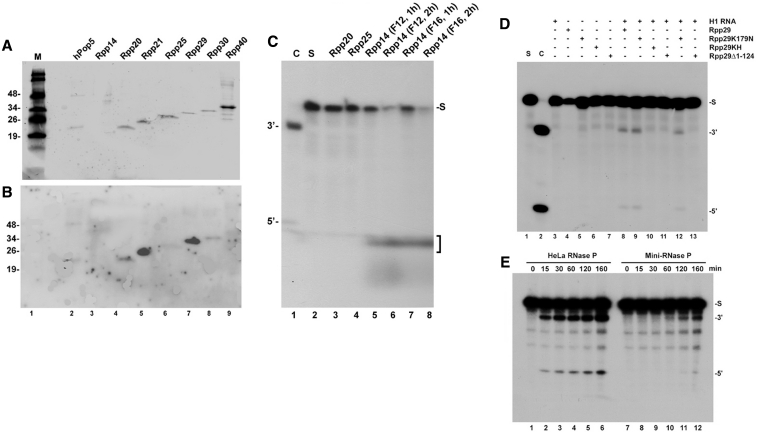
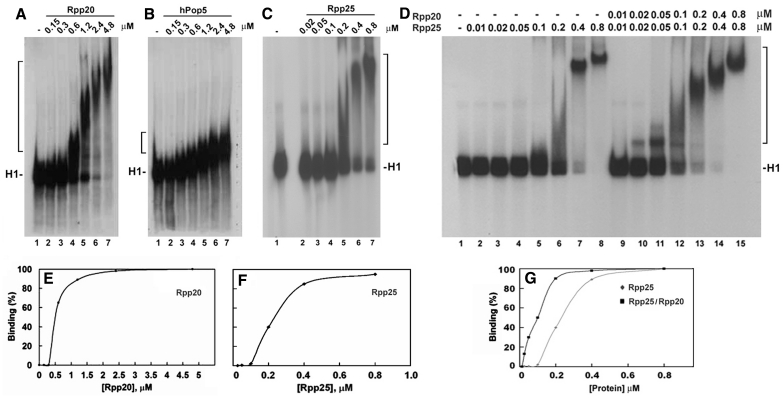
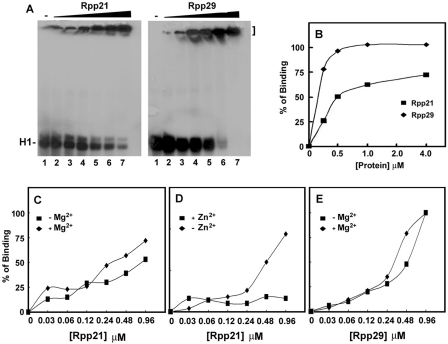
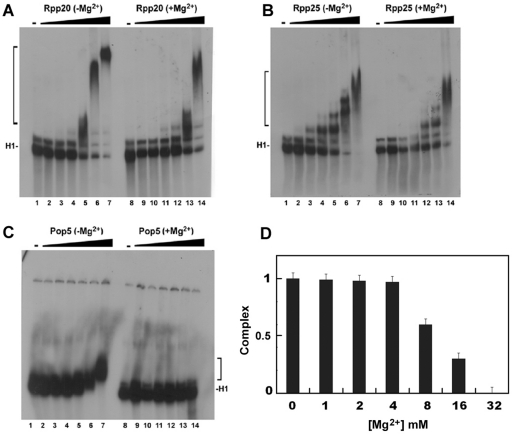
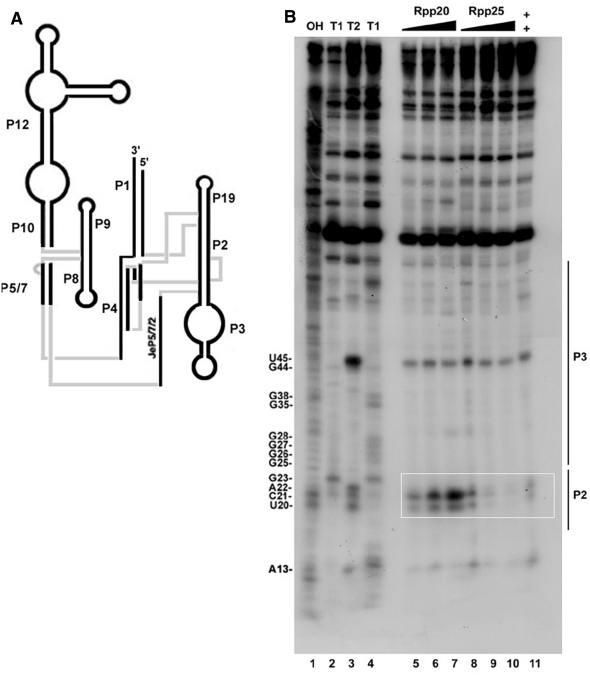
Human nuclear RNase P is required for transcription and processing of tRNA. This catalytic RNP has an H1 RNA moiety associated with ten distinct protein subunits. Five (Rpp20, Rpp21, Rpp25, Rpp29 and Pop5) out of eight of these protein subunits, prepared in refolded recombinant forms, bind to H1 RNA in vitro. Rpp20 and Rpp25 bind jointly to H1 RNA, even though each protein can interact independently with this transcript. Nuclease footprinting analysis reveals that Rpp20 and Rpp25 recognize overlapping regions in the P2 and P3 domains of H1 RNA. Rpp21 and Rpp29, which are sufficient for reconstitution of the endonucleolytic activity, bind to separate regions in the catalytic domain of H1 RNA. Common themes and discrepancies in the RNA-protein interactions between human nuclear RNase P and its related yeast and archaeal counterparts provide a rationale for the assembly of the fully active form of this enzyme.
人核 RNase P 是 tRNA 转录和加工所必需的。这种催化性 RNP 具有与十个不同的蛋白质亚基相关联的 H1 RNA 部分。在体外,在重新折叠的重组形式中制备的这八个蛋白质亚基中的五个(Rpp20、Rpp21、Rpp25、Rpp29 和 Pop5)与 H1 RNA 结合。Rpp20 和 Rpp25 联合结合 H1 RNA,尽管每种蛋白质都可以与该转录本独立相互作用。核酸酶足迹分析表明,Rpp20 和 Rpp25 识别 H1 RNA 的 P2 和 P3 结构域中的重叠区域。Rpp21 和 Rpp29 足以重新构建内切核酸酶活性,它们与 H1 RNA 的催化结构域中的不同区域结合。人核 RNase P 与其相关的酵母和古菌对应物之间的 RNA-蛋白质相互作用的共同主题和差异为该酶的完全活性形式的组装提供了依据。