Oxford University Clinical Research Unit, Wellcome Trust Major Overseas Program, Ho Chi Minh City, Vietnam.
PLoS One. 2011 Mar 24;6(3):e18176. doi: 10.1371/journal.pone.0018176.
The dominant viral etiologies responsible for acute respiratory infections (ARIs) are poorly understood, particularly among hospitalized children in resource-limited tropical countries where morbidity and mortality caused by ARIs are highest. Improved etiological insight is needed to improve clinical management and prevention.
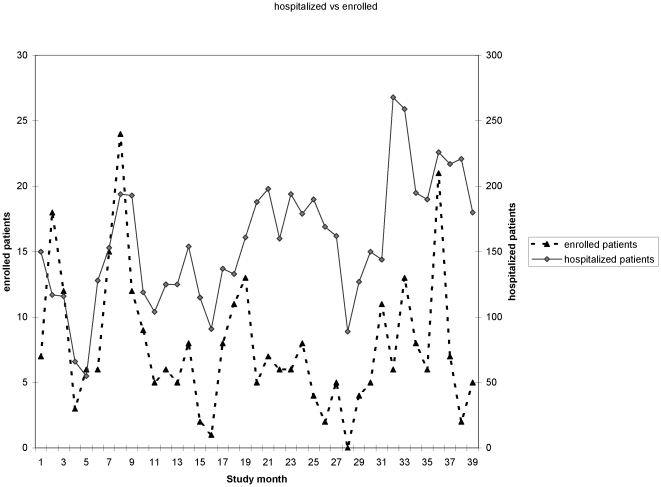
We conducted a three-year prospective descriptive study of severe respiratory illness among children from 2 months to 13 years of age within the largest referral hospital for infectious diseases in southern Vietnam.
Molecular detection for 15 viral species and subtypes was performed on three types of respiratory specimens (nose, throat swabs and nasopharyngeal aspirates) using a multiplex RT-PCR kit (Seeplex™ RV detection, Seegene) and additional monoplex real-time RT-PCRs.
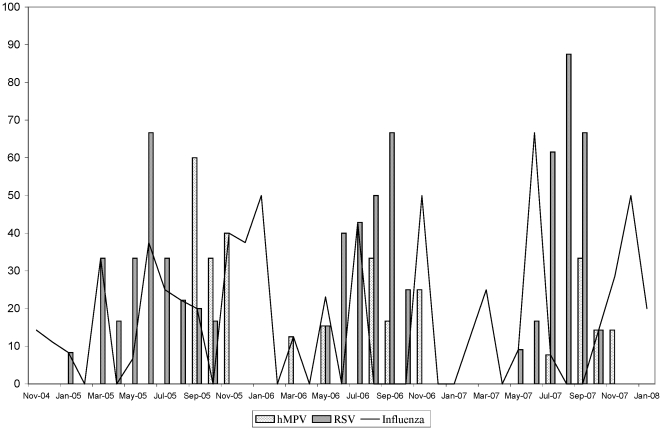
A total of 309 children were enrolled from November 2004 to January 2008. Viruses were identified in 72% (222/309) of cases, including respiratory syncytial virus (24%), influenza virus A and B (17%), human bocavirus (16%), enterovirus (9%), human coronavirus (8%), human metapneumovirus (7%), parainfluenza virus 1-3 (6%), adenovirus (5%), and human rhinovirus A (4%). Co-infections with multiple viruses were detected in 20% (62/309) of patients. When combined, diagnostic yields in nose and throat swabs were similar to nasopharyngeal aspirates.
Similar to other parts in the world, RSV and influenza were the predominant viral pathogens detected in Vietnamese hospitalized children. Combined nasal and throat swabs are the specimens of choice for sensitive molecular detection of a broad panel of viral agents. Further research is required to better understand the clinical significance of single versus multiple viral coinfections and to address the role of bacterial (co-)infections involved in severe respiratory illness.
导致急性呼吸道感染(ARI)的主要病毒病因尚不清楚,特别是在资源有限的热带国家,那里的 ARI 发病率和死亡率最高。需要更好地了解病因学,以改善临床管理和预防。
我们对越南南部最大的传染病转诊医院的 2 个月至 13 岁儿童严重呼吸道疾病进行了为期三年的前瞻性描述性研究。
使用多重 RT-PCR 试剂盒(Seeplex™ RV 检测,Seegene)和额外的单重实时 RT-PCR 对三种呼吸道标本(鼻、咽拭子和鼻咽抽吸物)进行了 15 种病毒种类和亚型的分子检测。
2004 年 11 月至 2008 年 1 月期间共纳入 309 例儿童。在 72%(222/309)的病例中鉴定出病毒,包括呼吸道合胞病毒(24%)、流感病毒 A 和 B(17%)、人类博卡病毒(16%)、肠道病毒(9%)、人冠状病毒(8%)、人偏肺病毒(7%)、副流感病毒 1-3(6%)、腺病毒(5%)和人鼻病毒 A(4%)。20%(62/309)的患者存在多种病毒的合并感染。鼻和咽拭子联合检测的诊断率与鼻咽抽吸物相似。
与世界其他地区相似,RSV 和流感是越南住院儿童中主要检测到的病毒病原体。联合使用鼻和咽拭子是用于敏感分子检测广泛病毒谱的首选标本。需要进一步研究以更好地了解单一与多种病毒合并感染的临床意义,并解决严重呼吸道疾病中涉及的细菌(共同)感染的作用。