Department of Biology, Grand Valley State University, Allendale, MI 49401, USA.
BMC Evol Biol. 2011 Apr 1;11:88. doi: 10.1186/1471-2148-11-88.
Human activities, such as agriculture, hunting, and habitat modification, exert a significant effect on native species. Although many species have suffered population declines, increased population fragmentation, or even extinction in connection with these human impacts, others seem to have benefitted from human modification of their habitat. Here we examine whether population growth in an insectivorous bat (Tadarida brasiliensis mexicana) can be attributed to the widespread expansion of agriculture in North America following European settlement. Colonies of T. b. mexicana are extremely large (~10(6) individuals) and, in the modern era, major agricultural insect pests form an important component of their food resource. It is thus hypothesized that the growth of these insectivorous bat populations was coupled to the expansion of agricultural land use in North America over the last few centuries.
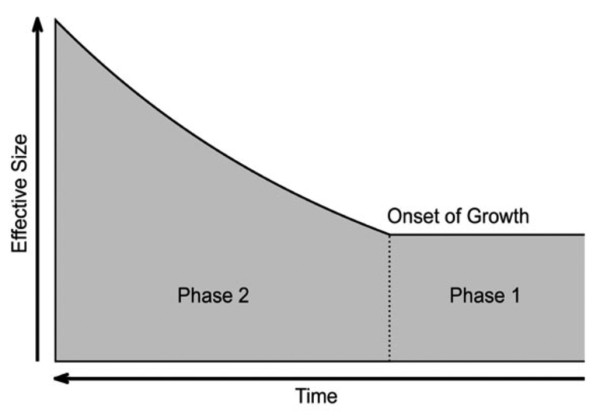
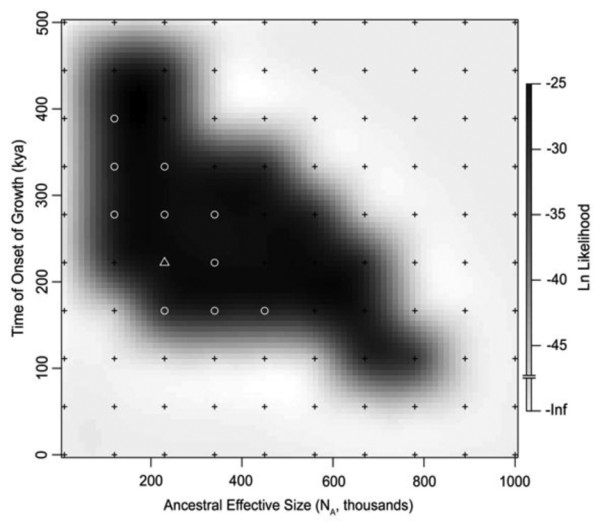
We sequenced one haploid and one autosomal locus to determine the rate and time of onset of population growth in T. b. mexicana. Using an approximate Maximum Likelihood method, we have determined that T. b. mexicana populations began to grow ~220 kya from a relatively small ancestral effective population size before reaching the large effective population size observed today.
Our analyses reject the hypothesis that T. b. mexicana populations grew in connection with the expansion of human agriculture in North America, and instead suggest that this growth commenced long before the arrival of humans. As T. brasiliensis is a subtropical species, we hypothesize that the observed signals of population growth may instead reflect range expansions of ancestral bat populations from southern glacial refugia during the tail end of the Pleistocene.
人类活动,如农业、狩猎和栖息地改变,对本地物种产生了重大影响。尽管许多物种因人类活动而遭受了种群数量下降、种群碎片化加剧甚至灭绝,但其他物种似乎受益于人类对其栖息地的改变。在这里,我们研究了在欧洲人定居后,北美的农业广泛扩张是否导致食虫蝙蝠(Tadarida brasiliensis mexicana)的种群增长。T. b. mexicana 的群体非常庞大(约 10^6 只个体),在现代,农业害虫是它们食物资源的重要组成部分。因此,有人假设这些食虫蝙蝠种群的增长与过去几个世纪北美农业土地利用的扩张有关。
我们对一个单倍体和一个常染色体位点进行测序,以确定 T. b. mexicana 种群的增长速度和时间。我们使用近似最大似然法确定,T. b. mexicana 种群从相对较小的祖先有效种群规模开始增长,约在 220 千年前,然后达到今天观察到的大有效种群规模。
我们的分析否定了 T. b. mexicana 种群与北美的人类农业扩张有关的假说,而是表明这种增长早在人类到来之前就已经开始了。由于 T. brasiliensis 是一种亚热带物种,我们假设观察到的种群增长信号可能反映了在更新世末期,祖先蝙蝠种群从南部冰川避难所的扩张。