Department of Psychiatry and Behavioral Sciences, Northwestern University, Feinberg School of Medicine, 303 E Chicago Ave, Chicago, IL 60611, USA.
Mol Cell Neurosci. 2011 Jun;47(2):137-44. doi: 10.1016/j.mcn.2011.03.009. Epub 2011 Apr 2.
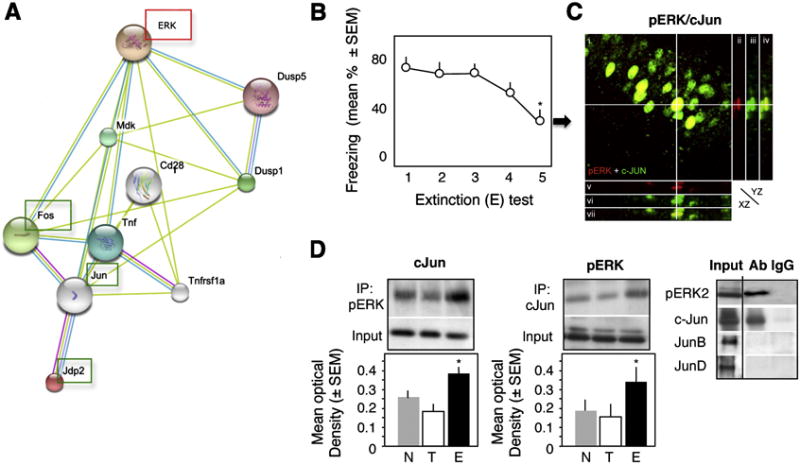
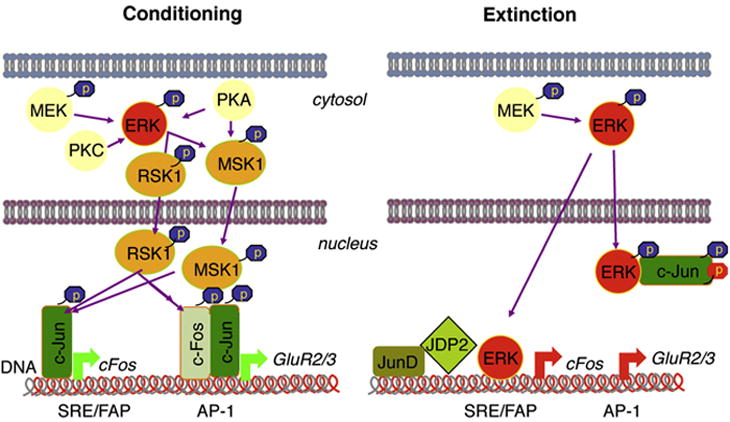
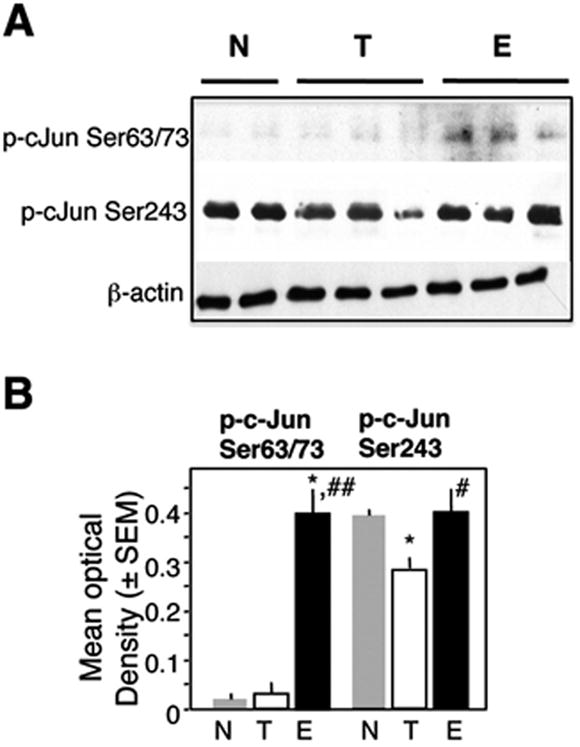
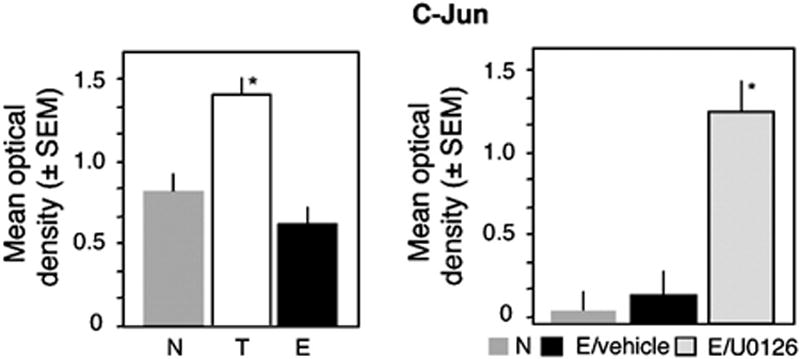
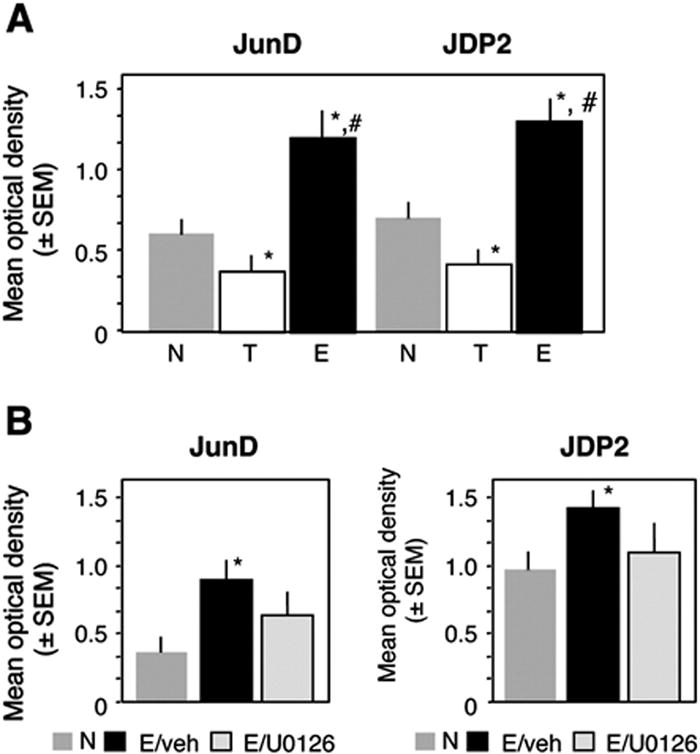
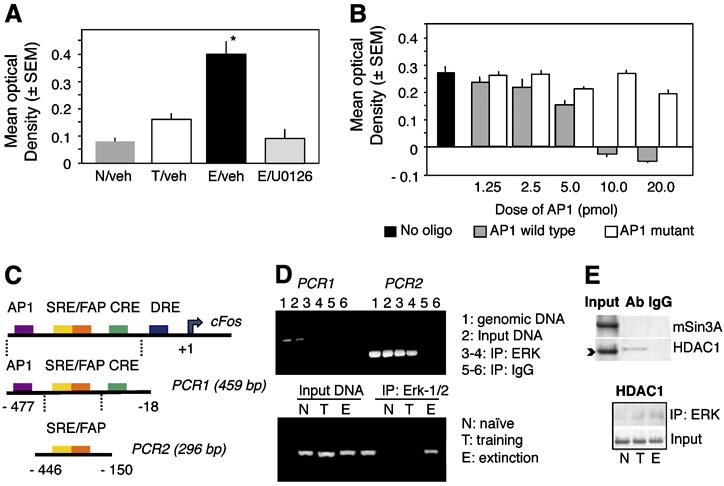
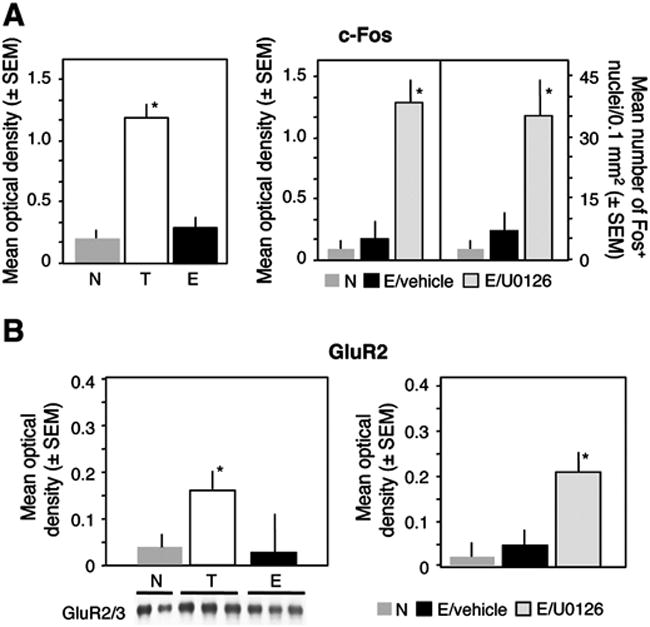
Extensive research has unraveled the molecular basis of learning processes underlying contextual fear conditioning, but the mechanisms of fear extinction remain less known. Contextual fear extinction occurs when an aversive stimulus that initially caused fear is no longer present and depends on the activation of the extracellular signal-regulated kinase (ERK), among other molecules. Here we investigated how ERK signaling triggered by extinction affects its downstream targets belonging to the activator protein-1 (AP-1) transcription factor family. We found that extinction, when compared to conditioning of fear, markedly enhanced the interactions of active, phospho-ERK (pERK ) with c-Jun causing alterations of its phosphorylation state. The AP-1 binding of c-Jun was decreased whereas AP-1 binding of JunD, Jun dimerization protein 2 (JDP2) and ERK were significantly enhanced. The increased AP-1 binding of the inhibitory JunD and JDP2 transcription factors was paralleled by decreased levels of the AP-1 regulated proteins c-Fos and GluR2. These changes were specific for extinction and were MEK-dependent. Overall, fear extinction involves ERK/Jun interactions and a decrease of a subset of AP-1-regulated proteins that are typically required for fear conditioning. Facilitating the formation of inhibitory AP-1 complexes may thus facilitate the reduction of fear.
大量研究已经揭示了情境性恐惧条件反射背后学习过程的分子基础,但恐惧消退的机制仍知之甚少。当最初引起恐惧的厌恶刺激不再存在时,就会发生情境性恐惧消退,这依赖于细胞外信号调节激酶 (ERK) 的激活,以及其他分子。在这里,我们研究了由消退引发的 ERK 信号转导如何影响其下游靶标,属于激活蛋白-1 (AP-1) 转录因子家族。我们发现,与恐惧条件化相比,消退显著增强了活性磷酸化 ERK (pERK) 与 c-Jun 的相互作用,导致其磷酸化状态发生改变。c-Jun 的 AP-1 结合减少,而 JunD、Jun 二聚化蛋白 2 (JDP2) 和 ERK 的 AP-1 结合显著增强。抑制性 JunD 和 JDP2 转录因子的 AP-1 结合增加伴随着 AP-1 调节蛋白 c-Fos 和 GluR2 的水平降低。这些变化是特异性的消退,并且是 MEK 依赖性的。总的来说,恐惧消退涉及 ERK/Jun 相互作用以及一组通常对恐惧条件化所需的 AP-1 调节蛋白的减少。因此,促进抑制性 AP-1 复合物的形成可能有助于减少恐惧。