Department of Pharmacy, The Hospital for Sick Children, Toronto, Ontario, Canada.
Pediatr Blood Cancer. 2011 Aug;57(2):191-8. doi: 10.1002/pbc.23114. Epub 2011 Apr 4.
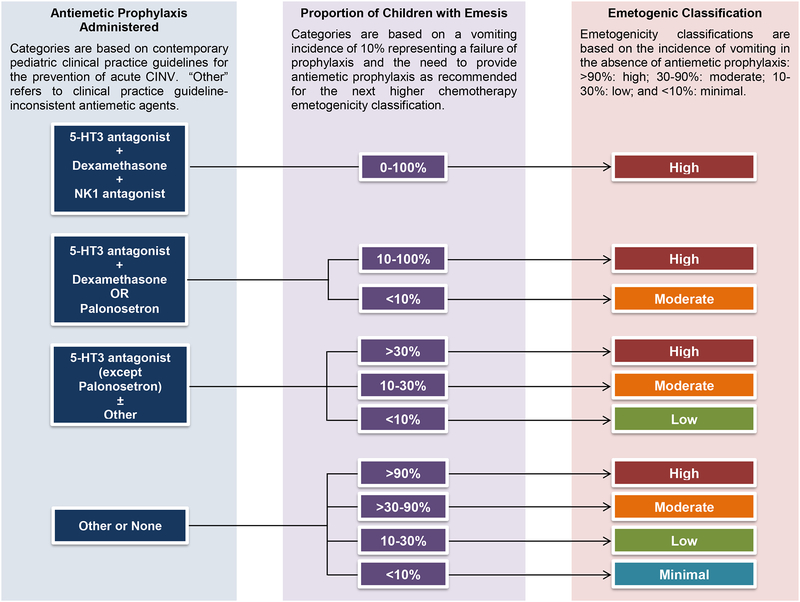
This guideline provides clinicians caring for children with an approach to assessing the acute emetogenic potential of antineoplastic therapies. It was developed by an international, inter-professional panel of clinicians and researchers using AGREE and CAN-ADAPTE methods. The emetogenicity of antineoplastic agents was evaluated and ranked as high, moderate, low, or minimal. The emetogenicity of multiple-agent and multiple-day antineoplastic therapy was also classified. Gaps in the evidence used to underpin the guideline recommendations were identified. The contribution of this guideline to the prevention of antineoplastic-induced nausea and vomiting in individual children about to receive antineoplastic therapy requires prospective evaluation.
本指南为儿科临床医生提供了一种评估抗肿瘤治疗急性致吐潜能的方法。该指南由国际跨专业临床医生和研究人员使用 AGREE 和 CAN-ADAPTE 方法制定。评估和分级抗肿瘤药物的致吐性为高、中、低或轻微。多药物和多日抗肿瘤治疗的致吐性也进行了分类。确定了为支持指南推荐而使用的证据中的差距。本指南对预防即将接受抗肿瘤治疗的个别儿童发生抗肿瘤诱导的恶心和呕吐的贡献需要前瞻性评估。