Department of Anesthesiology & Peri-Operative Medicine, Oregon Health & Science University, Portland, USA.
Metab Brain Dis. 2011 Jun;26(2):123-33. doi: 10.1007/s11011-011-9241-2. Epub 2011 Apr 7.
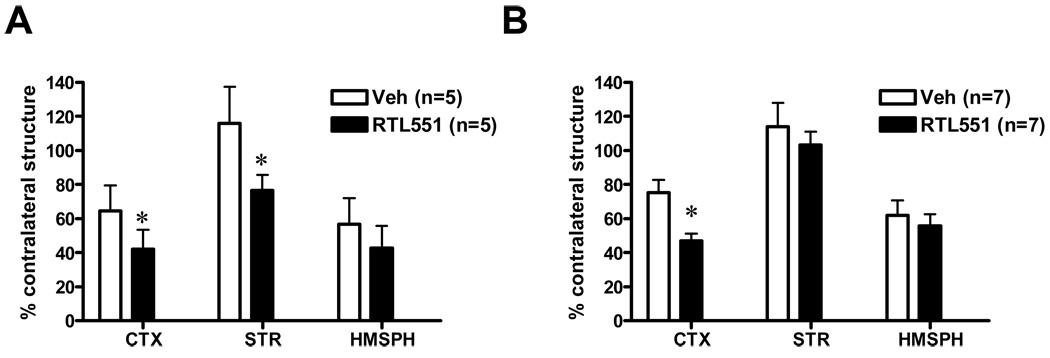
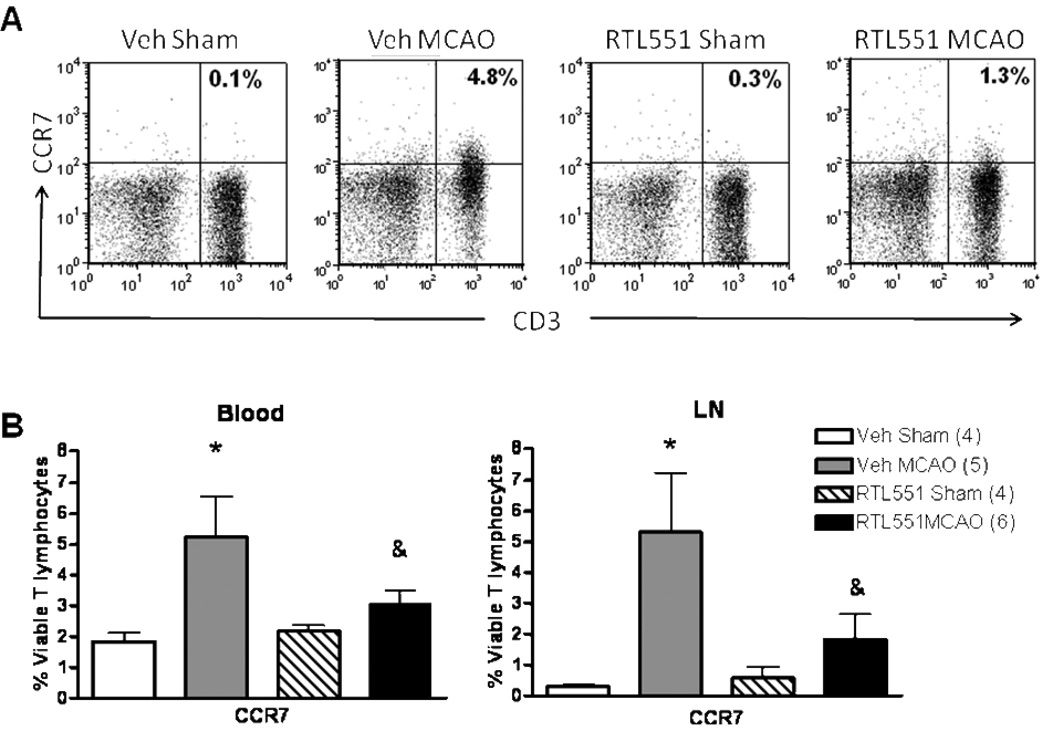
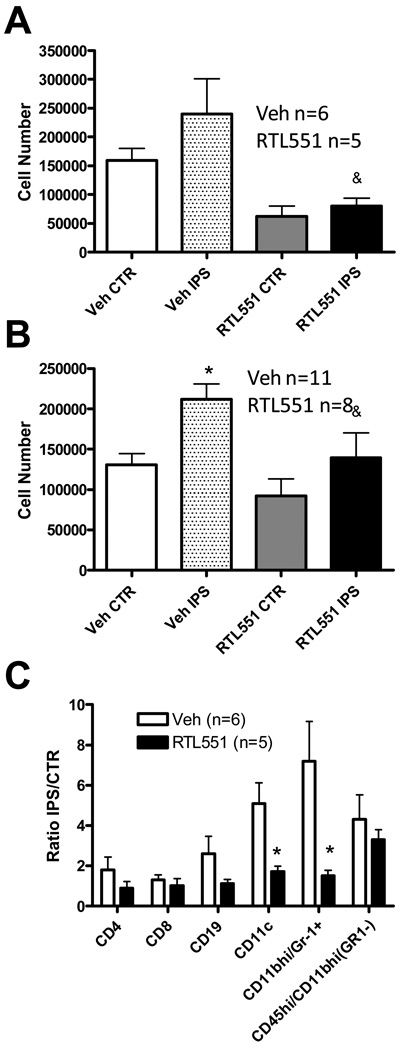
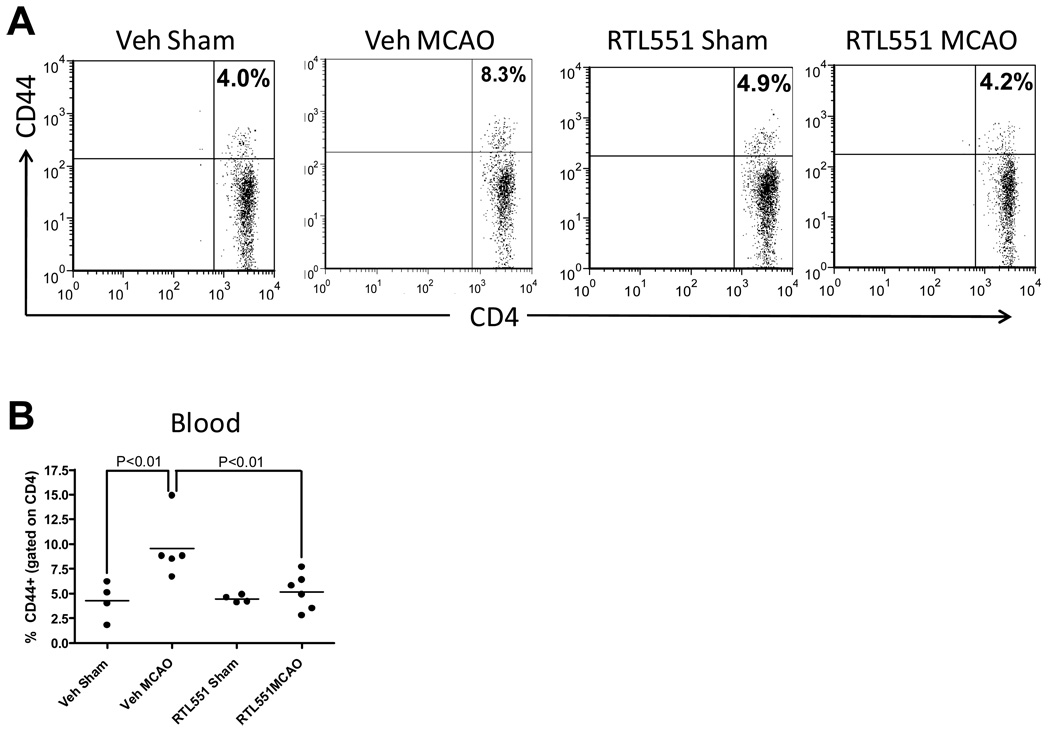
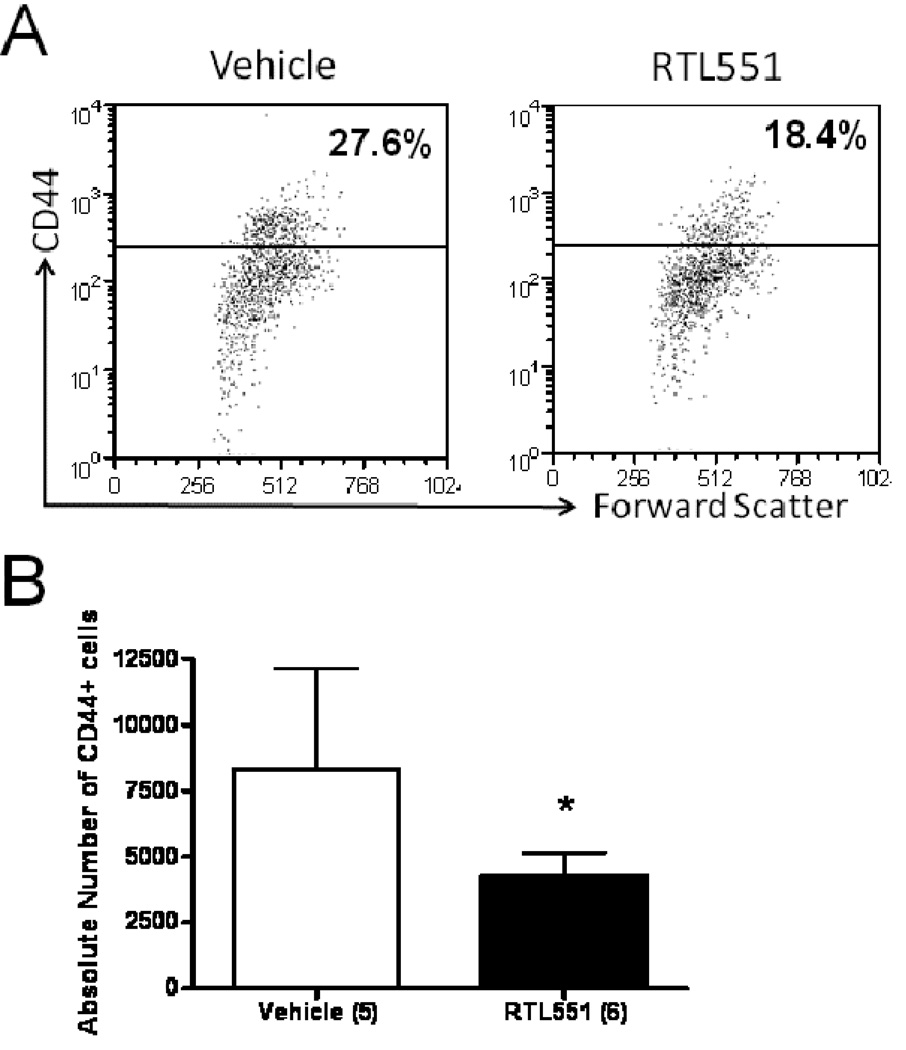
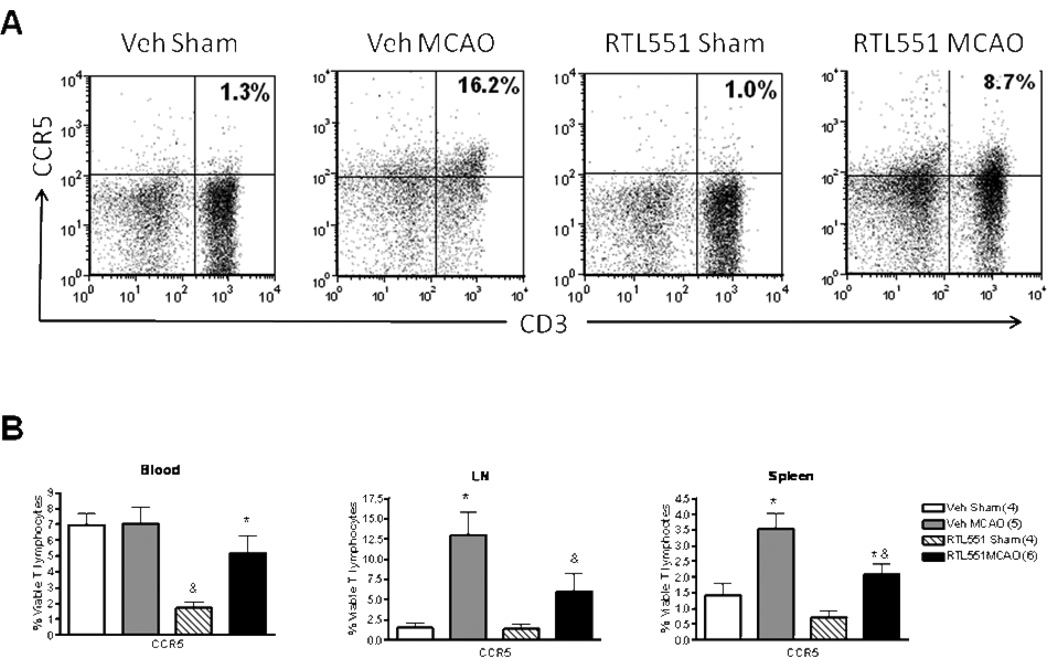
Stroke induces a biphasic effect on the peripheral immune response that involves early activation of peripheral leukocytes followed by severe immunosuppression and atrophy of the spleen. Peripheral immune cells, including T lymphocytes, migrate to the brain and exacerbate the developing infarct. Recombinant T-cell receptor (TCR) Ligand (RTL)551 is designed as a partial TCR agonist for myelin oligodendrocyte glycoprotein (MOG)-reactive T cells and has demonstrated the capacity to limit infarct volume and inflammation in brain when administered to mice undergoing middle cerebral artery occlusion (MCAO). The goal of this study was to determine if RTL551 could retain protection when given within the therapeutically relevant 4 h time window currently in clinical practice for stroke patients. RTL551 was administered subcutaneously 4 h after MCAO, with repeated doses every 24 h until the time of euthanasia. Cell numbers were assessed in the brain, blood, spleen and lymph nodes and infarct size was measured after 24 and 96 h reperfusion. RTL551 reduced infarct size in both cortex and striatum at 24 h and in cortex at 96 h after MCAO and inhibited the accumulation of inflammatory cells in brain at both time points. At 24 h post-MCAO, RTL551 reduced the frequency of the activation marker, CD44, on T-cells in blood and in the ischemic hemisphere. Moreover, RTL551 reduced expression of the chemokine receptors, CCR5 in lymph nodes and spleen, and CCR7 in the blood and lymph nodes. These data demonstrate effective treatment of experimental stroke with RTL551 within a therapeutically relevant 4 h time window through immune regulation of myelin-reactive inflammatory T-cells.
中风对周围免疫反应产生双相影响,涉及外周白细胞的早期激活,随后是严重的免疫抑制和脾脏萎缩。外周免疫细胞,包括 T 淋巴细胞,迁移到大脑并加剧正在形成的梗死。重组 T 细胞受体 (TCR) 配体 (RTL)551 被设计为髓鞘少突胶质细胞糖蛋白 (MOG) 反应性 T 细胞的部分 TCR 激动剂,当给予经历大脑中动脉闭塞 (MCAO) 的小鼠时,已证明具有限制梗死体积和炎症的能力。本研究的目的是确定 RTL551 是否可以在目前中风患者临床实践中具有治疗意义的 4 小时时间窗内保持保护作用。RTL551 在 MCAO 后 4 小时皮下给药,每隔 24 小时重复给药,直到安乐死时间。评估了大脑、血液、脾脏和淋巴结中的细胞数量,并在再灌注 24 和 96 小时后测量了梗死面积。RTL551 减少了 MCAO 后 24 小时和 96 小时皮质和纹状体的梗死面积,并抑制了两个时间点大脑中炎症细胞的积累。在 MCAO 后 24 小时,RTL551 降低了血液中和缺血半球中 T 细胞上激活标志物 CD44 的频率。此外,RTL551 降低了淋巴结和脾脏中趋化因子受体 CCR5 以及血液和淋巴结中 CCR7 的表达。这些数据表明,通过对髓鞘反应性炎症 T 细胞的免疫调节,RTL551 在具有治疗意义的 4 小时时间窗内有效治疗实验性中风。