Cangene Corporation, 155 Innovation Drive, Winnipeg, Man., Canada R3T 5Y3.
N Biotechnol. 2011 Sep;28(5):489-501. doi: 10.1016/j.nbt.2011.03.018. Epub 2011 Apr 5.
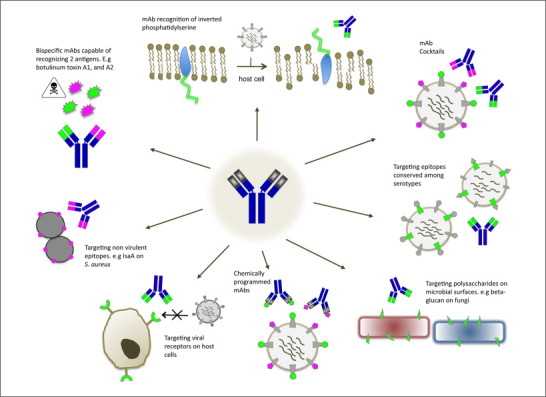
Antibody preparations have a long history of providing protection from infectious diseases. Although antibodies remain the only natural host-derived defense mechanism capable of completely preventing infection, as products, they compete against inexpensive therapeutics such as antibiotics, small molecule inhibitors and active vaccines. The continued discovery in the monoclonal antibody (mAb) field of leads with broadened cross neutralization of viruses and demonstrable synergy of antibody with antibiotics for bacterial diseases, clearly show that innovation remains. The commercial success of mAbs in chronic disease has not been paralleled in infectious diseases for several reasons. Infectious disease immunotherapeutics are limited in scope as endemic diseases necessitate active vaccine development. Also, the complexity of these small markets draws the interest of niche companies rather than big pharmaceutical corporations. Lastly, the cost of goods for mAb therapeutics is inherently high for infectious agents due to the need for antibody cocktails, which better mimic polyclonal immunoglobulin preparations and prevent antigenic escape. In cases where vaccine or convalescent populations are available, current polyclonal hyperimmune immunoglobulin preparations (pIgG), with modern and highly efficient purification technology and standardized assays for potency, can make economic sense. Recent innovations to broaden the potency of mAb therapies, while reducing cost of production, are discussed herein. On the basis of centuries of effective use of Ab treatments, and with growing immunocompromised populations, the question is not whether antibodies have a bright future for infectious agents, but rather what formats are cost effective and generate safe and efficacious treatments to satisfy regulatory approval.
抗体制剂在预防传染病方面有着悠久的历史。尽管抗体仍然是唯一能够完全预防感染的天然宿主衍生防御机制,但作为产品,它们与抗生素、小分子抑制剂和活性疫苗等廉价疗法竞争。在单克隆抗体 (mAb) 领域,不断发现具有更广泛的病毒交叉中和作用的先导化合物,并证明抗体与抗生素在细菌疾病方面具有协同作用,这清楚地表明创新仍在继续。由于多种原因,mAbs 在慢性病中的商业成功并未在传染病中得到复制。传染病免疫疗法的范围有限,因为地方性疾病需要积极开发疫苗。此外,由于需要抗体鸡尾酒来更好地模拟多克隆免疫球蛋白制剂并防止抗原逃逸,这些小市场的复杂性吸引了利基公司而不是大型制药公司的兴趣。最后,由于需要抗体鸡尾酒来更好地模拟多克隆免疫球蛋白制剂并防止抗原逃逸,因此用于传染病的 mAb 治疗药物的制造成本天生就很高。在有疫苗或恢复期人群的情况下,具有现代高效纯化技术和效力标准化检测的当前多克隆高免疫球蛋白制剂 (pIgG) 在经济上是有意义的。本文讨论了最近为扩大 mAb 治疗效力同时降低生产成本而进行的创新。基于抗体治疗的数百年有效使用经验,以及免疫功能低下人群的不断增加,问题不是抗体对传染病是否有光明的未来,而是哪种形式具有成本效益并能产生安全有效的治疗方法以满足监管批准。