Department of Communication Sciences and Disorders, University of Iowa, Iowa City, IA 52242, USA.
Psychol Sci. 2011 May;22(5):666-73. doi: 10.1177/0956797611404897. Epub 2011 Apr 7.
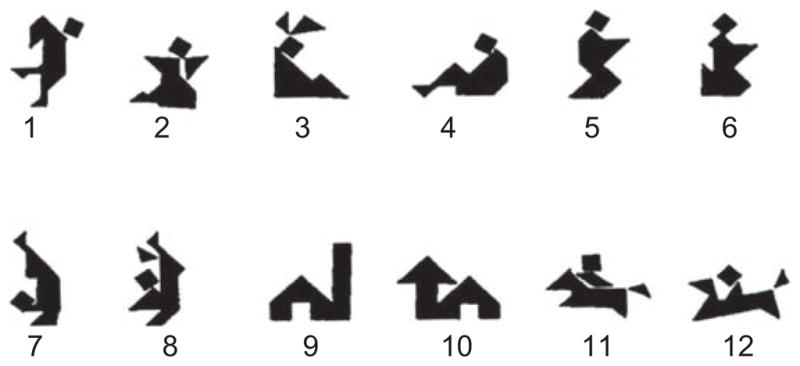
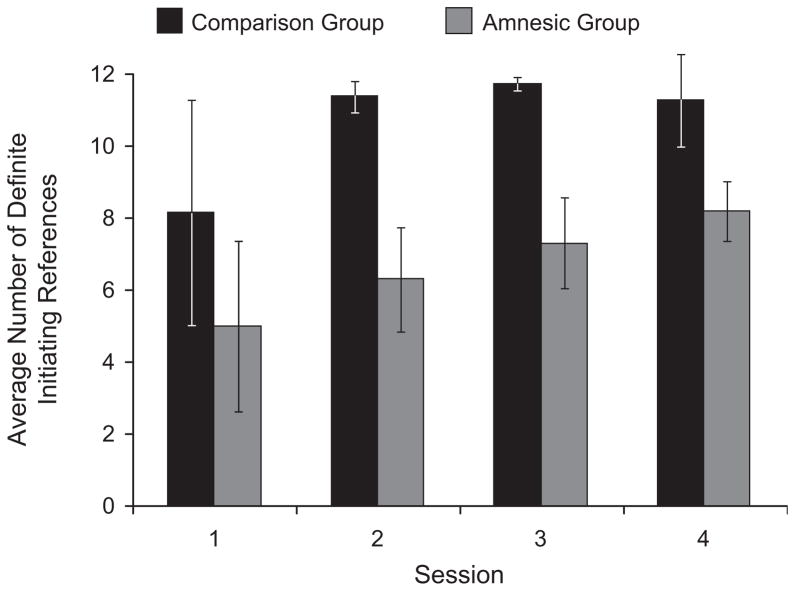
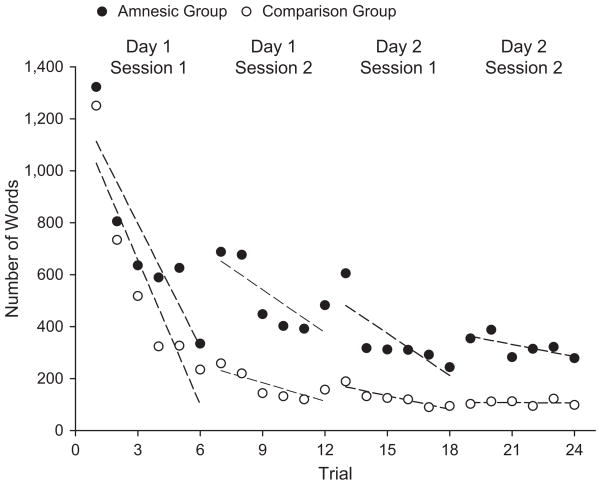
Language function in patients with impaired declarative memory presents a compelling opportunity to investigate the inter-dependence of memory and language in referential communication. We examined amnesic patients' use of definite references during a referential communication task. Discursively, definite references can be used to mark a referent as situationally unique (e.g., "the game," as in the case of a recently publicized game) or as shared information (e.g., "the game," as in one discussed previously). We found that despite showing normal collaborative learning after repeated referring-as indexed by consistent and increasingly efficient descriptive labels for previously unfamiliar tangram figures-amnesic patients did not consistently use definite references in referring to those figures. The use of definite references seems to be critically dependent on declarative memory, and the engagement of such memory is signaled by language.
语言功能在陈述性记忆障碍的患者身上提供了一个引人注目的机会,可以研究记忆和语言在指代交流中的相互依赖关系。我们考察了遗忘症患者在指代交流任务中使用确定指代的情况。在话语中,确定的指代可以用来标记一个指称是情境独特的(例如,“游戏”,就像最近公布的一个游戏那样),或者是共享信息(例如,“游戏”,就像之前讨论过的一个那样)。我们发现,尽管遗忘症患者在反复指代后表现出正常的协作学习(表现为对以前不熟悉的七巧板图形的一致且越来越有效的描述性标签),但他们在指代这些图形时并没有一致地使用确定的指代。确定指代的使用似乎严重依赖于陈述性记忆,而这种记忆的参与则由语言来表示。