Laboratorio de Oncología Molecular, Unidad de Diferenciación Celular y Cáncer, FES-Zaragoza, Universidad Nacional Autónoma de México, Ciudad de México 09230, Mexico.
J Exp Clin Cancer Res. 2011 Apr 10;30(1):37. doi: 10.1186/1756-9966-30-37.
Cancer cells are known to secrete the stress molecules MICA and MICB that activate cytotoxicity by lymphocytes and NK cells through their NKG2D receptor as a mechanism of immunological defense. This work was undertaken to evaluate if cancer cells can also express this receptor as a possible mechanisms of depletion of MIC molecules and thus interfere with their immune recognition.
Myelomonocytic leukemic (TPH-1 and U-937) and cervical cancer (CALO and INBL) cell lines were evaluated by Western Blot, ELISA, flow cytometry and immunocytochemistry to evaluate their capacity to express and secrete MICA and MICB and to be induced to proliferate by these molecules as well as to express their receptor NKG2D. Statistical analysis was performed by two-way ANOVA for time course analysis and Student's t-test for comparison between groups. Values were considered significantly different if p < 0.05.
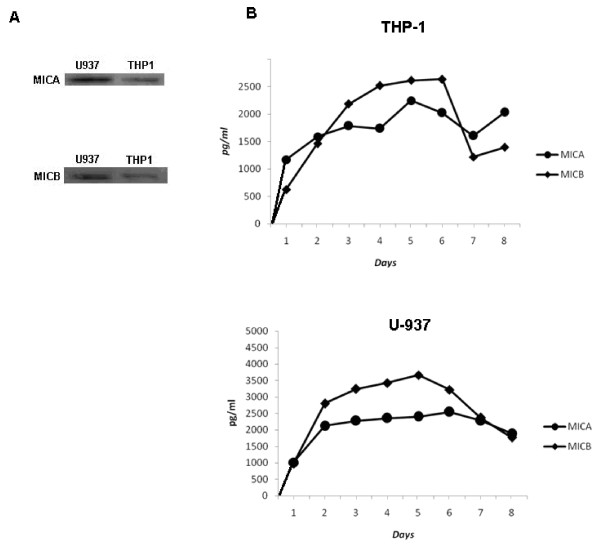
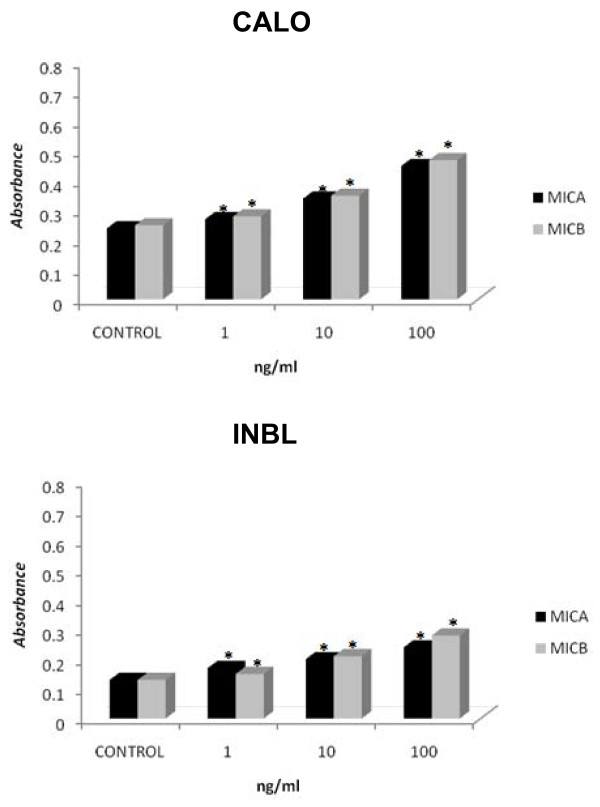
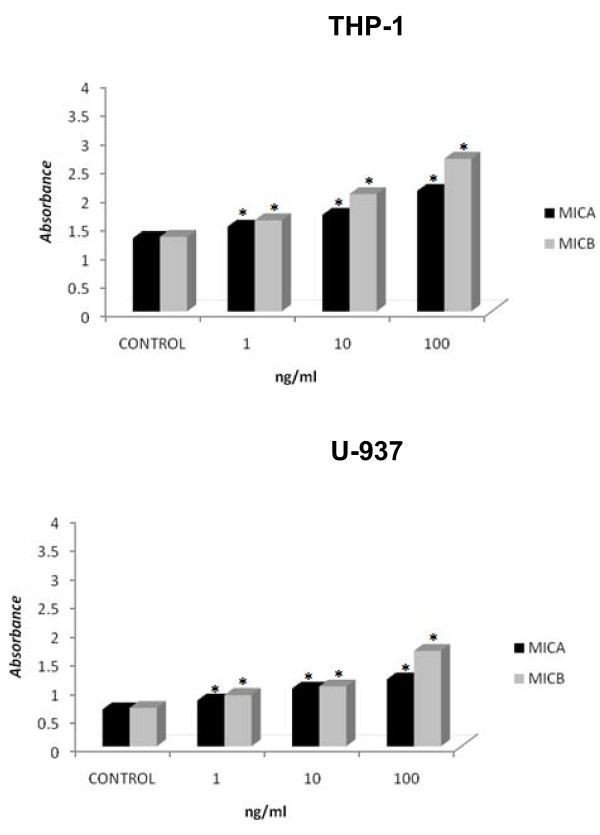
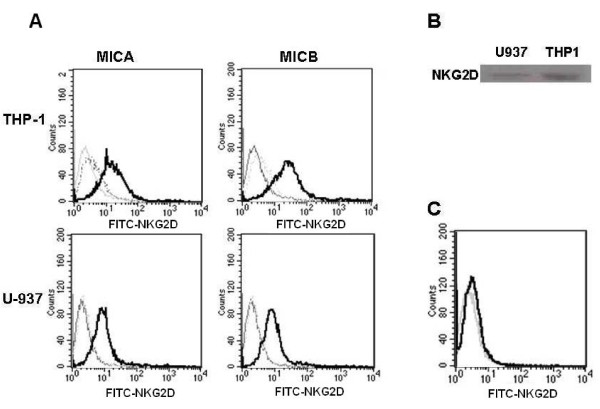
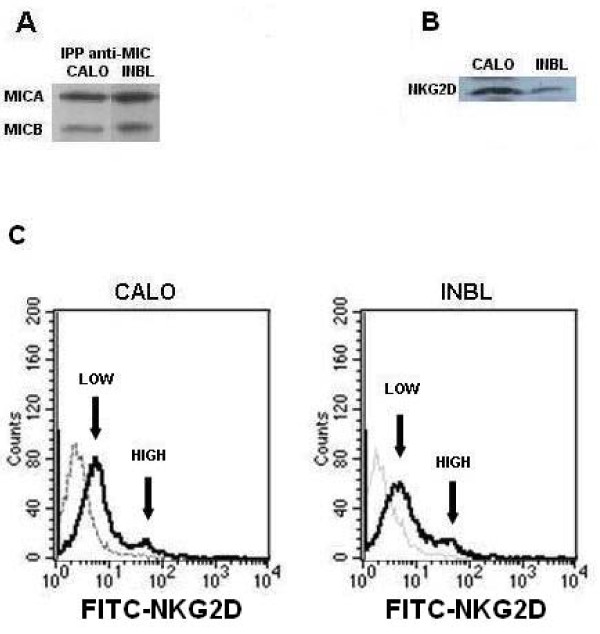
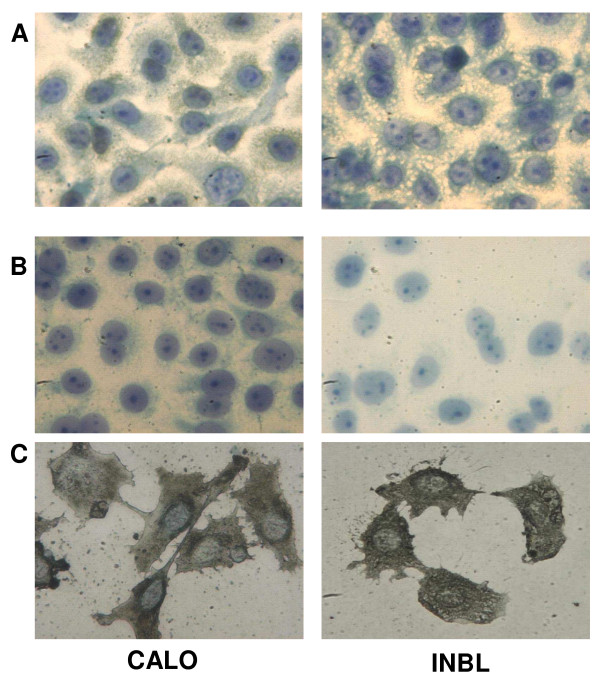
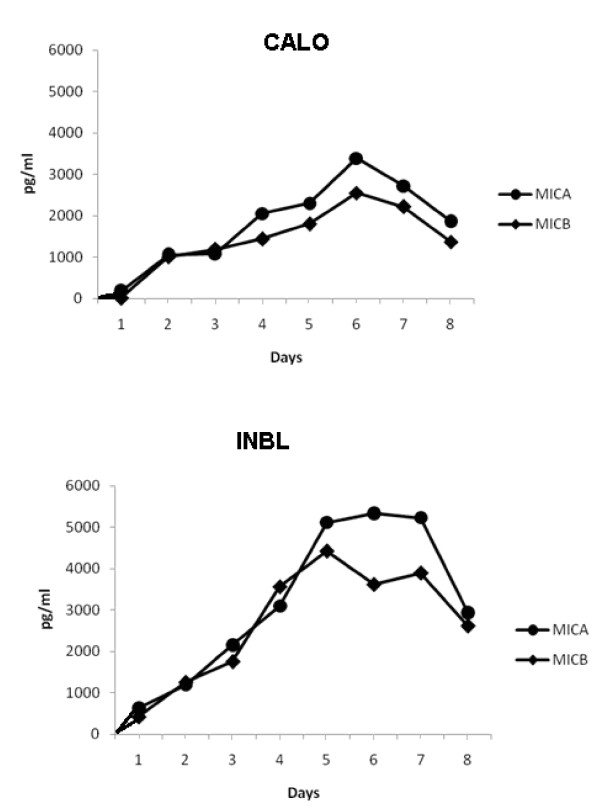
THP-1 and U-937 produce and secrete the stress MICA and MICB as shown by Western Blot of lysed cells and by ELISA of their conditioned media. By Western Blot and flow cytometry we found that these cells also express the receptor NKG2D. When THP-1 and U-937 were cultured with recombinant MICA and MICB they exhibited a dose dependent induction for their proliferation. CALO and INBL also produce MICA and MICB and were induced to proliferate by these stress molecules. By Western Blot, flow cytometry and immunocytochemistry we also found that these cells express NKG2D.
Our novel results that tumor cells can simultaneously secrete MIC molecules and express their receptor, and to be induced for proliferation by these stress molecules, and that tumor epithelial cells can also express the NKG2D receptor that was thought to be exclusive of NK and cytotoxic lymphocytes is discussed as a possible mechanism of immunological escape and of tumor growth induction.
已知癌细胞会分泌应激分子 MICA 和 MICB,通过其 NKG2D 受体激活淋巴细胞和 NK 细胞的细胞毒性,作为免疫防御的一种机制。这项工作旨在评估癌细胞是否也可以表达这种受体,作为消耗 MIC 分子的可能机制,从而干扰它们的免疫识别。
通过 Western Blot、ELISA、流式细胞术和免疫细胞化学评估髓系白血病(TPH-1 和 U-937)和宫颈癌(CALO 和 INBL)细胞系表达和分泌 MICA 和 MICB 的能力,以及这些分子诱导其增殖的能力,并表达其受体 NKG2D。通过双向方差分析进行时间过程分析和 Student's t 检验进行组间比较进行统计分析。如果 p < 0.05,则认为值有显著差异。
THP-1 和 U-937 产生并分泌应激 MICA 和 MICB,这通过裂解细胞的 Western Blot 和条件培养基的 ELISA 显示。通过 Western Blot 和流式细胞术,我们发现这些细胞还表达受体 NKG2D。当 THP-1 和 U-937 与重组 MICA 和 MICB 共培养时,它们的增殖呈剂量依赖性诱导。CALO 和 INBL 也产生 MICA 和 MICB,并被这些应激分子诱导增殖。通过 Western Blot、流式细胞术和免疫细胞化学,我们还发现这些细胞表达 NKG2D。
我们的新结果表明,肿瘤细胞可以同时分泌 MIC 分子并表达其受体,并被这些应激分子诱导增殖,而肿瘤上皮细胞也可以表达 NKG2D 受体,该受体被认为是 NK 和细胞毒性淋巴细胞所特有,这被讨论为一种免疫逃逸和肿瘤生长诱导的可能机制。