Laboratory of Molecular Studies and Experimental Therapy (LEMTE), Department of Genetics, Center of Biological Sciences, Federal University of Pernambuco, Cidade Universitária, Av. Prof Moraes Rego, 1235, Recife, PE, CEP-50670-901, Brazil.
Laboratory of Immunological and Antitumor Analysis (LAIA), Department of Antibiotics, Center of Biological Sciences, Federal University of Pernambuco, Cidade Universitária, Av. Prof Artur de Sá, s/n, Recife, PE, CEP-50740-525, Brazil.
J Exp Clin Cancer Res. 2018 Jul 5;37(1):137. doi: 10.1186/s13046-018-0802-7.
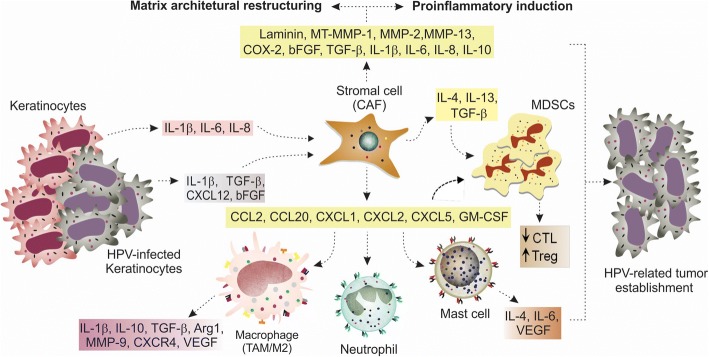
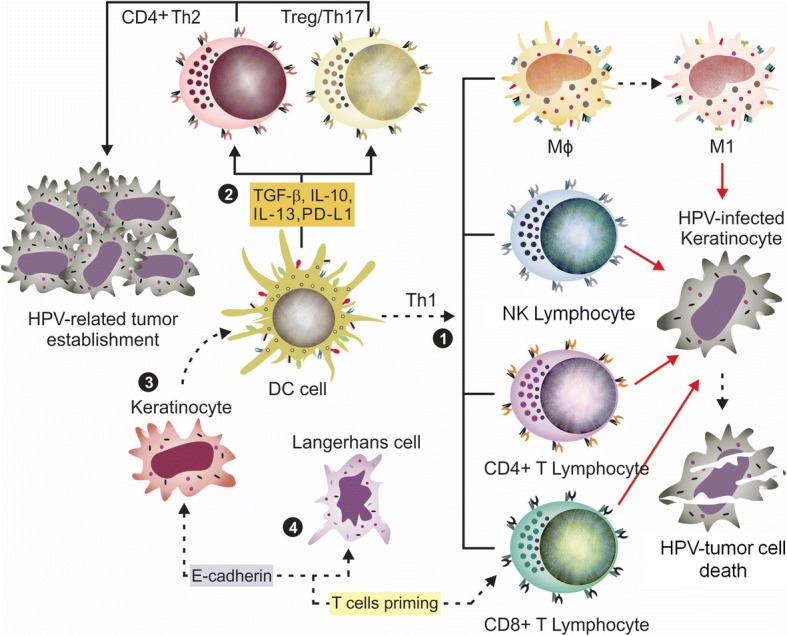
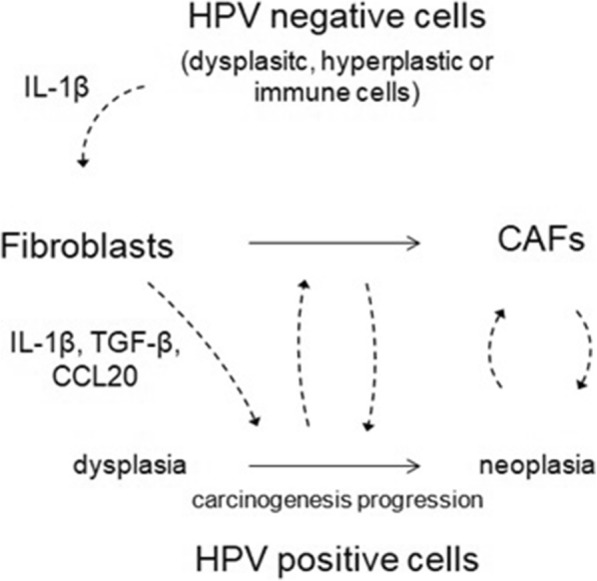
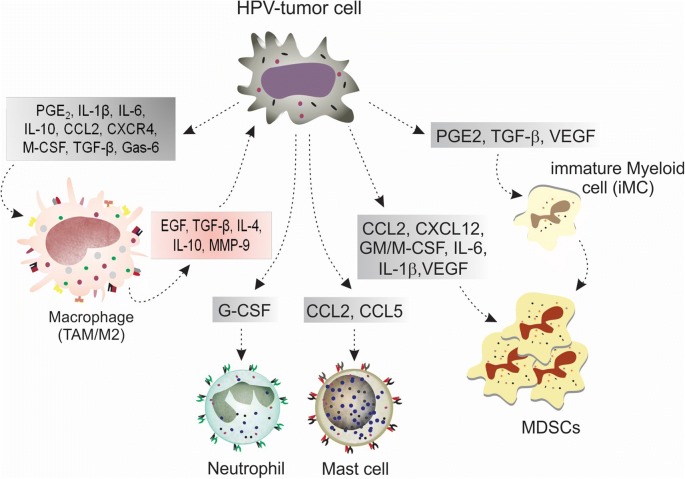
The immune system is composed of immune as well as non-immune cells. As this system is a well-established component of human papillomavirus- (HPV)-related carcinogenesis, high risk human papillomavirus (hrHPV) prevents its routes and mechanisms in order to cause the persistence of infection. Among these mechanisms are those originated from stromal cells, which include the cancer-associated fibroblasts (CAFs), the myeloid-derived suppressor cells (MDSCs) and the host infected cells themselves, i.e. the keratinocytes. These types of cells play central role since they modulate immune cells activities to create a prosperous milieu for cancer development, and the knowledge how such interactions occur are essential for prognostic assessment and development of preventive and therapeutic approaches. Nevertheless, the precise mechanisms are not completely understood, and this lack of knowledge precluded the development of entirely efficient immunotherapeutic strategies for HPV-associated tumors. As a result, an intense work for attaining how host immune response works, and developing of effective therapies has been applied in the last decade. Based on this, this review aims to discuss the major mechanisms of immune and non-immune cells modulated by hrHPV and the potential and existing immunotherapies involving such mechanisms in HPV-related cancers. It is noticed that the combination of immunotherapies has been demonstrated to be essential for obtaining better results, especially because the possibility of increasing the modulating capacity of the HPV-tumor microenvironment has been shown to be central in strengthening the host immune system.
免疫系统由免疫细胞和非免疫细胞组成。由于该系统是人类乳头瘤病毒(HPV)相关致癌作用的一个既定组成部分,高危型 HPV(hrHPV)为了引起感染的持续存在,会阻止其途径和机制。这些机制包括源自间质细胞的机制,其中包括癌相关成纤维细胞(CAFs)、髓系来源的抑制细胞(MDSCs)和受感染的宿主细胞本身,即角质形成细胞。这些类型的细胞起着核心作用,因为它们调节免疫细胞的活性,为癌症的发展创造一个有利的环境,而了解这些相互作用是如何发生的对于预后评估和预防及治疗方法的开发至关重要。然而,确切的机制尚未完全了解,这种知识的缺乏阻碍了针对 HPV 相关肿瘤的完全有效的免疫治疗策略的发展。因此,在过去十年中,人们一直在努力了解宿主免疫反应的工作原理,并开发有效的治疗方法。基于此,本文旨在讨论 hrHPV 调节的免疫和非免疫细胞的主要机制,以及 HPV 相关癌症中涉及这些机制的潜在和现有免疫疗法。值得注意的是,免疫疗法的联合已被证明是获得更好结果的关键,特别是因为增加 HPV 肿瘤微环境的调节能力的可能性已被证明是增强宿主免疫系统的核心。