Department of Molecular and Cellular Biology, Harvard University, Cambridge, Massachusetts 02138, USA.
Nature. 2011 Apr 28;472(7344):499-503. doi: 10.1038/nature09929. Epub 2011 Apr 10.
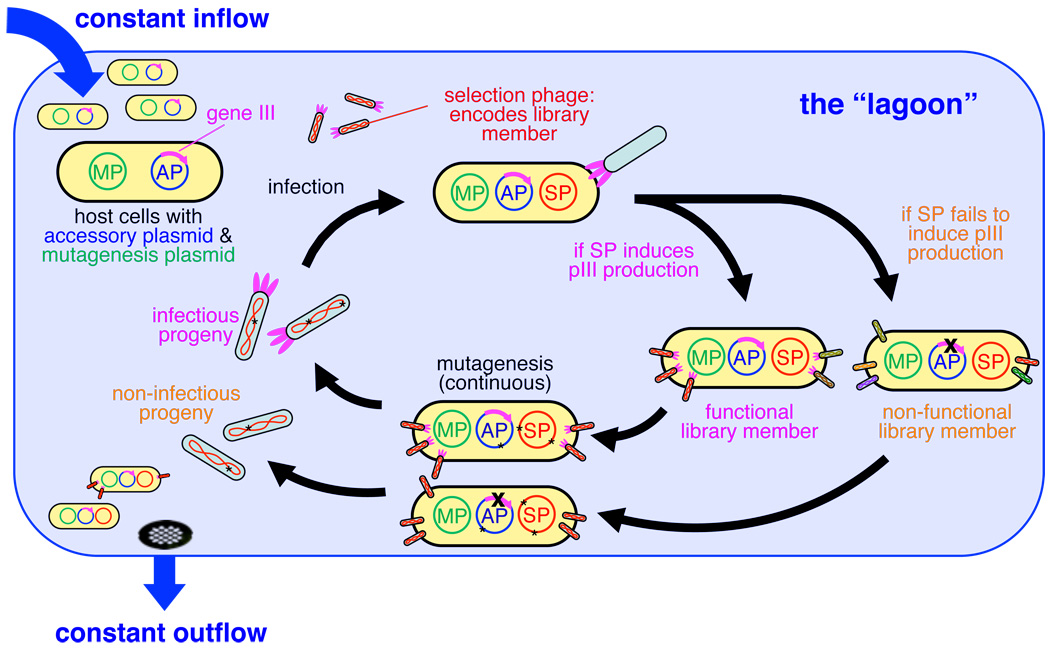
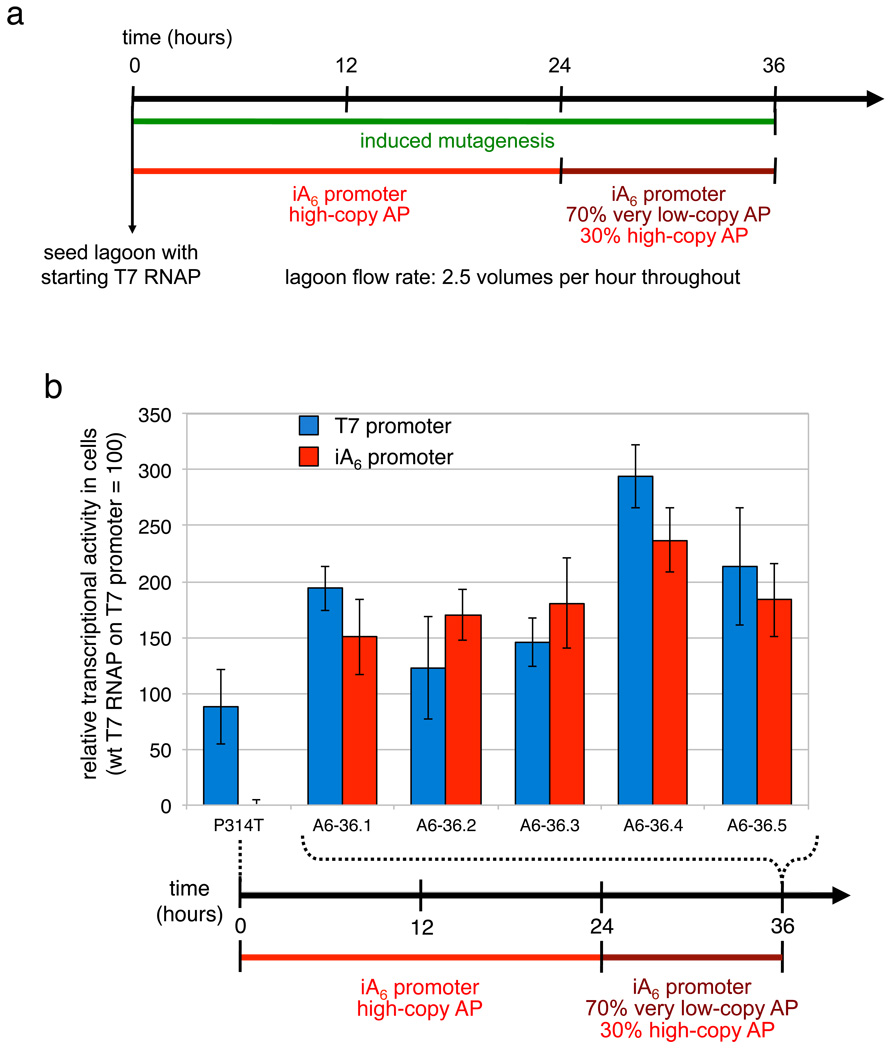
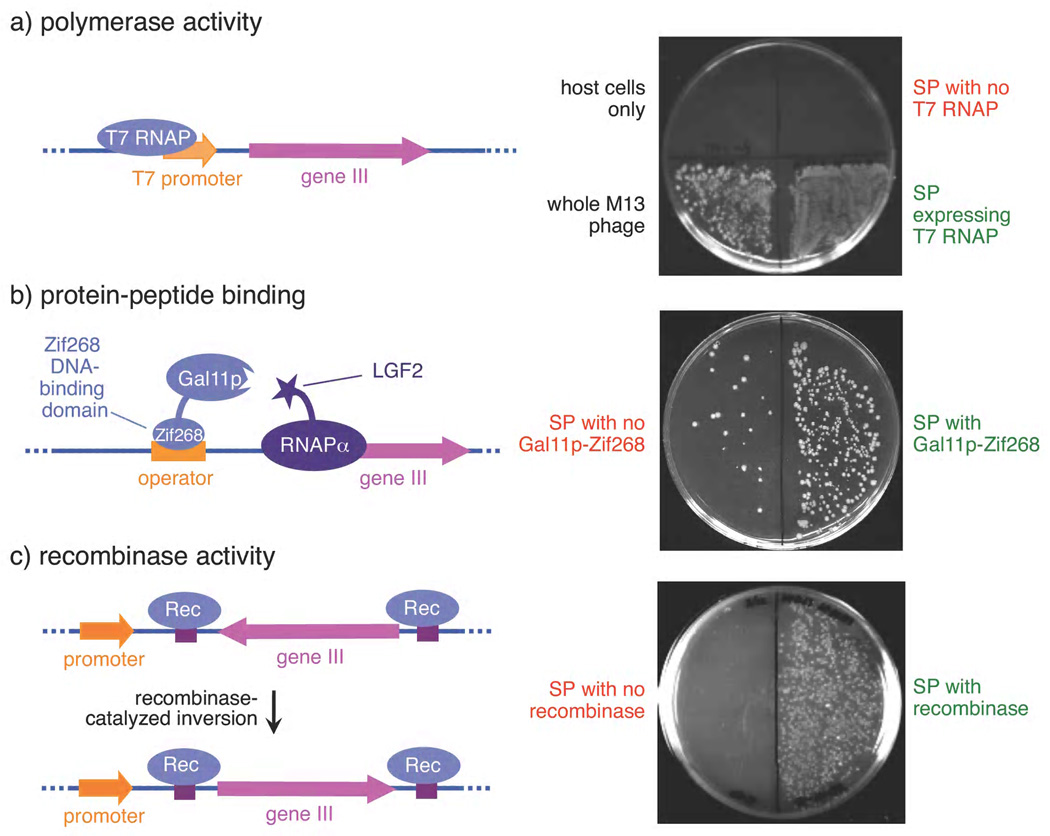
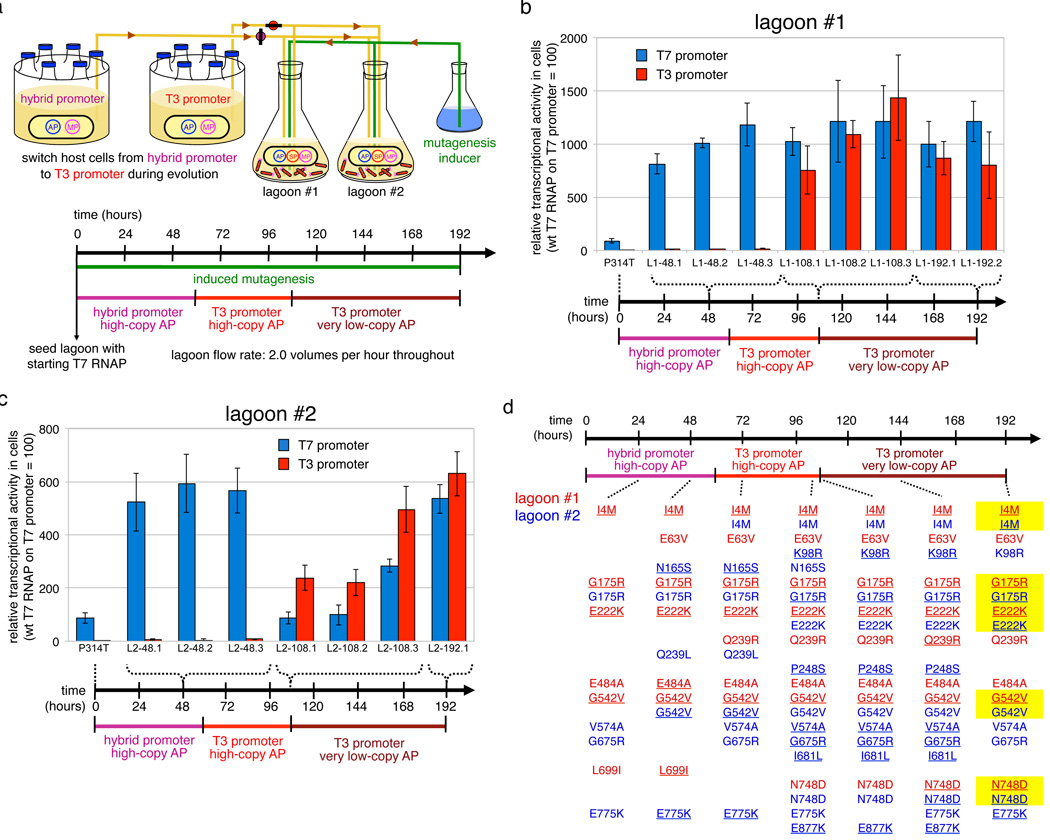
Laboratory evolution has generated many biomolecules with desired properties, but a single round of mutation, gene expression, screening or selection, and replication typically requires days or longer with frequent human intervention. Because evolutionary success is dependent on the total number of rounds performed, a means of performing laboratory evolution continuously and rapidly could dramatically enhance its effectiveness. Although researchers have accelerated individual steps in the evolutionary cycle, the only previous example of continuous directed evolution was the landmark study of Wright and Joyce, who continuously evolved RNA ligase ribozymes with an in vitro replication cycle that unfortunately cannot be easily adapted to other biomolecules. Here we describe a system that enables the continuous directed evolution of gene-encoded molecules that can be linked to protein production in Escherichia coli. During phage-assisted continuous evolution (PACE), evolving genes are transferred from host cell to host cell through a modified bacteriophage life cycle in a manner that is dependent on the activity of interest. Dozens of rounds of evolution can occur in a single day of PACE without human intervention. Using PACE, we evolved T7 RNA polymerase (RNAP) variants that recognize a distinct promoter, initiate transcripts with ATP instead of GTP, and initiate transcripts with CTP. In one example, PACE executed 200 rounds of protein evolution over the course of 8 days. Starting from undetectable activity levels in two of these cases, enzymes with each of the three target activities emerged in less than 1 week of PACE. In all three cases, PACE-evolved polymerase activities exceeded or were comparable to that of the wild-type T7 RNAP on its wild-type promoter, representing improvements of up to several hundred-fold. By greatly accelerating laboratory evolution, PACE may provide solutions to otherwise intractable directed evolution problems and address novel questions about molecular evolution.
实验室进化已经产生了许多具有所需特性的生物分子,但一轮突变、基因表达、筛选或选择以及复制通常需要几天或更长时间,并且需要频繁的人工干预。由于进化的成功取决于执行的总轮数,因此连续快速地进行实验室进化的方法可以极大地提高其效率。尽管研究人员已经加速了进化周期中的个别步骤,但连续定向进化的唯一先前示例是赖特和乔伊斯的里程碑式研究,他们连续进化 RNA 连接酶核酶,具有体外复制周期,但不幸的是,该周期不易适应其他生物分子。在这里,我们描述了一种能够连续定向进化基因编码分子的系统,这些分子可以与大肠杆菌中的蛋白质生产联系起来。在噬菌体辅助连续进化 (PACE) 期间,通过依赖于感兴趣的活性的方式,通过改良的噬菌体生命周期将进化基因从宿主细胞转移到宿主细胞。在 PACE 中,数十轮进化可以在一天内无需人工干预的情况下发生。使用 PACE,我们进化了 T7 RNA 聚合酶 (RNAP) 变体,这些变体可以识别独特的启动子,用 ATP 而不是 GTP 起始转录,并用 CTP 起始转录。在一个示例中,PACE 在 8 天的时间内执行了 200 轮蛋白质进化。在其中两种情况下,从无法检测到的活性水平开始,在不到 1 周的 PACE 时间内,每种目标活性的酶都出现了。在所有三种情况下,PACE 进化的聚合酶活性都超过或可与野生型 T7 RNAP 在其野生型启动子上的活性相媲美,代表了高达数百倍的改进。通过大大加速实验室进化,PACE 可能为其他难以解决的定向进化问题提供解决方案,并解决有关分子进化的新问题。