Molecular & Behavioral Neuroscience Institute, University of Michigan, Ann Arbor, MI 48109-2200, USA.
Mol Psychiatry. 2012 May;17(5):511-9. doi: 10.1038/mp.2011.33. Epub 2011 Apr 12.
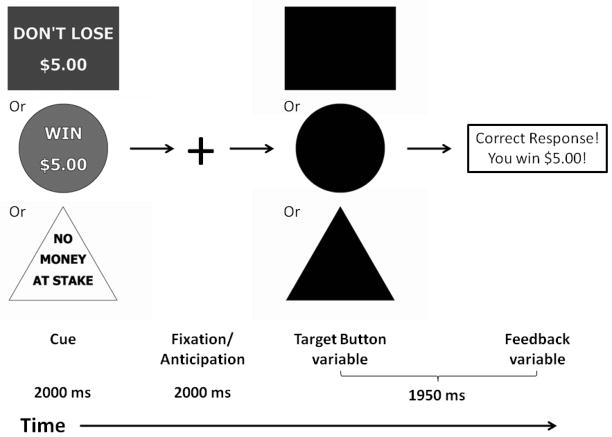
Genetic factors, externalizing personality traits such as impulsivity, and brain processing of salient stimuli all can affect individual risk for alcoholism. One of very few confirmed genetic association findings differentiating alcoholics from non-alcoholics is with variants in the inhibitory γ-amino butyric acid α2 receptor subunit (GABRA2) gene. Here we report the association of two of these GABRA2 variants with measures of alcohol symptoms, impulsivity and with insula cortex activation during anticipation of reward or loss using functional magnetic resonance imaging (fMRI). In a sample of 173 families (449 subjects), 129 of whom had at least one member diagnosed with alcohol dependence or abuse, carriers for the G allele in two single-nucleotide polymorphisms (SNPs) and haplotypes were more likely to have alcohol dependence symptoms (rs279858, P=0.01; rs279826, P=0.05; haplotype, P=0.02) and higher NEO Personality Inventory-Revised (NEO-PI-R) Impulsiveness scores (rs279858, P=0.016; rs279826, P=0.012; haplotype, P=0.032) with a stronger effect in women (rs279858, P=0.011; rs279826, P=0.002; haplotype, P=0.006), all P-values are corrected for family history and age. A subset of offspring from these families (n=44, 20 females), genotyped for GABRA2, participated in an fMRI study using a monetary incentive delay task. Increased insula activation during reward (r(2)=0.4; P=0.026) and loss (r(2)=0.38; P=0.039) anticipation was correlated with NEO-PI-R Impulsiveness and further associated with the GG genotype for both SNPs (P's<0.04). Our results suggest that GABRA2 genetic variation is associated with Impulsiveness through variation of insula activity responses, here evidenced during anticipatory responses.
遗传因素、外显人格特质(如冲动)和大脑对显著刺激的处理都可能影响个体患酒精中毒的风险。极少数能区分酗酒者和非酗酒者的确定遗传关联发现之一是在抑制性γ-氨基丁酸 A2 受体亚基(GABRA2)基因的变异。在这里,我们报告了两种 GABRA2 变体与酒精症状、冲动以及使用功能磁共振成像(fMRI)在预期奖励或损失时岛叶皮层激活之间的关联。在一个包含 173 个家庭(449 名受试者)的样本中,其中 129 名至少有一名成员被诊断为酒精依赖或滥用,携带两个单核苷酸多态性(SNP)和单倍型的 G 等位基因的个体更有可能出现酒精依赖症状(rs279858,P=0.01;rs279826,P=0.05;单倍型,P=0.02)和更高的 NEO 人格量表修订版(NEO-PI-R)冲动分数(rs279858,P=0.016;rs279826,P=0.012;单倍型,P=0.032),女性的影响更强(rs279858,P=0.011;rs279826,P=0.002;单倍型,P=0.006),所有 P 值均经过家族史和年龄校正。这些家庭的一部分后代(n=44,20 名女性)进行了 GABRA2 基因分型,并参加了一项使用货币奖励延迟任务的 fMRI 研究。在奖励(r(2)=0.4;P=0.026)和损失(r(2)=0.38;P=0.039)预期期间,岛叶激活的增加与 NEO-PI-R 冲动呈正相关,并与两个 SNP 的 GG 基因型进一步相关(P<0.04)。我们的结果表明,GABRA2 基因变异通过岛叶活动反应的变化与冲动有关,这里证据来自于预期反应。