Infectious Diseases Program, Institute of Health and Biomedical Innovation (IHBI), Queensland University of Technology, Brisbane, Australia.
PLoS One. 2011 Mar 31;6(3):e18197. doi: 10.1371/journal.pone.0018197.
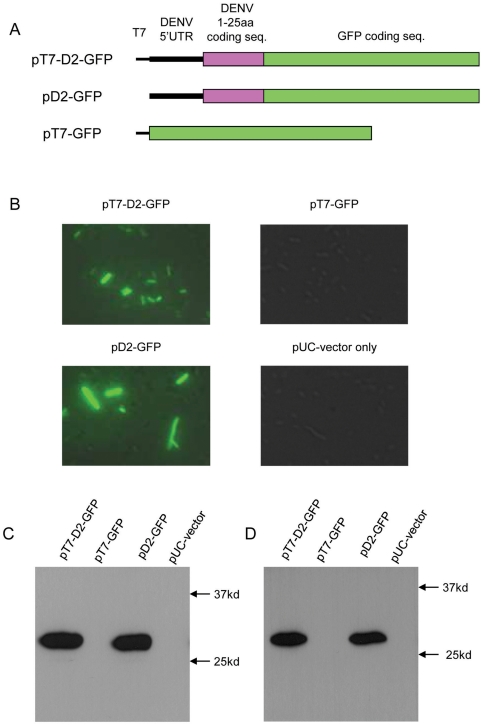
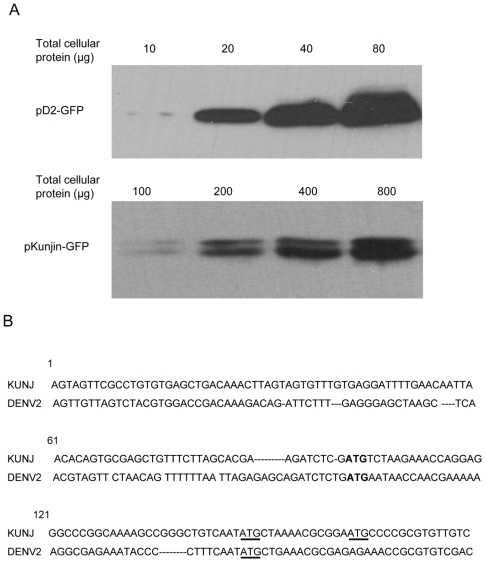
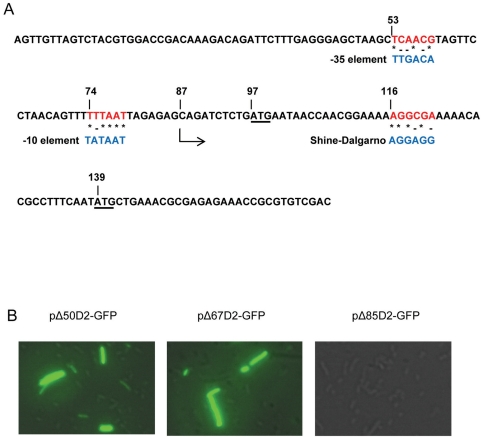
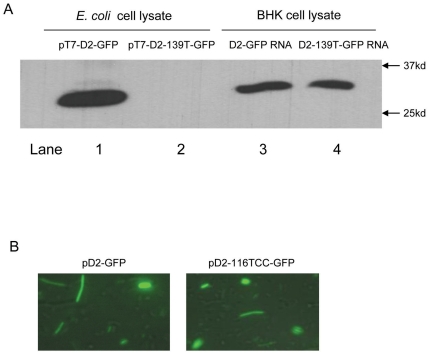
Infectious cDNA clones of RNA viruses are important research tools, but flavivirus cDNA clones have proven difficult to assemble and propagate in bacteria. This has been attributed to genetic instability and/or host cell toxicity, however the mechanism leading to these difficulties has not been fully elucidated. Here we identify and characterize an efficient cryptic bacterial promoter in the cDNA encoding the dengue virus (DENV) 5' UTR. Following cryptic transcription in E. coli, protein expression initiated at a conserved in-frame AUG that is downstream from the authentic DENV initiation codon, yielding a DENV polyprotein fragment that was truncated at the N-terminus. A more complete understanding of constitutive viral protein expression in E. coli might help explain the cloning and propagation difficulties generally observed with flavivirus cDNA.
RNA 病毒的感染性 cDNA 克隆是重要的研究工具,但黄病毒 cDNA 克隆在细菌中难以组装和繁殖。这归因于遗传不稳定性和/或宿主细胞毒性,但导致这些困难的机制尚未完全阐明。在这里,我们在登革热病毒 (DENV) 5'UTR 的 cDNA 中鉴定并表征了一个有效的隐匿细菌启动子。在大肠杆菌中进行隐匿转录后,在一个保守的、位于真实 DENV 起始密码子下游的框内 AUG 起始蛋白表达,产生一个在 N 端截断的 DENV 多蛋白片段。对大肠杆菌中病毒蛋白组成型表达的更全面理解可能有助于解释通常观察到的黄病毒 cDNA 克隆和繁殖困难的原因。