Group of Neuropharmacology, Institute of Neuroscience, Université catholique de Louvain, Brussels, Belgium.
J Neuroinflammation. 2011 Apr 13;8:33. doi: 10.1186/1742-2094-8-33.
Neuroinflammation and nitroxidative stress are implicated in the pathophysiology of neuropathic pain. In view of both processes, microglial and astroglial activation in the spinal dorsal horn play a predominant role. The present study investigated the severity of neuropathic pain and the degree of glial activation in an inflammatory- and nitroxidative-prone animal model.
Transgenic rats expressing mutated superoxide dismutase 1 (hSOD1 G93A) are classically used as a model for amyotrophic lateral sclerosis (ALS). Because of the associated inflammatory- and nitroxidative-prone properties, this model was used to study thermal and mechanical hypersensitivity following partial sciatic nerve ligation (PSNL). Next to pain hypersensitivity assessment, microglial and astroglial activation states were moreover characterized, as well as inflammatory marker gene expression and the glutamate clearance system.
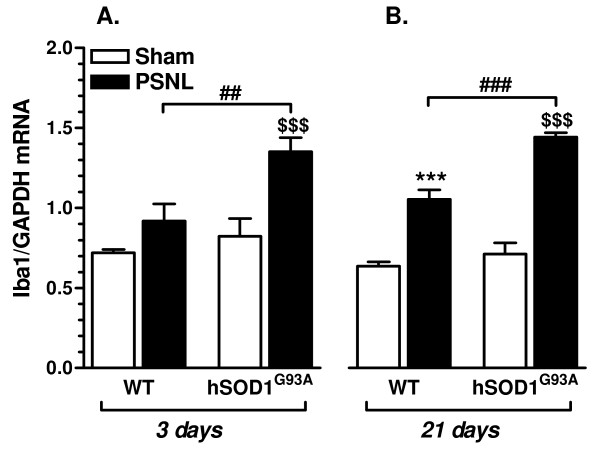
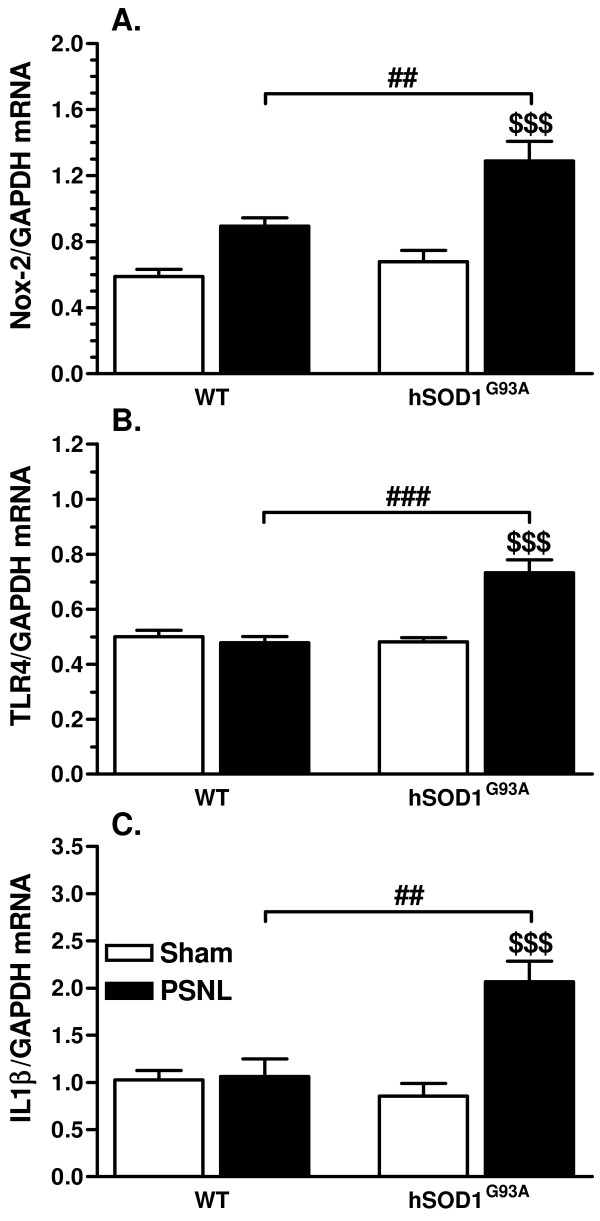
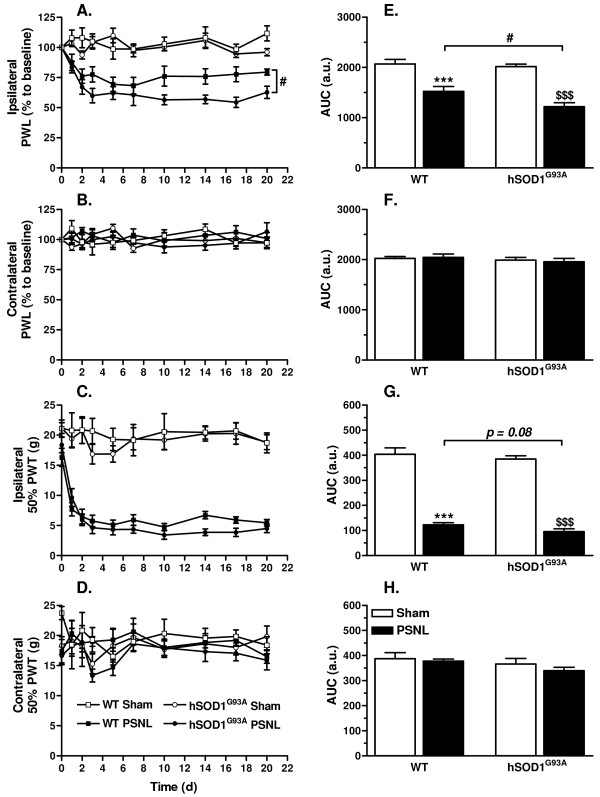
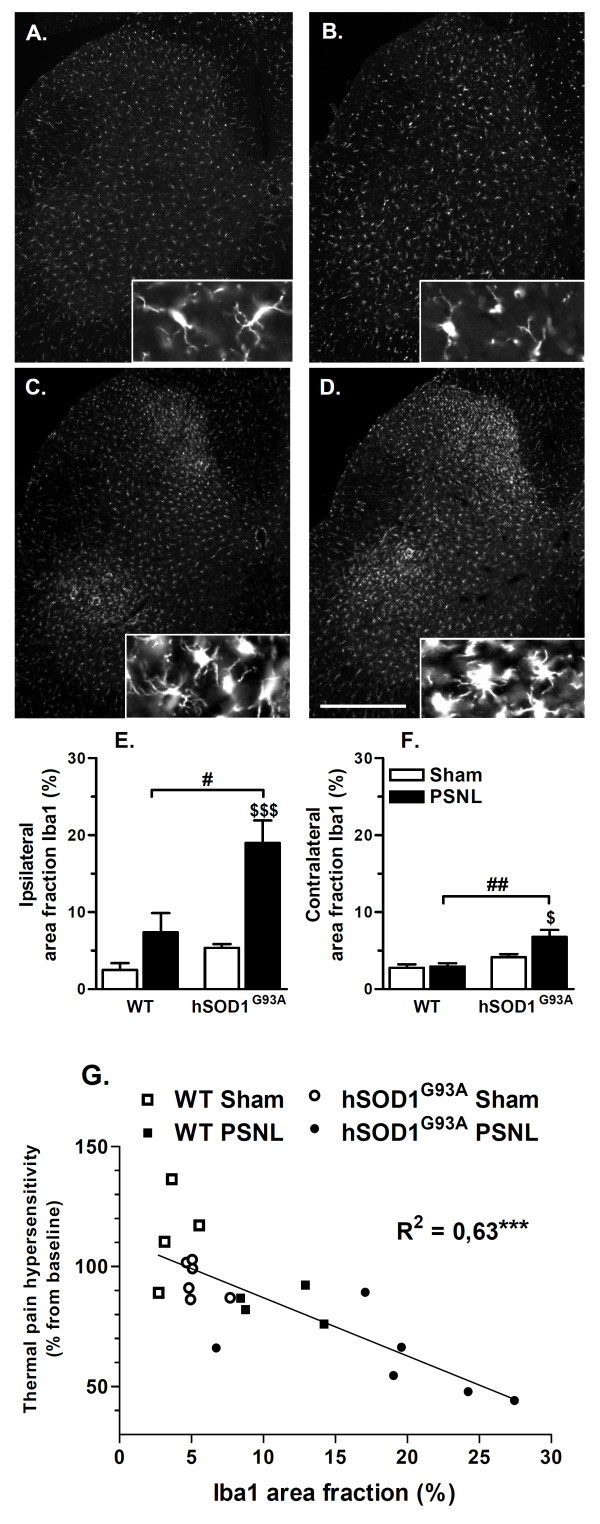
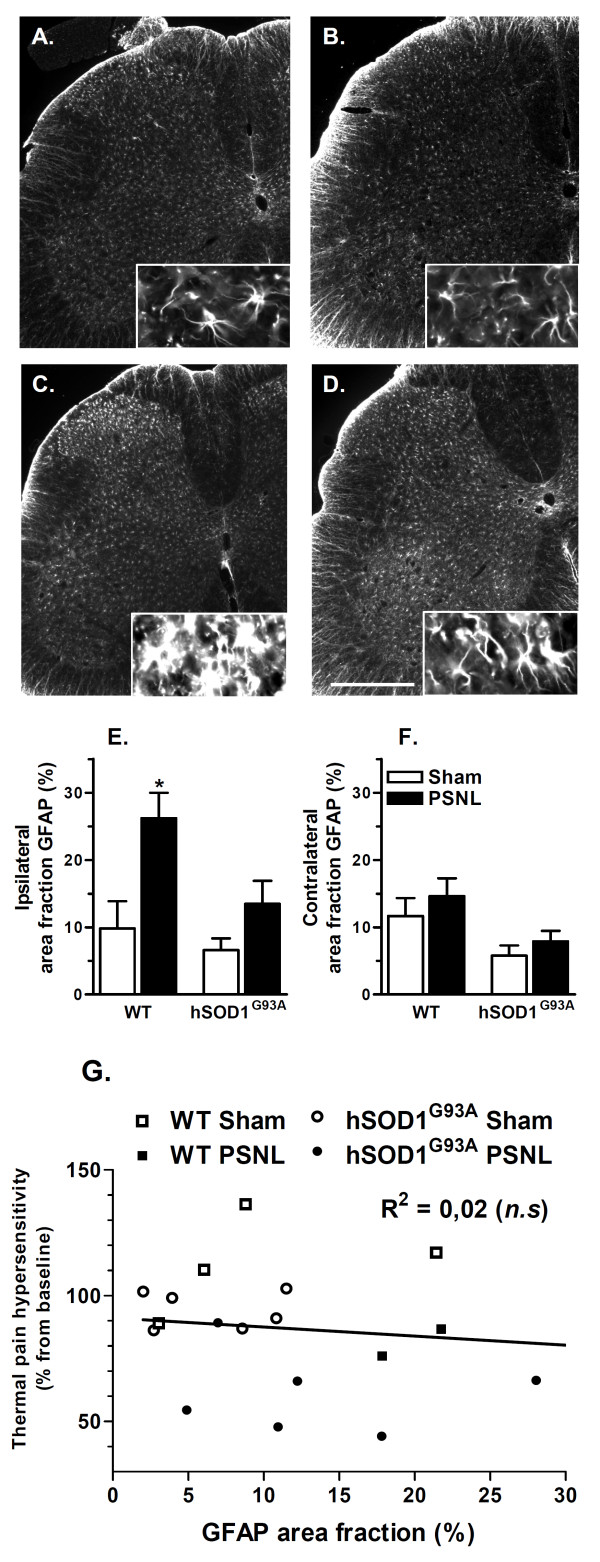
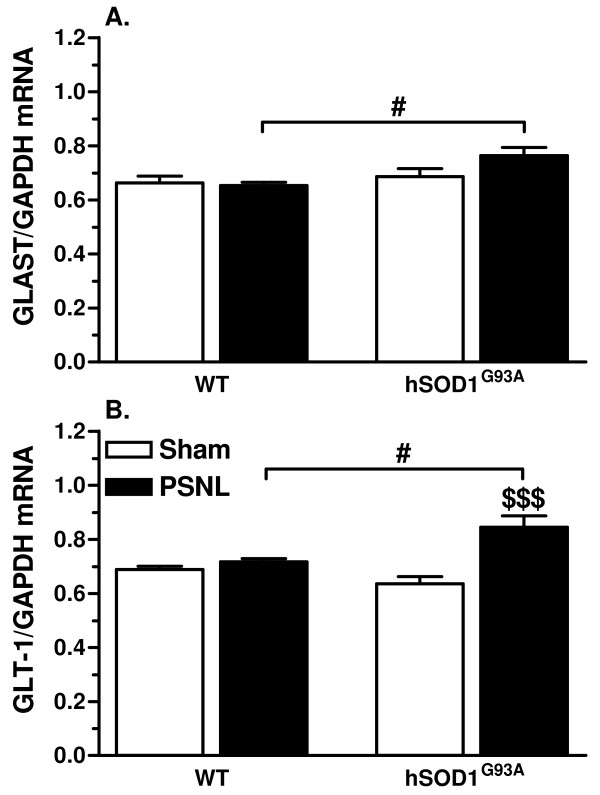
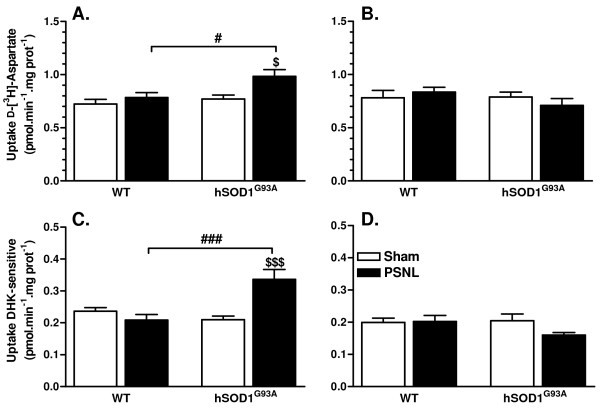
PSNL induced thermal and mechanical hypersensitivity in both wild-type (WT) and transgenic rats. However, the degree of thermal hypersensitivity was found to be exacerbated in transgenic rats while mechanical hypersensitivity was only slightly and not significantly increased. Microglial Iba1 expression was found to be increased in the ipsilateral dorsal horn of the lumbar spinal cord after PSNL but such Iba1 up-regulation was enhanced in transgenic rats as compared WT rats, both at 3 days and at 21 days after injury. Moreover, mRNA levels of Nox2, a key enzyme in microglial activation, but also of pro-inflammatory markers (IL-1β and TLR4) were not modified in WT ligated rats at 21 days after PSNL as compared to WT sham group while transgenic ligated rats showed up-regulated gene expression of these 3 targets. On the other hand, the PSNL-induced increase in GFAP immunoreactivity spreading that was evidenced in WT rats was unexpectedly found to be attenuated in transgenic ligated rats. Finally, GLT-1 gene expression and uptake activity were shown to be similar between WT sham and WT ligated rats at 21 days after injury, while both parameters were significantly increased in the ipsilateral dorsal region of the lumbar spinal cord of hSOD1 G93A rats.
Taken together, our findings show that exacerbated microglial activation and subsequent inflammatory and nitroxidative processes are associated with the severity of neuropathic pain symptoms.
神经炎症和氧化硝化应激与神经病理性疼痛的病理生理学有关。鉴于这两个过程,脊髓背角中的小胶质细胞和星形胶质细胞的激活起着主要作用。本研究调查了炎症和氧化硝化倾向动物模型中神经病理性疼痛的严重程度和神经胶质细胞的激活程度。
表达突变超氧化物歧化酶 1(hSOD1 G93A)的转基因大鼠通常被用作肌萎缩侧索硬化症(ALS)的模型。由于其相关的炎症和氧化硝化倾向特性,该模型被用于研究坐骨神经部分结扎(PSNL)后的热和机械性痛觉过敏。除了疼痛过敏评估外,还对小胶质细胞和星形胶质细胞的激活状态、炎症标志物基因表达和谷氨酸清除系统进行了特征描述。
PSNL 诱导 WT 和转基因大鼠的热和机械性痛觉过敏。然而,在转基因大鼠中,热痛觉过敏的程度被发现加剧,而机械性痛觉过敏仅略有且无显著增加。PSNL 后,在脊髓背角的同侧发现小胶质细胞 Iba1 表达增加,但与 WT 大鼠相比,转基因大鼠的 Iba1 上调增强,在损伤后 3 天和 21 天均如此。此外,在 PSNL 后 21 天,WT 结扎大鼠中,与 WT 假手术组相比,Nox2(小胶质细胞激活的关键酶)和促炎标志物(IL-1β 和 TLR4)的 mRNA 水平没有改变,但转基因结扎大鼠的这 3 个靶基因的表达上调。另一方面,在 WT 结扎大鼠中,发现 PSNL 诱导的 GFAP 免疫反应性扩散增加,但在转基因结扎大鼠中却出乎意料地减弱。最后,在损伤后 21 天,WT sham 和 WT 结扎大鼠之间的 GLT-1 基因表达和摄取活性相似,而 hSOD1 G93A 大鼠的同侧背区脊髓中的这两个参数均显著增加。
综上所述,我们的研究结果表明,神经病理性疼痛症状的严重程度与小胶质细胞的过度激活以及随后的炎症和氧化硝化过程有关。