Crane Genevieve M, Bennett Nelson E
Institute of Urology, Lahey Clinic, 41 Mall Road, Burlington, MA 01805, USA.
Anemia. 2011;2011:297364. doi: 10.1155/2011/297364. Epub 2010 Nov 30.
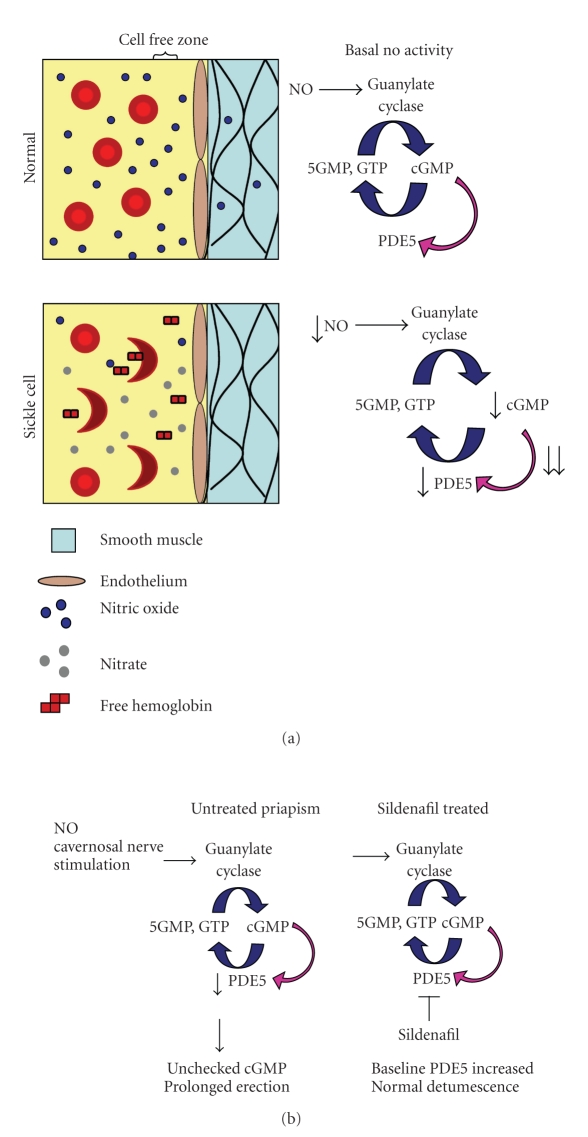
Sickle cell anemia is a common and disabling disorder profoundly affecting mortality as well as quality of life. Up to 35% of men with sickle cell disease are affected by painful, prolonged erections termed ischemic priapism. A priapic episode may result in fibrosis and permanent erectile dysfunction. The severity of sickle cell disease manifestations is variable dependent on a number of contributing genetic factors; however, priapism tends to cluster with other severe vascular complications including pulmonary hypertension, leg ulceration, and overall risk of death. The mechanisms underlying priapism in sickle cell disease have begun to be elucidated including hemolysis-mediated dysregulation of the nitric oxide signaling pathway and dysregulation of adenosine-mediated vasodilation. A better understanding of these mechanisms is leading toward novel preventative strategies. This paper will focus on the mechanisms underlying development of ischemic priapism in sickle cell disease, current acute and preventative treatment strategies, and future directions for improved management of this disorder.
镰状细胞贫血是一种常见且致残的疾病,严重影响死亡率和生活质量。高达35%的镰状细胞病男性会出现疼痛、持续时间长的勃起,即缺血性阴茎异常勃起。阴茎异常勃起发作可能导致纤维化和永久性勃起功能障碍。镰状细胞病表现的严重程度因多种遗传因素而异;然而,阴茎异常勃起往往与其他严重血管并发症聚集在一起,包括肺动脉高压、腿部溃疡和总体死亡风险。镰状细胞病中阴茎异常勃起的潜在机制已开始得到阐明,包括溶血介导的一氧化氮信号通路失调和腺苷介导的血管舒张失调。对这些机制的更好理解正导向新的预防策略。本文将聚焦于镰状细胞病中缺血性阴茎异常勃起发生的潜在机制、当前的急性和预防性治疗策略以及改善该疾病管理的未来方向。