Schmidt Constanze, Kisselbach Jana, Schweizer Patrick A, Katus Hugo A, Thomas Dierk
Department of Cardiology, Medical University Hospital, Heidelberg, Germany.
Vasc Health Risk Manag. 2011;7:193-202. doi: 10.2147/VHRM.S10758. Epub 2011 Mar 31.
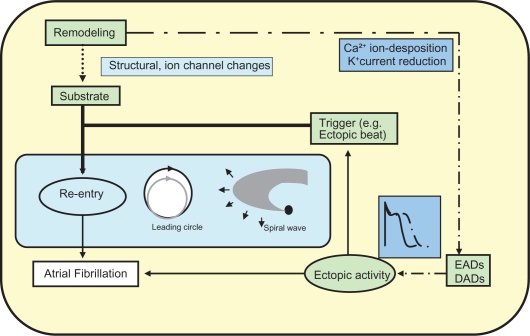
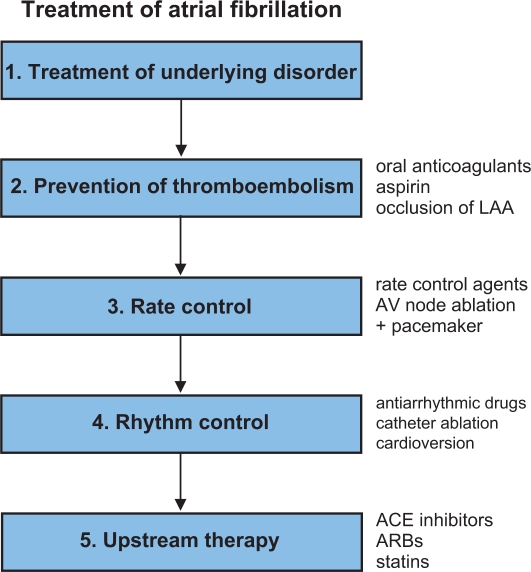
Atrial fibrillation (AF) is the most frequently encountered sustained cardiac arrhythmia in clinical practice and a major cause of morbidity and mortality. Effective treatment of AF still remains an unmet medical need. Treatment of AF is based on drug therapy and ablative strategies. Antiarrhythmic drug therapy is limited by a relatively high recurrence rate and proarrhythmic side effects. Catheter ablation suppresses paroxysmal AF in the majority of patients without structural heart disease but is more difficult to achieve in patients with persistent AF or with concomitant cardiac disease. Stroke is a potentially devastating complication of AF, requiring anticoagulation that harbors the risk of bleeding. In search of novel treatment modalities, targeted pharmacological treatment and gene therapy offer the potential for greater selectivity than conventional small-molecule or interventional approaches. This paper summarizes the current understanding of molecular mechanisms underlying AF. Established drug therapy and interventional treatment of AF is reviewed, and emerging clinical and experimental therapeutic approaches are highlighted.
心房颤动(AF)是临床实践中最常见的持续性心律失常,也是发病和死亡的主要原因。AF的有效治疗仍然是未满足的医疗需求。AF的治疗基于药物治疗和消融策略。抗心律失常药物治疗受到相对较高的复发率和促心律失常副作用的限制。导管消融可抑制大多数无结构性心脏病患者的阵发性AF,但对于持续性AF或合并心脏病的患者则更难实现。中风是AF的一种潜在毁灭性并发症,需要抗凝治疗,但存在出血风险。在寻找新的治疗方式时,靶向药物治疗和基因治疗比传统的小分子或介入方法具有更高的选择性潜力。本文总结了目前对AF潜在分子机制的认识。综述了AF既定的药物治疗和介入治疗,并重点介绍了新兴的临床和实验治疗方法。