Calabia Jordi, Torguet Pere, Garcia Maria, Garcia Isabel, Martin Nadia, Guasch Bernat, Faur Diana, Vallés Martí
Department of Nephrology, Hospital Universitari Dr, J,Trueta de Girona, Av, de França s/n, Girona, Spain.
Cardiovasc Ultrasound. 2011 Apr 15;9:13. doi: 10.1186/1476-7120-9-13.
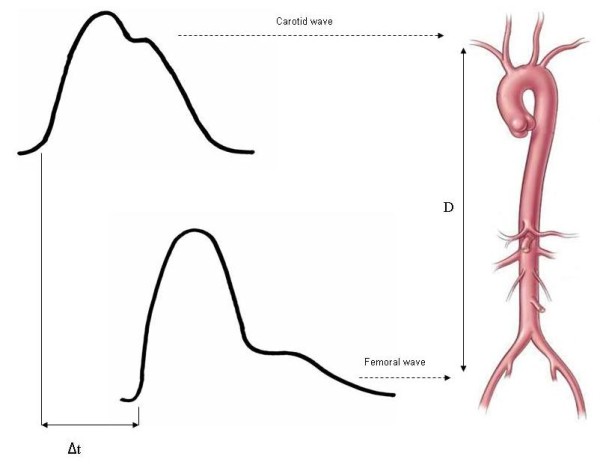
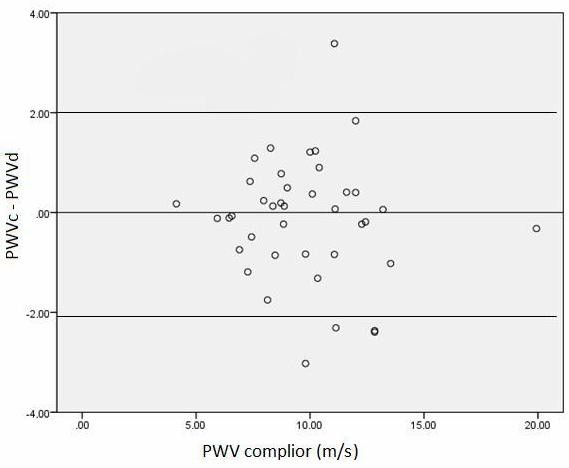
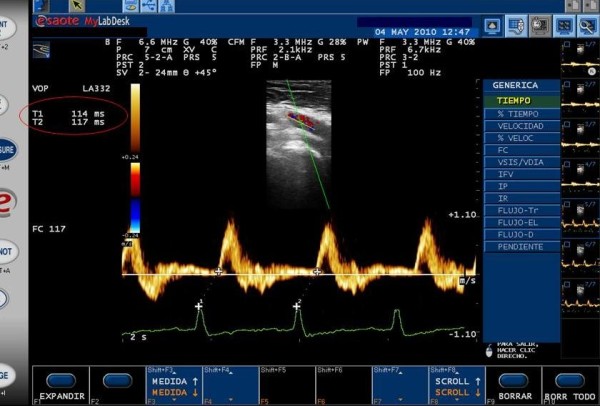
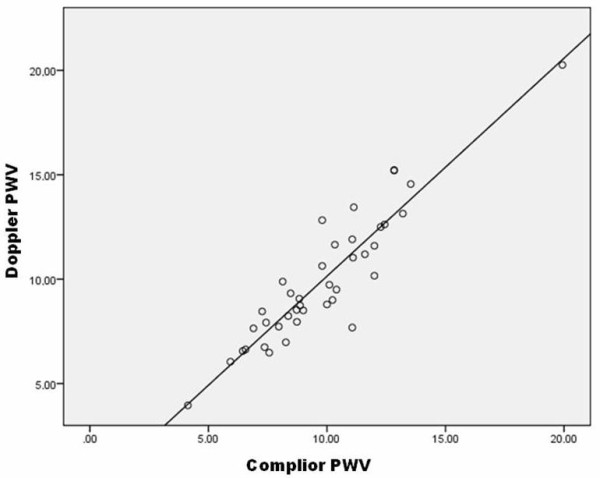
Aortic stiffness is an independent predictor factor for cardiovascular risk. Different methods for determining pulse wave velocity (PWV) are used, among which the most common are mechanical methods such as SphygmoCor or Complior, which require specific devices and are limited by technical difficulty in obtaining measurements. Doppler guided by 2D ultrasound is a good alternative to these methods. We studied 40 patients (29 male, aged 21 to 82 years) comparing the Complior method with Doppler. Agreement of both devices was high (R = 0.91, 0.84-0.95, 95% CI). The reproducibility analysis revealed no intra-nor interobserver differences. Based on these results, we conclude that Doppler ultrasound is a reliable and reproducible alternative to other established methods for the measurement of aortic PWV.
主动脉僵硬度是心血管风险的一个独立预测因素。人们使用不同的方法来测定脉搏波速度(PWV),其中最常见的是机械方法,如SphygmoCor或Complior,这些方法需要特定设备,并且受测量技术难度的限制。二维超声引导下的多普勒是这些方法的一个很好的替代方法。我们研究了40例患者(29例男性,年龄21至82岁),将Complior方法与多普勒方法进行比较。两种设备的一致性很高(R = 0.91,0.84 - 0.95,95%可信区间)。重复性分析显示观察者内和观察者间均无差异。基于这些结果,我们得出结论,多普勒超声是测量主动脉PWV的其他既定方法的一种可靠且可重复的替代方法。