Department of Molecular Carcinogenesis, University of Texas MD Anderson Cancer Center, Science Park-Research Division, Smithville, USA.
Oncogene. 2011 Sep 8;30(36):3833-45. doi: 10.1038/onc.2011.114. Epub 2011 Apr 18.
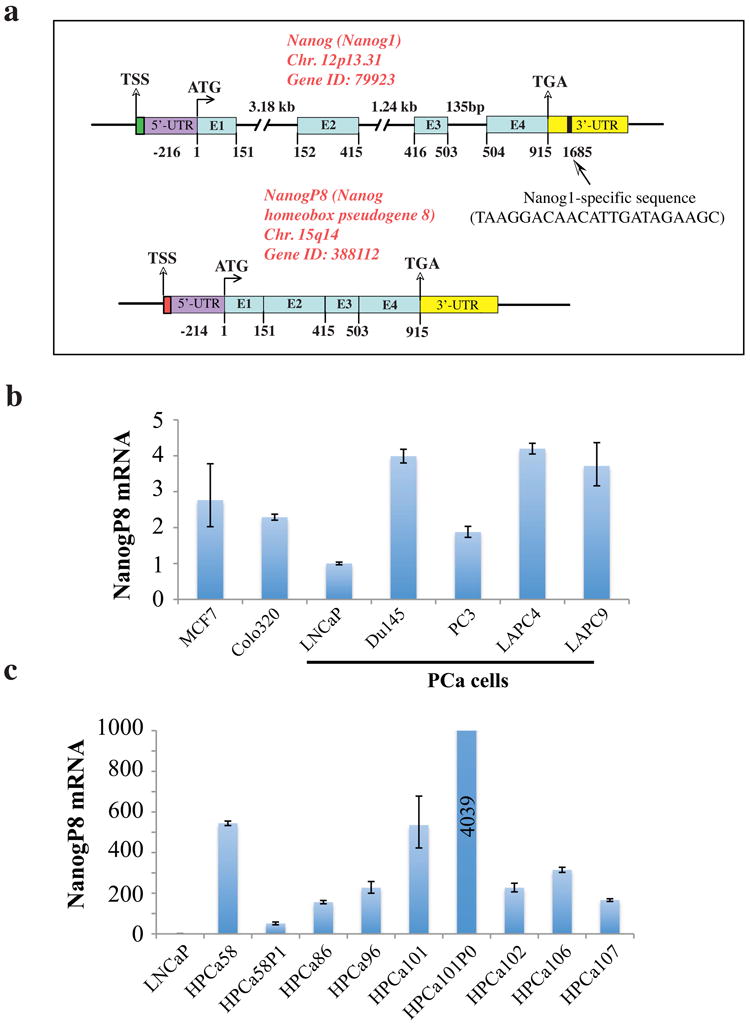
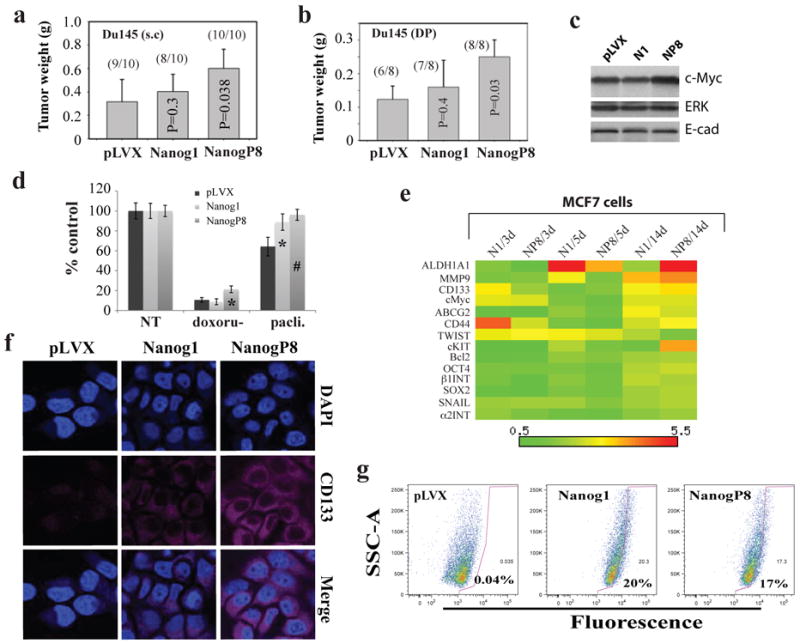
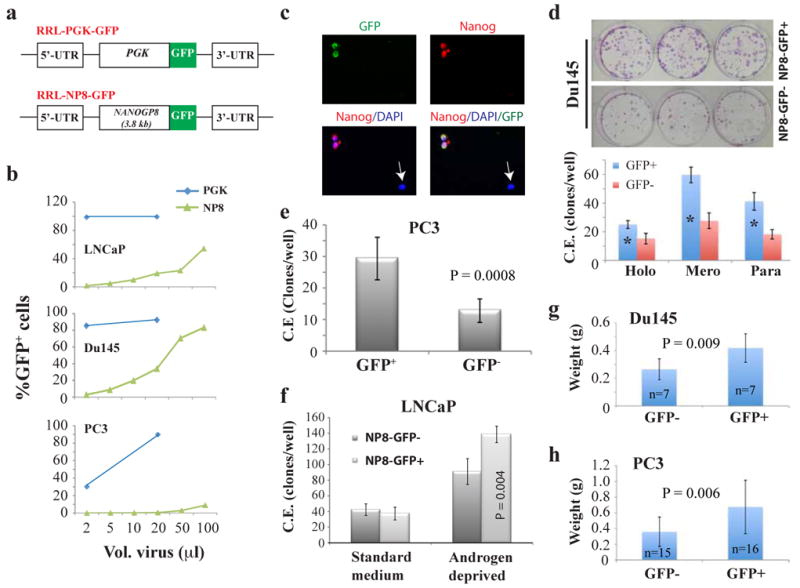
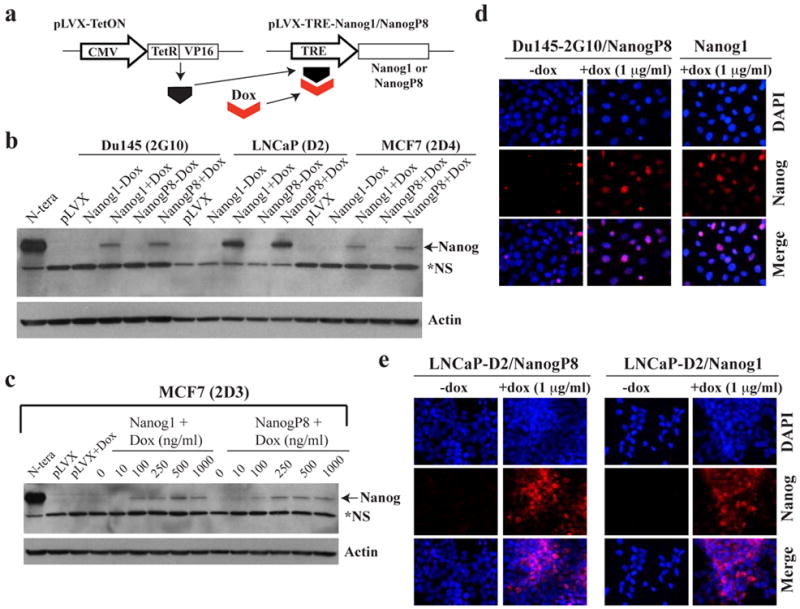
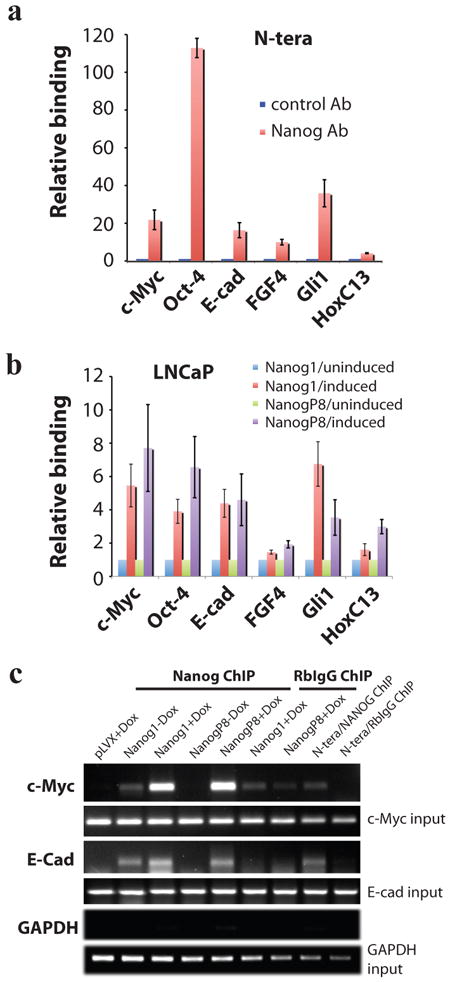
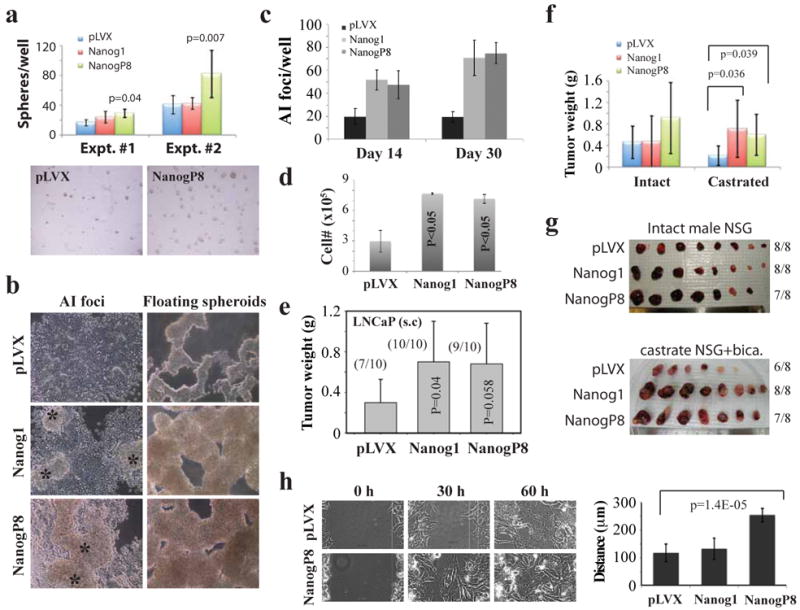
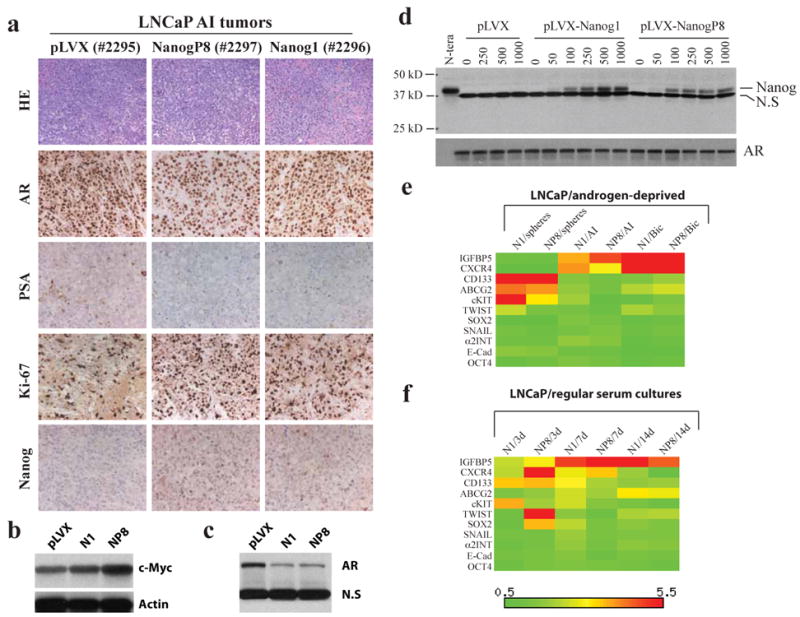
Cancer cell molecular mimicry of stem cells (SC) imbues neoplastic cells with enhanced proliferative and renewal capacities. In support, numerous mediators of SC self-renewal have been evinced to show oncogenic potential. We have recently reported that short-hairpin RNA-mediated knockdown of the embryonic stem cell (ESC) self-renewal gene NANOG significantly reduced the clonogenic and tumorigenic capabilities of various cancer cells. In this study, we sought to test the potential pro-tumorigenic functions of NANOG, particularly, in prostate cancer (PCa). Using qRT-PCR, we first confirmed that PCa cells expressed NANOG mRNA primarily from the NANOGP8 locus on chromosome 15q14. We then constructed a lentiviral promoter reporter in which the -3.8-kb NANOGP8 genomic fragment was used to drive the expression of green fluorescence protein (GFP). We observed that NANOGP8-GFP(+) PCa cells showed cancer stem cell (CSC) characteristics such as enhanced clonal growth and tumor regenerative capacity. To further investigate the functions and mechanisms of NANOG in tumorigenesis, we established tetracycline-inducible NANOG-overexpressing cancer cell lines, including both PCa (Du145 and LNCaP) and breast (MCF-7) cancer cells. NANOG induction promoted drug resistance in MCF-7 cells, tumor regeneration in Du145 cells and, most importantly, castration-resistant tumor development in LNCaP cells. These pro-tumorigenic effects of NANOG were associated with key molecular changes, including an upregulation of molecules such as CXCR4, IGFBP5, CD133 and ALDH1. The present gain-of-function studies, coupled with our recent loss-of-function work, establish the integral role for NANOG in neoplastic processes and shed light on its mechanisms of action.
癌细胞对干细胞(SCs)的分子模拟赋予了肿瘤细胞更强的增殖和更新能力。支持这一观点的是,许多SCs 自我更新的介质已被证明具有致癌潜力。我们最近报道,通过短发夹 RNA 介导的胚胎干细胞(ESC)自我更新基因 NANOG 的敲低,显著降低了各种癌细胞的克隆形成和致瘤能力。在这项研究中,我们试图测试 NANOG 的潜在促肿瘤功能,特别是在前列腺癌(PCa)中。我们首先使用 qRT-PCR 确认了 PCa 细胞主要从染色体 15q14 上的 NANOGP8 基因座表达 NANOG mRNA。然后,我们构建了一个慢病毒启动子报告基因,其中 -3.8kb 的 NANOGP8 基因组片段用于驱动绿色荧光蛋白(GFP)的表达。我们观察到 NANOGP8-GFP(+)PCa 细胞表现出癌症干细胞(CSC)特征,如增强的克隆生长和肿瘤再生能力。为了进一步研究 NANOG 在肿瘤发生中的功能和机制,我们建立了四环素诱导的 NANOG 过表达癌细胞系,包括前列腺癌(Du145 和 LNCaP)和乳腺癌(MCF-7)细胞。NANOG 诱导促进了 MCF-7 细胞的耐药性、Du145 细胞的肿瘤再生,最重要的是,LNCaP 细胞的去势抵抗肿瘤发展。NANOG 的这些促肿瘤作用与关键分子变化有关,包括上调 CXCR4、IGFBP5、CD133 和 ALDH1 等分子。这些功能获得研究,加上我们最近的功能丧失工作,确立了 NANOG 在肿瘤发生过程中的整体作用,并阐明了其作用机制。