Observatoire Océanologique, Biologie du Développement, Université Pierre et Marie Curie and CNRS, Villefranche-sur-Mer, France.
Mol Biol Cell. 2011 Jun 15;22(12):2042-53. doi: 10.1091/mbc.E10-10-0844. Epub 2011 Apr 20.
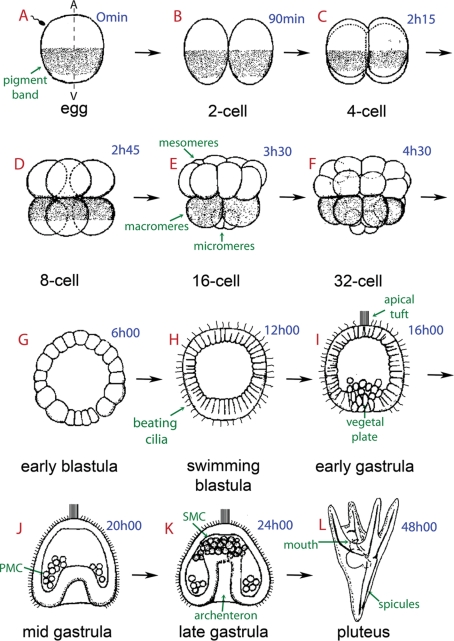
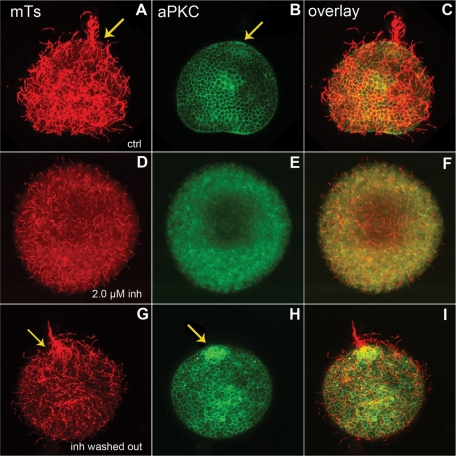
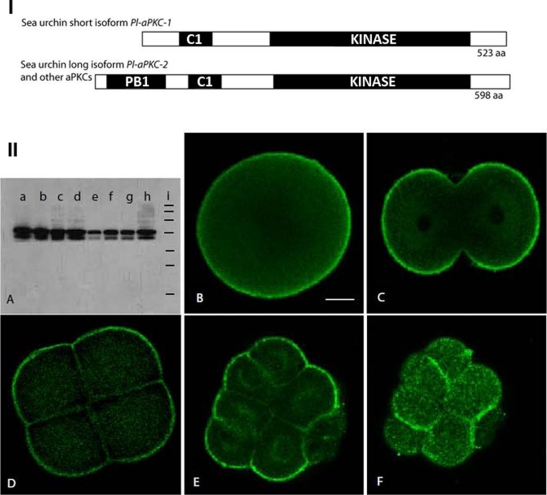
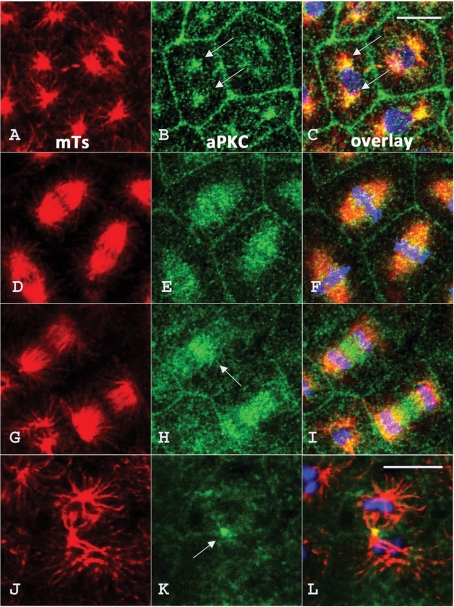
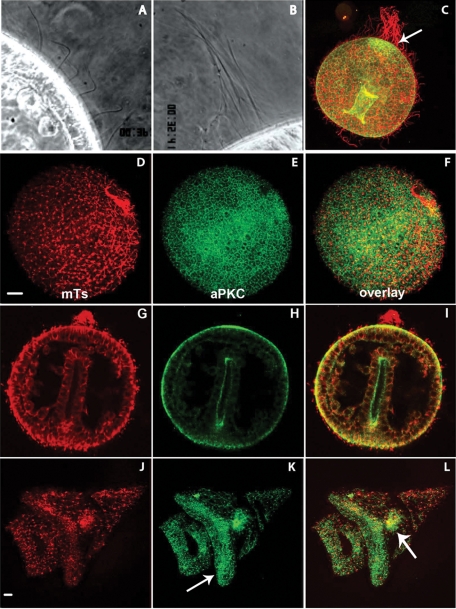
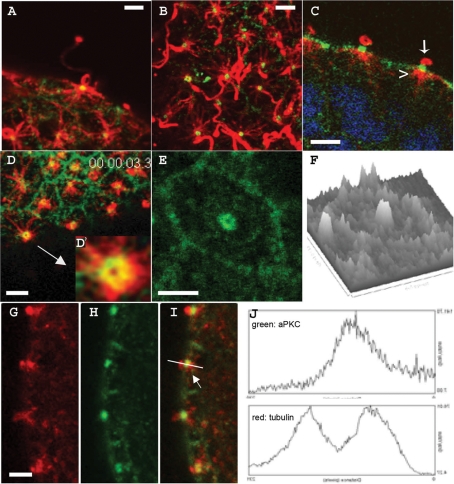
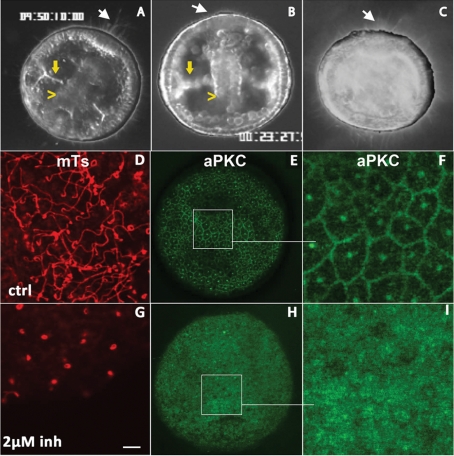
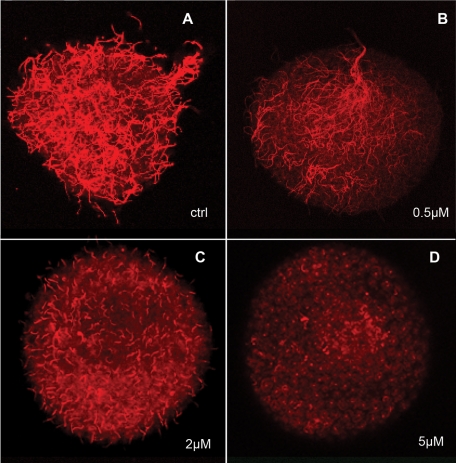
The atypical protein kinase C (aPKC) is part of the conserved aPKC/PAR6/PAR3 protein complex, which regulates many cell polarity events, including the formation of a primary cilium at the apical surface of epithelial cells. Cilia are highly organized, conserved, microtubule-based structures involved in motility, sensory processes, signaling, and cell polarity. We examined the distribution and function of aPKC in the sea urchin embryo, which forms a swimming blastula covered with motile cilia. We found that in the early embryo aPKC is uniformly cortical and becomes excluded from the vegetal pole during unequal cleavages at the 8- to 64-cell stages. During the blastula and gastrula stages the kinase localizes at the base of cilia, forming a ring at the transition zone between the basal body and the elongating axoneme. A dose-dependent and reversible inhibition of aPKC results in mislocalization of the kinase, defective ciliogenesis, and lack of swimming. Thus, as in the primary cilium of differentiated mammalian cells, aPKC controls the growth of motile cilia in invertebrate embryos. We suggest that aPKC might function to phosphorylate kinesin and so activate the transport of intraflagellar vesicles.
非典型蛋白激酶 C(aPKC)是保守的 aPKC/PAR6/PAR3 蛋白复合物的一部分,该复合物调节许多细胞极性事件,包括上皮细胞顶表面初级纤毛的形成。纤毛是高度组织化、保守的、基于微管的结构,参与运动、感觉过程、信号转导和细胞极性。我们研究了海胆胚胎中 aPKC 的分布和功能,该胚胎形成覆盖有运动纤毛的游泳囊胚。我们发现,在早期胚胎中,aPKC 均匀地位于皮质,并在 8 到 64 细胞阶段的不等分裂过程中从植物极排除。在囊胚和原肠胚阶段,激酶定位于纤毛的基部,在基体和延伸轴丝之间的过渡区形成一个环。aPKC 的剂量依赖性和可逆抑制导致激酶定位错误、纤毛发生缺陷和缺乏游泳能力。因此,与分化的哺乳动物细胞中的初级纤毛一样,aPKC 控制着无脊椎动物胚胎中运动纤毛的生长。我们认为,aPKC 可能通过磷酸化驱动蛋白来发挥作用,从而激活鞭毛内囊泡的运输。