State Key Laboratory of Biotherapy and Cancer Center, West China Hospital, West China Medical School, Sichuan University, Chengdu, P. R. China
J Transl Med. 2011 Apr 23;9:46. doi: 10.1186/1479-5876-9-46.
Polyethyleneimine (PEI), which can interact with negatively charged DNA through electrostatic interaction to form nanocomplexes, has been widely attempted to use as a gene delivery system. However, PEI has some defects that are not fit for keeping on gene expression. Therefore, some modifications against PEI properties have been done to improve their application value in gene delivery. In this study, three modified PEI derivatives, including poly(ε-caprolactone)-pluronic-poly(ε-caprolactone) grafted PEI (PCFC-g-PEI), folic acid-PCFC-isophorone diidocyanate-PEI (FA-PEAs) and heparin-PEI (HPEI), were evaluated in terms of their cytotoxicity and transfection efficiency in vitro and in vivo in order to ascertain their potential application in gene therapy.
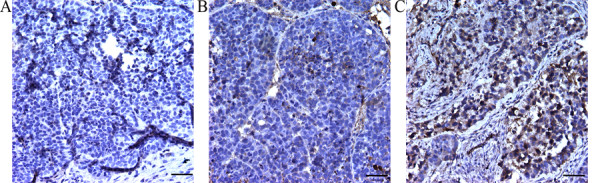
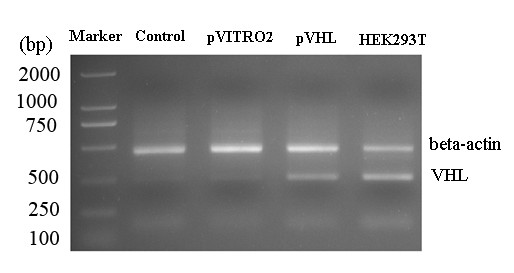
MTT assay and a marker GFP gene, encoding green fluorescent protein, were used to evaluate cell toxicity and transfection activity of the three modified PEI in vitro. Renal cell carcinoma (RCC) models were established in BALB/c nude mice inoculated with OS-RC-2 cells to detect the gene therapy effects using the three PEI-derived nanoparticles as gene delivery vehicles. The expression status of a target gene Von Hippel-Lindau (VHL) in treated tumor tissues was analyzed by semiquantitative RT-PCR and immunohistochemistry.
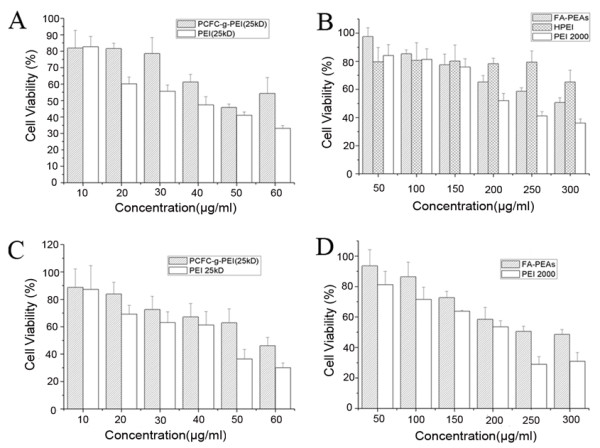
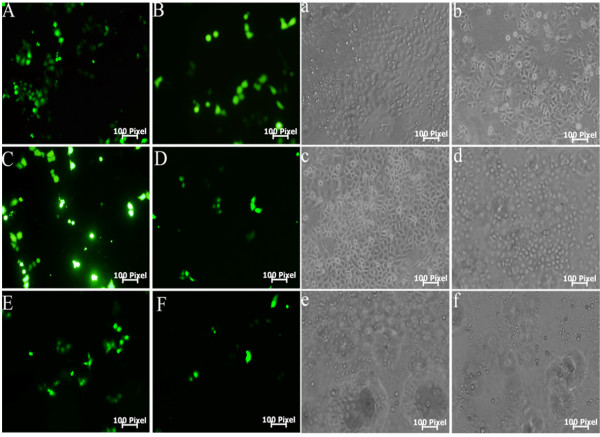
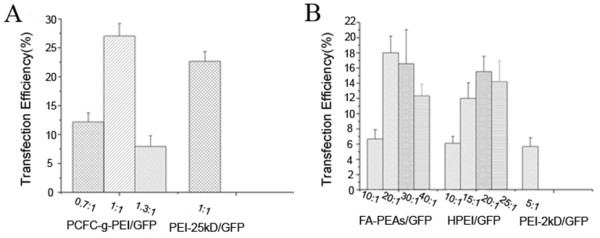
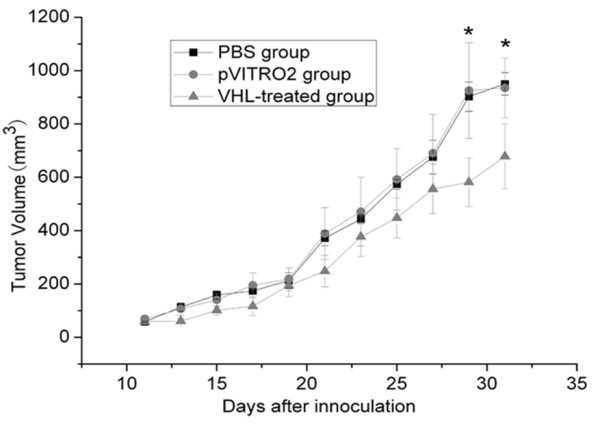
Each of three modified PEI-derived biomaterials had an increased transfection efficiency and a lower cytotoxicity compared with its precursor PEI with 25-kD or 2-kD molecule weight in vitro. And the mean tumor volume was obviously decreased 30% by using FA-PEAs to transfer VHL plasmids to treat mice RCC models. The VHL gene expression was greatly improved in the VHL-treated group. While there was no obvious tumor inhibition treated by PCFC-g-PEI:VHL and HPEI:VHL complexes.
The three modified PEI-derived biomaterials, including PCFC-g-PEI, FA-PEAs and HPEI, had an increased transfection efficiency in vitro and obviously lower toxicities compared with their precursor PEI molecules. The FA-PEAs probably provide a potential gene delivery system to treat RCC even other cancers in future.
聚乙烯亚胺(PEI)可以通过静电相互作用与带负电荷的 DNA 相互作用形成纳米复合物,已被广泛尝试用作基因传递系统。然而,PEI 存在一些不适合保持基因表达的缺陷。因此,对 PEI 性质进行了一些修饰,以提高其在基因传递中的应用价值。在这项研究中,评估了三种修饰的 PEI 衍生物,包括聚(ε-己内酯)-聚(丙交酯-乙交酯)接枝聚乙烯亚胺(PCFC-g-PEI)、叶酸-PCFC-异佛尔酮二异氰酸酯-PEI(FA-PEAs)和肝素-PEI(HPEI),以评估其在体外和体内的细胞毒性和转染效率,以确定其在基因治疗中的潜在应用。
使用 MTT 测定法和标记 GFP 基因(编码绿色荧光蛋白)评估三种修饰的 PEI 在体外的细胞毒性和转染活性。用 OS-RC-2 细胞接种 BALB/c 裸鼠建立肾细胞癌(RCC)模型,用三种 PEI 衍生的纳米颗粒作为基因传递载体检测基因治疗效果。通过半定量 RT-PCR 和免疫组织化学分析检测治疗肿瘤组织中目标基因 Von Hippel-Lindau(VHL)的表达状态。
与 25-kD 或 2-kD 分子量的原始 PEI 相比,三种修饰的 PEI 衍生生物材料均具有更高的转染效率和更低的细胞毒性。用 FA-PEAs 转染 VHL 质粒治疗小鼠 RCC 模型可使平均肿瘤体积明显减少 30%。VHL 基因的表达在 VHL 治疗组中得到了很大改善。而用 PCFC-g-PEI:VHL 和 HPEI:VHL 复合物治疗则没有明显的肿瘤抑制作用。
三种修饰的 PEI 衍生生物材料,包括 PCFC-g-PEI、FA-PEAs 和 HPEI,与原始 PEI 分子相比,在体外具有更高的转染效率和明显更低的毒性。FA-PEAs 可能为未来治疗 RCC 甚至其他癌症提供了一种潜在的基因传递系统。